Review101
What Is a Home Treadmill? A Beginner’s Guide to Walking Pads and Running Treadmills
A treadmill lets you walk or run in place on a moving belt. Here’s what speed and incline change, how the main styles differ, and when an indoor option is worth the floor space.
Read the article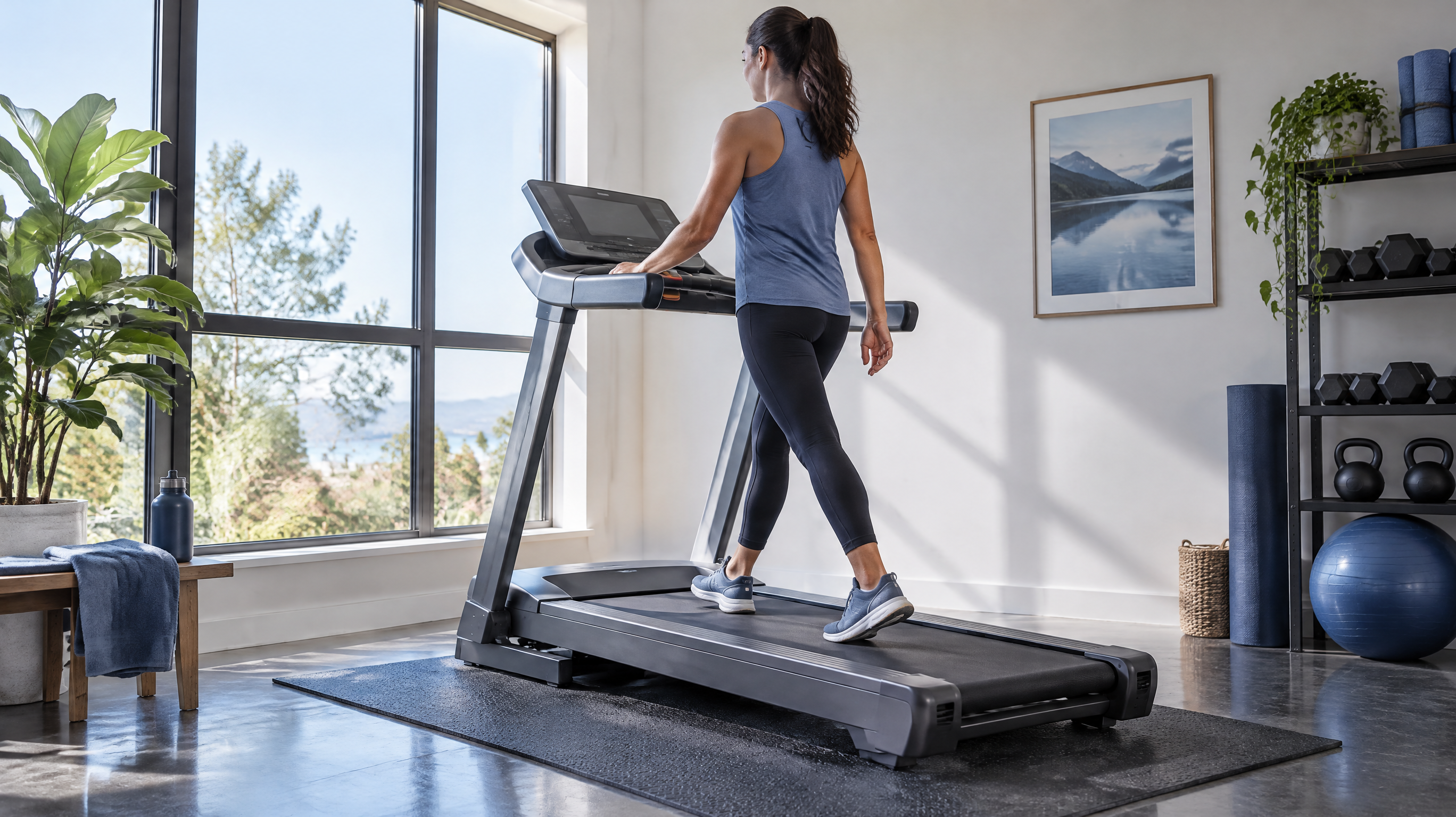
Some links may earn us a commission, at no extra cost to you. How we’re supported
In this article 8 sections
Start with your needs
Try slow walking during a task you actually do at your desk. Notice whether you can do it comfortably and reach the stop control without fumbling.
Test a running model at your usual easy pace. Check whether you have room for your natural stride and can reach the controls without looking down for long.
Try a day pass at a gym or community center. You may only need occasional access, not a machine at home.
As an Amazon Associate, we earn from qualifying purchases. Research-based analysis; no hands-on testing.
The short answer
You don’t need a treadmill to walk or run. It’s worth considering if weather, darkness, or an inconvenient route regularly keeps you from getting out. If you only need an indoor option now and then, try a gym or indoor track before giving up floor space at home.
Worth considering if
- People whose walks or runs are regularly interrupted by weather or darkness.
- Walkers or runners who want to repeat a pace or grade without planning a route.
- Households with a spot where the machine can be used without disrupting others.
Hold off if
- You haven’t tried a moving belt and aren’t sure you’ll like the motion.
- Noise, clearance, or safe access around children and pets is unresolved.
- You already have a convenient route or indoor alternative that you use consistently.
Choose your next step
Ready to compare?
See the differences, tradeoffs and who each model suits.
Compare the products →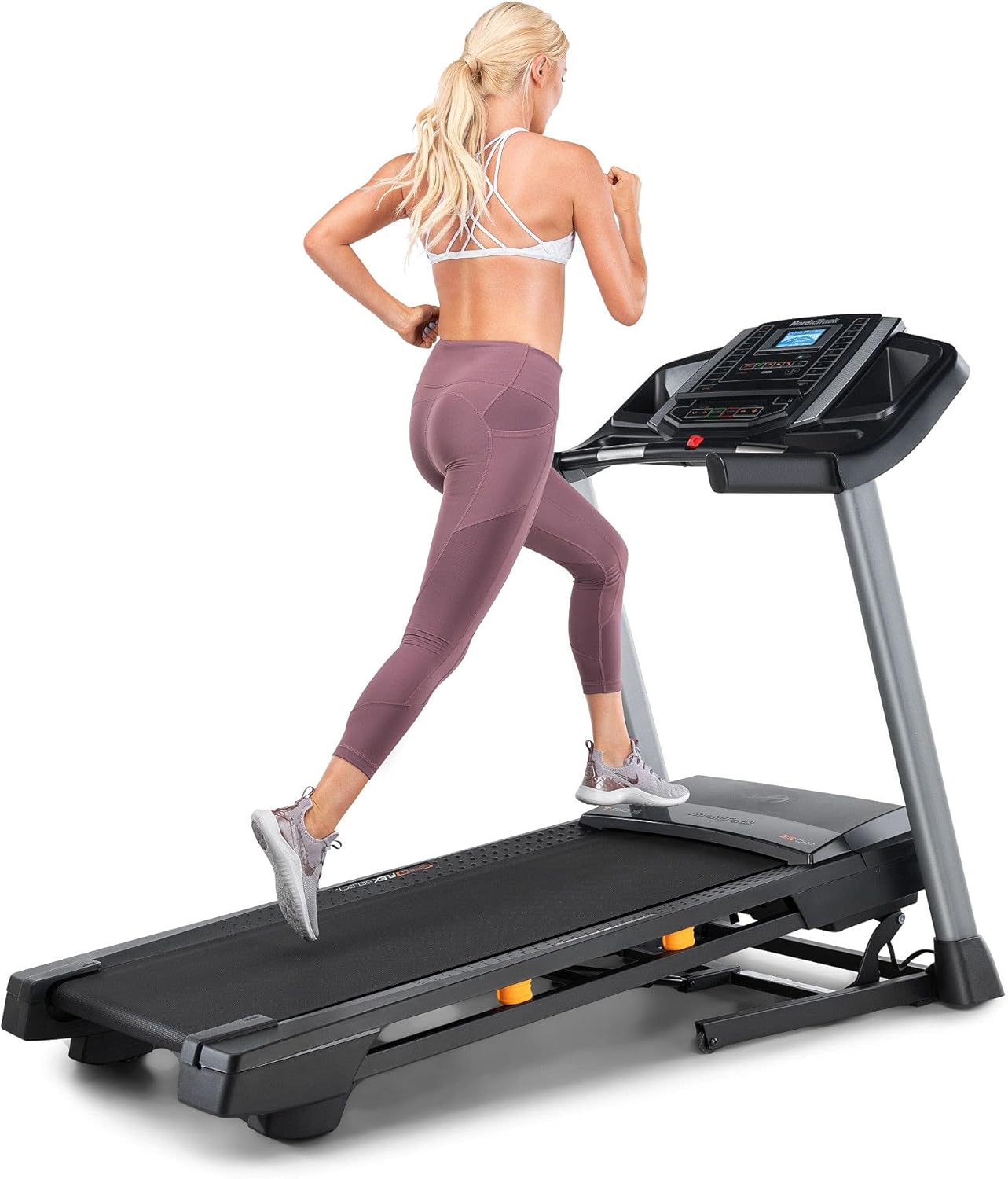


How a treadmill belt moves
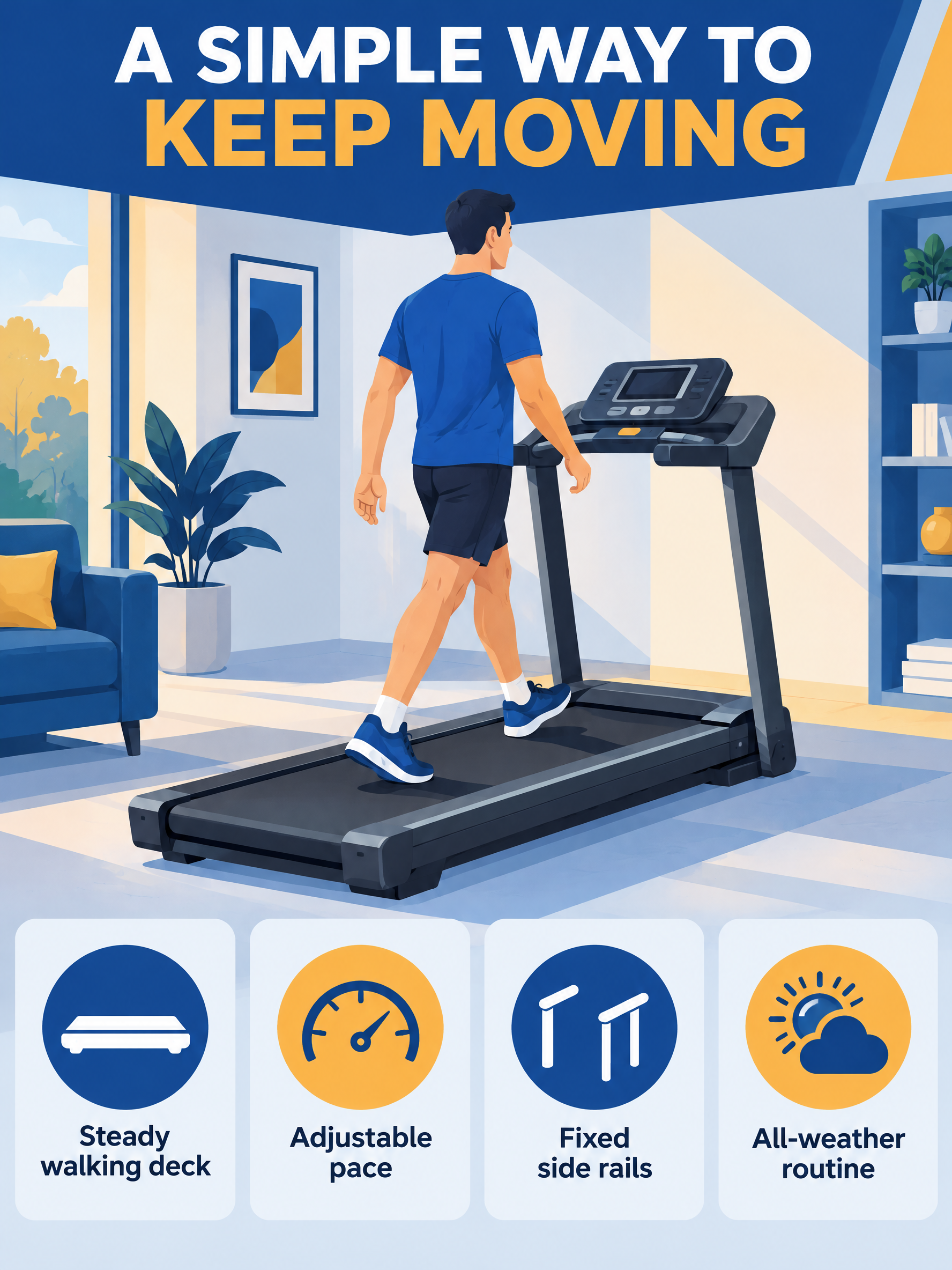
On a motorized treadmill, a motor turns a drive roller, pulling a continuous belt around the rollers at either end. The top of the belt slides over the deck, the firm platform that supports your steps.
You step forward while the belt carries each planted foot backward. When your pace matches the belt speed, you stay in roughly the same spot. Unlike walking outside, where you can slow down without thinking about it, on a treadmill you use the controls to slow the belt.
Feel the difference between speed and incline
See the movement
Follow the continuous moving belt and alternating walking stride.
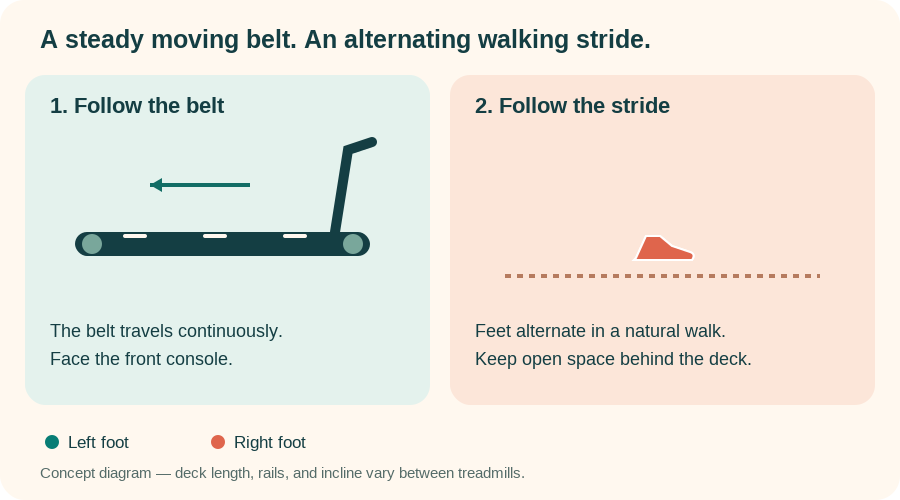
Simplified motion diagram. Deck length, rails, and incline vary by treadmill.
- Start flat
Walk at a comfortable speed with the deck level. Give yourself time to settle into a steady stride.
- Change only the slope
Try a small incline increase at the same speed. If incline is manual, stop and step off before adjusting it, then resume at the original speed.
- Change only the speed
Return to flat and try a small speed increase. Notice how keeping up with a faster belt differs from walking uphill.
What speed and incline actually change
Speed sets how fast the belt moves. Turn it up and you have to move faster to stay in place. A pace that feels like a brisk walk to one person may feel like a jog to another; there’s no single speed at which everyone should start running.
Incline tilts the deck uphill. A 6% grade means six units of vertical rise for every 100 units of horizontal distance, not an angle of six degrees. Even if the belt speed stays the same, walking uphill generally feels more demanding than walking on a flat deck.
With manual incline, you stop and get off to change the deck position as directed in the manual. The Superun under-desk walking pad lists a manual incline of up to 6%. With powered incline, you can change the grade from the controls during a session. The NordicTrack T Series T 6.5 S, for example, lists console controls for grades from 0% to 10%.
Choose your next step
Which model fits your needs?
See the differences, tradeoffs and who each model suits.
Compare the products →Walking pads, flat-folding treadmills, and running treadmills
These labels overlap. An under-desk walking pad is designed around where you’ll walk. A running treadmill is designed around how you’ll move. Folding tells you how the machine stores, not whether it’s meant for running.
- Under-desk walking pads prioritize a compact footprint and may use a remote instead of an upright console. The Superun example includes a remote and lists a 35.4-inch deck and a 3.8 mph top speed. A short deck takes up less room but gives you less space to lengthen your stride or drift backward.
- Flat-folding treadmills can have an upright setup in use and a low profile in storage. Sunny Health & Fitness lists its SF-T723030 at 11.4 inches high and 63.8 inches long when folded. Both measurements matter: a machine can clear the bottom of a bed and still be too long for the available space.
- Running treadmills typically give you a longer surface for a running stride and upright controls you can reach while moving. Horizon Fitness lists a 60-inch deck on its 7.0 AT, names running as an intended use, and provides folded dimensions. A top-speed figure alone won’t tell you whether you’ll have enough stride room at your pace.
Rehearse a workout with a folding treadmill
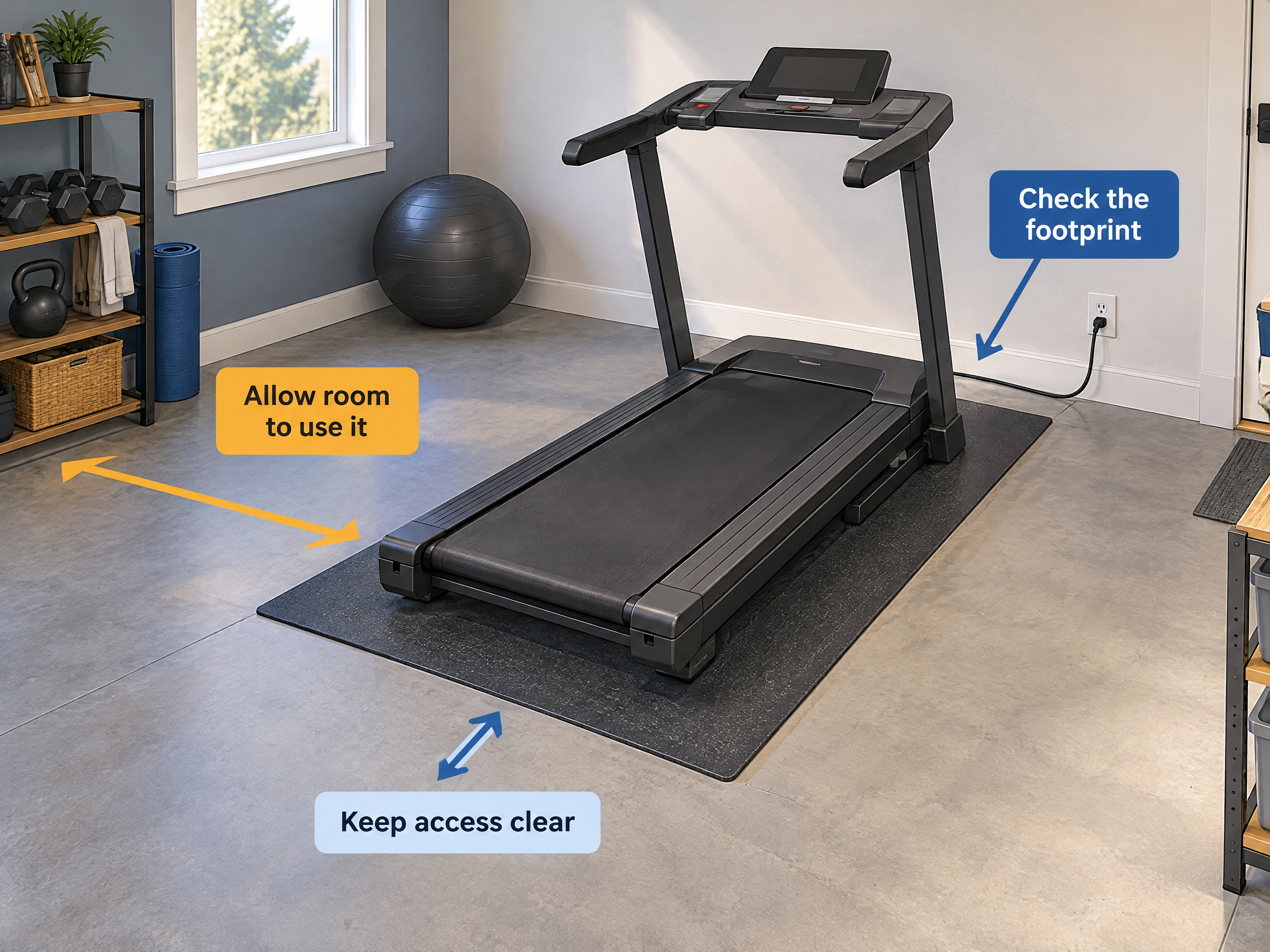
- Mark both spots
Use tape to outline where the folded machine would sit and where you’d set it up for a walk.
- Walk the storage route
Look for tight turns, rugs, and thresholds. Check the model’s weight and how the transport wheels are meant to be used.
- Count the setup chores
If you’d have to move a chair, unfold the deck, and route the cord every time, decide whether you’d still set it up for a short walk.
What’s easier to plan indoors
A treadmill lets you walk when the sidewalk is icy or your only free time is after dark. It also lets you repeat a chosen speed and grade without finding the same hill or breaking your pace at crossings.
If you’d rather follow a workout than watch the clock, some models offer guided sessions. The ProForm Carbon TL listing describes pairing a phone or tablet for iFIT workouts that can adjust settings for you. That’s a convenience, not a promise of a particular fitness result.
Try the motion before making room for one
Try a treadmill at a gym, community center, or showroom. Start with a slow walk and notice whether you like matching a moving belt or prefer setting your own pace on the ground. If you expect to run at home, try a running model at a comfortable pace rather than judging it by a walk on a compact pad.
If you already have a route you enjoy and rarely miss it, keep the floor space. An indoor track lets you set your own pace on bad-weather days; a gym treadmill gives you the belt and controls without the upkeep. If you mainly want to move at a desk but find walking distracting, a seated pedal exerciser is another option, though it won’t feel like walking.
What owning a treadmill involves
Plan for the machine in use, not just folded. Allow the clearances specified in the manual, check headroom with the deck raised, and locate a suitable outlet for a corded model. Measure the delivery route too: a room can be big enough even if the stairs or doorway are awkward.
Expect some motor and footfall noise. Keep children and pets away from the moving belt, and secure the machine when it’s not in use as directed in the manual. Keep the belt area clean and follow the model’s instructions for alignment and lubrication rather than assuming every belt needs the same care.
Questions before you commit
Can I use a treadmill without Wi-Fi or a subscription?
It depends on the model, so check both first-time setup and everyday use. The ProForm Carbon TL listing describes direct speed and incline controls and a display that shows live stats without your phone or tablet. It lists Bluetooth pairing separately for guided iFIT sessions, but that alone doesn’t confirm that setup and basic workouts are fully offline.
Do I need to hold the handrails the whole time?
No, not if you can walk comfortably and steadily without them. Follow the manual for starting and stopping, and attach the safety clip as directed if the machine has one. If you need to grip the rails just to keep up, slow down.
Will a mat make a treadmill quiet enough for an upstairs apartment?
Don’t count on a mat to keep it quiet downstairs. A suitable mat can protect the floor, but footfalls and vibration can still travel through the building. Check your building rules and consider when you’d be using it.
Can I plug a treadmill into an extension cord?
Don’t assume an extension cord or power strip is allowed. Check the exact model’s manual for outlet and circuit requirements. If the supplied cord won’t reach a suitable outlet, reconsider the location before delivery.
Choose your next step
Put your shortlist side by side
See the differences, tradeoffs and who each model suits.
Compare the products →Your next step
- Name the problem an indoor treadmill would solve and how often it comes up.
- Check the exact model’s belt length and width, speed range, and stop controls.
- Measure the operating space, storage space, and delivery route.
- Read the manual for power, clearance, and upkeep requirements.
Before you commit, pick one real slot in your week when you’d use it. A dark Tuesday morning you regularly skip is a better reason to make room than a workout schedule you’ve never followed.