Review101
What Are Suspension Training Straps? A Beginner’s Guide
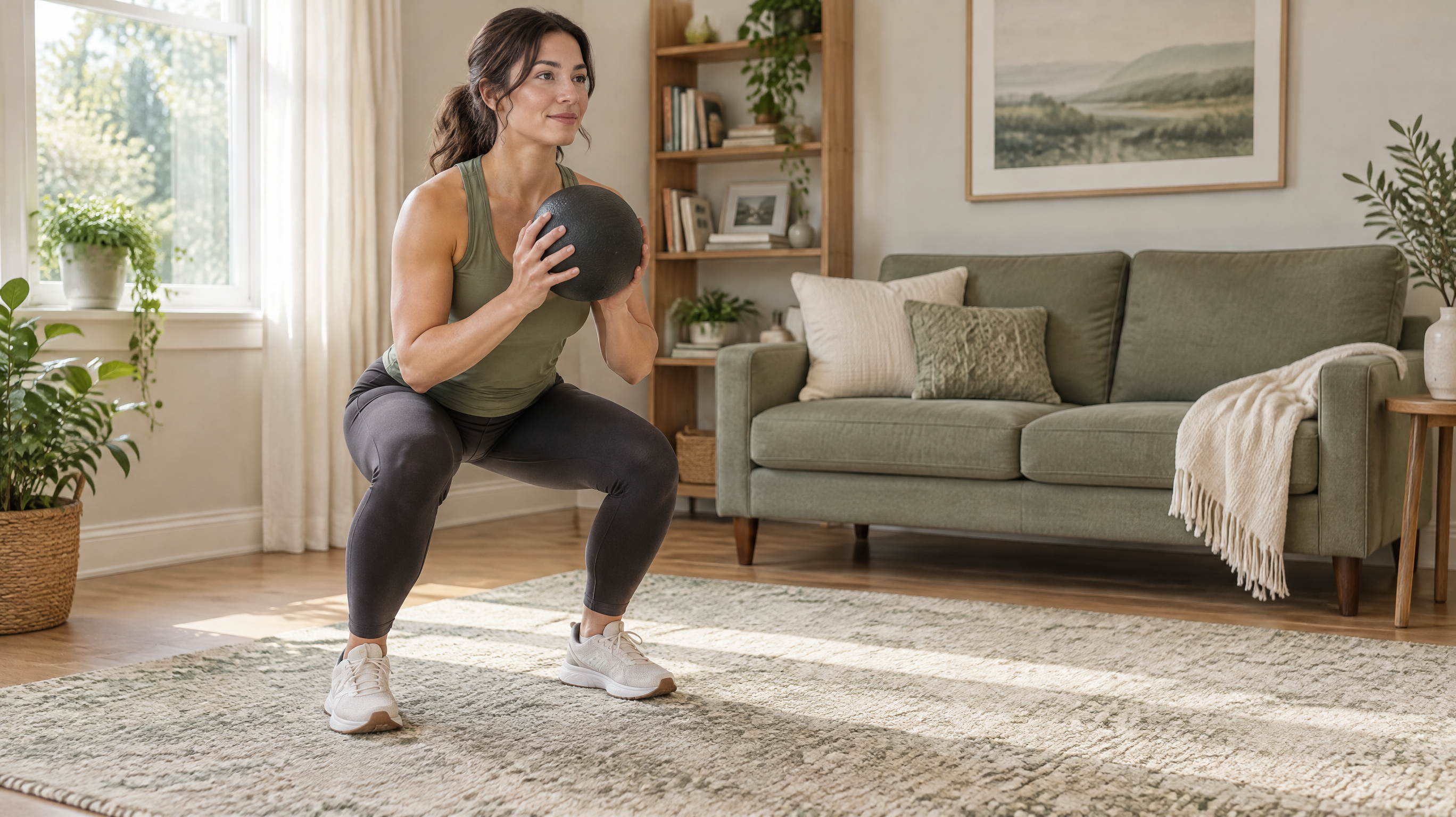
Picture leaning back with your feet on the floor and a handle in each hand. The straps catch your weight, and pulling on the handles brings your chest forward. In a squat, those same straps can make it easier to stand back up.
Read the article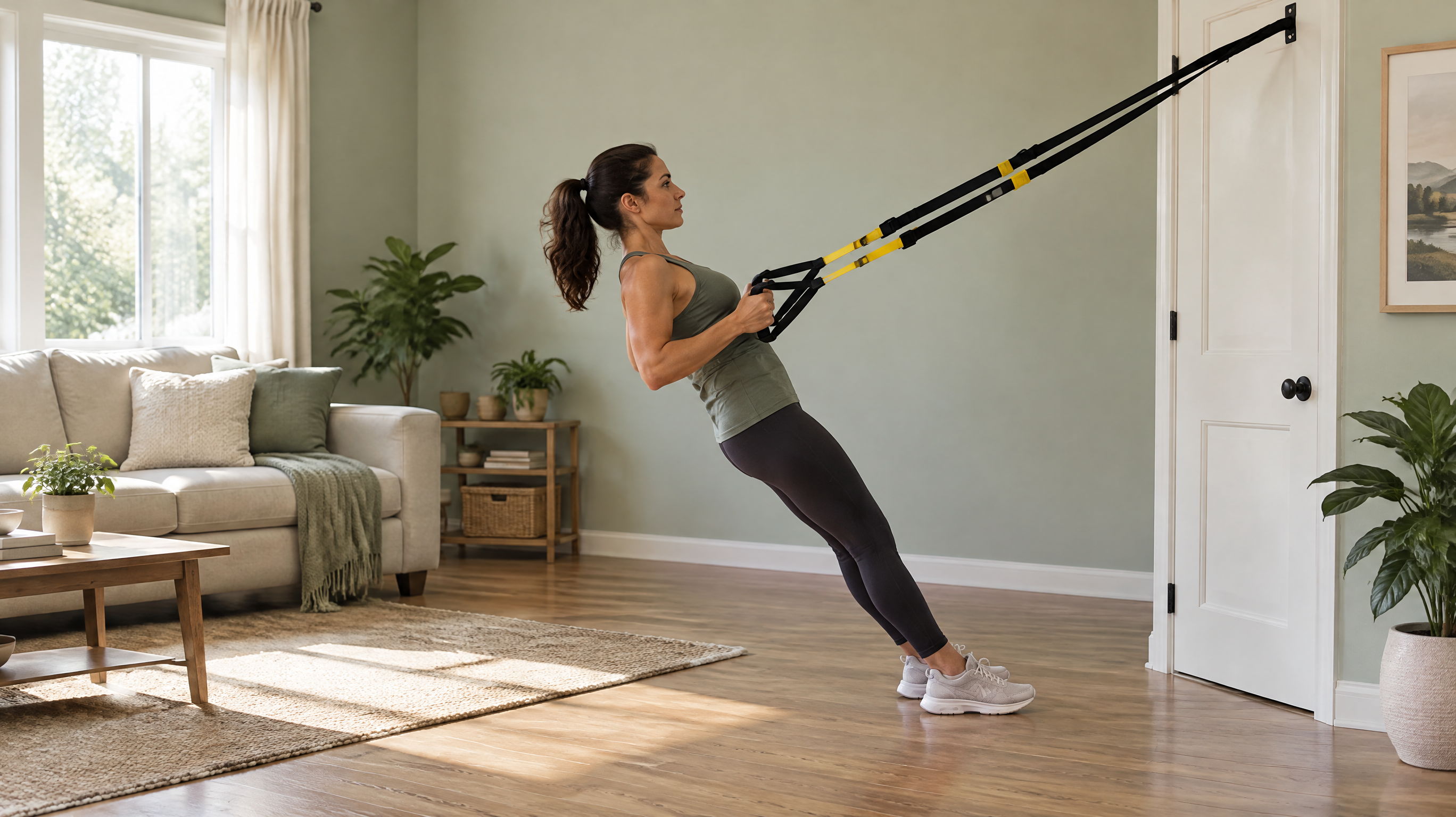
Some links may earn us a commission, at no extra cost to you. How we’re supported
In this article 7 sections
Start with your needs
You want body-weight rows or supported movements and have a suitable place to use the trainer.
You’re interested but don’t know whether you’ll enjoy moving against hanging straps.
You don’t have a suitable anchor, or your current equipment already does the job.
As an Amazon Associate, we earn from qualifying purchases. Research-based analysis; no hands-on testing.
The short answer
You don’t need suspension straps to train with your body weight. They’re useful if you want to add rows to a floor-based routine or use one kit for both supported and feet-suspended movements. If you can’t confirm a suitable anchor or clear enough room to move, skip them for now.
Worth considering if
- People who want to add a pulling movement to a routine built around floor exercises.
- People who prefer changing body position to swapping weights.
- People who share a workout space but can keep it clear while they exercise.
Hold off if
- You can’t verify that your intended attachment point is suitable.
- Furniture or foot traffic would cut into the space you need.
- You prefer fixed equipment or a weight you can record directly.
Choose your next step
Ready to compare?
See the differences, tradeoffs and who each model suits.
Compare the products →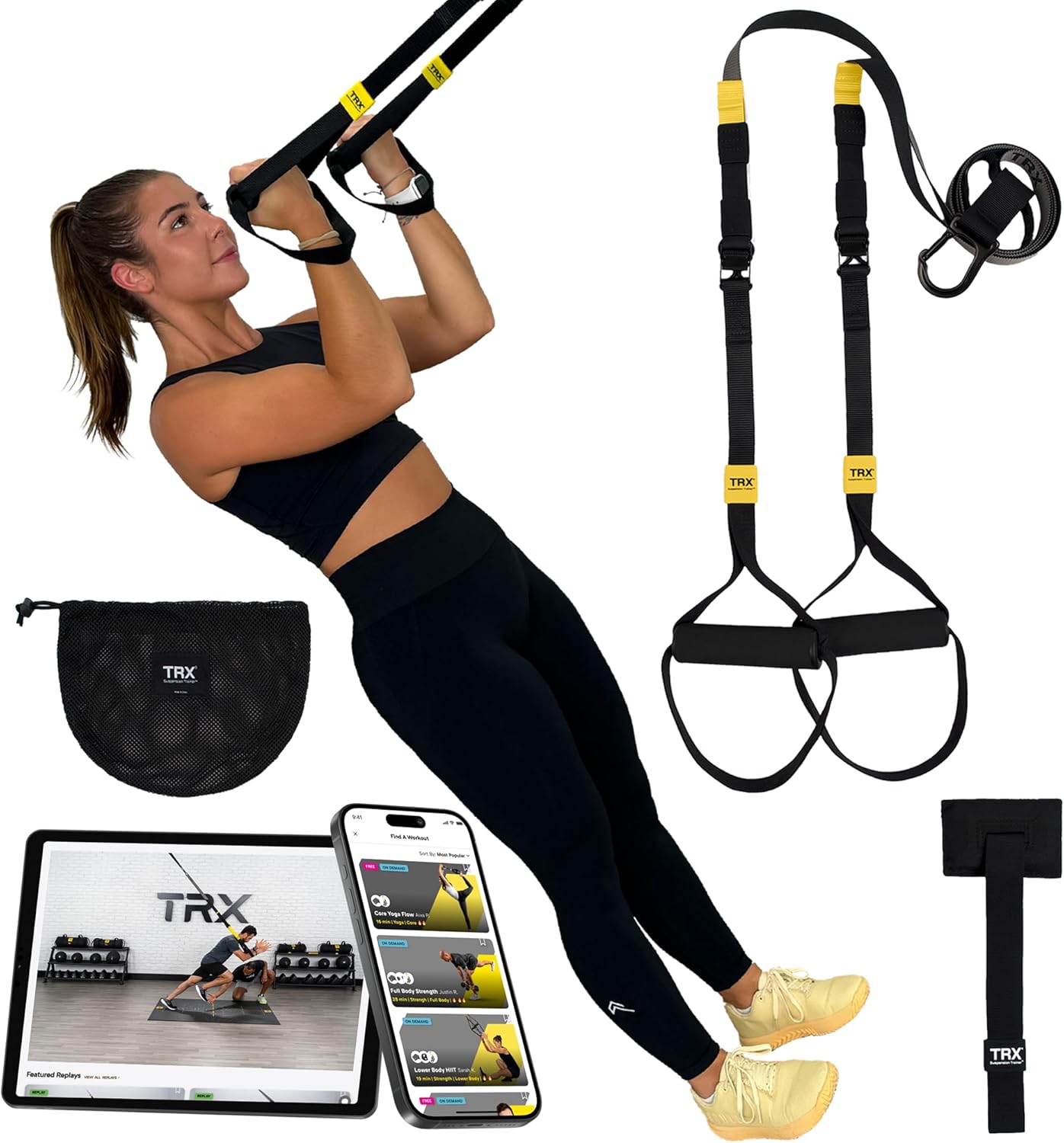
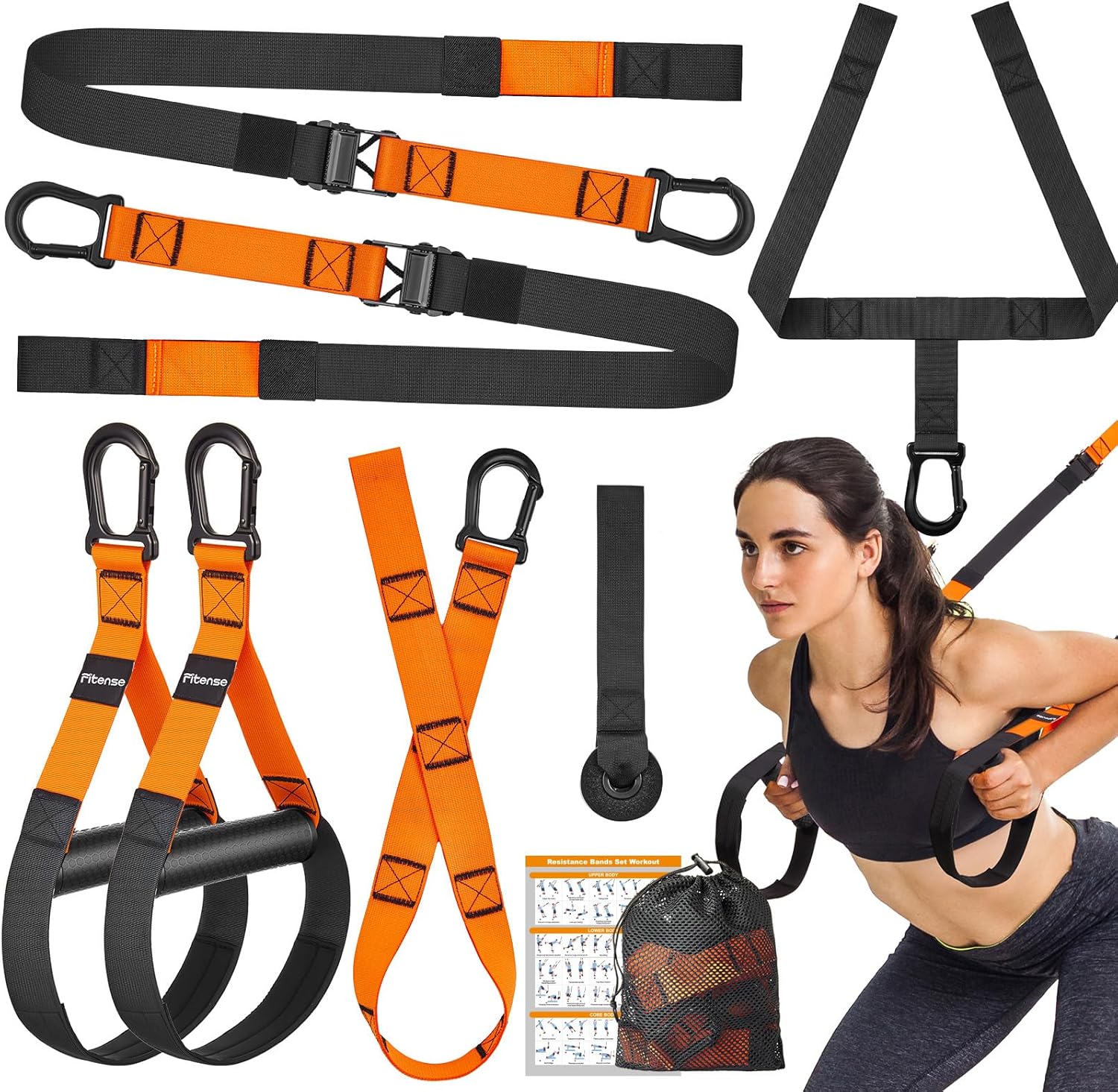

What a suspension training strap system is
A suspension trainer connects your hands or feet to a fixed attachment point. The anchor transfers the pull to a supporting structure, and the adjustable straps let you change where the handles hang. Some systems also have foot cradles: loops that support your feet off the floor. These can be built into the handles.
Think seat belt, not rubber band. Suspension webbing transmits a pull without stretching much. An elastic resistance band pushes back harder as it stretches; suspension straps get their resistance from your body weight and how you position yourself against gravity.
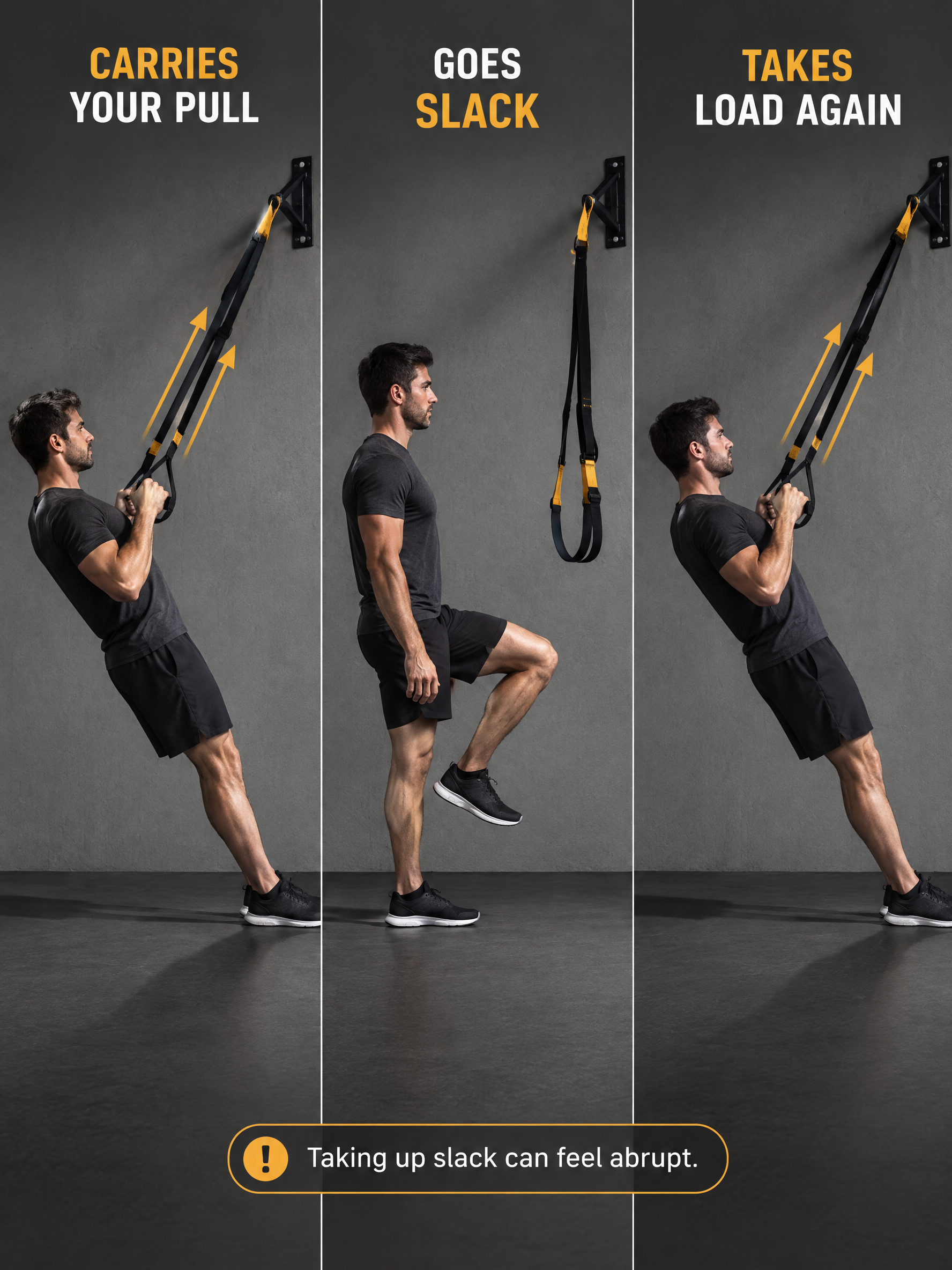
What happens when a strap goes slack?
See the movement
Use a locked side-view loop with a slow, hand-only demonstration: pull the webbing straight, move the handle toward the anchor until it droops, then draw it straight again. Show a force arrow only while the strap carries load.
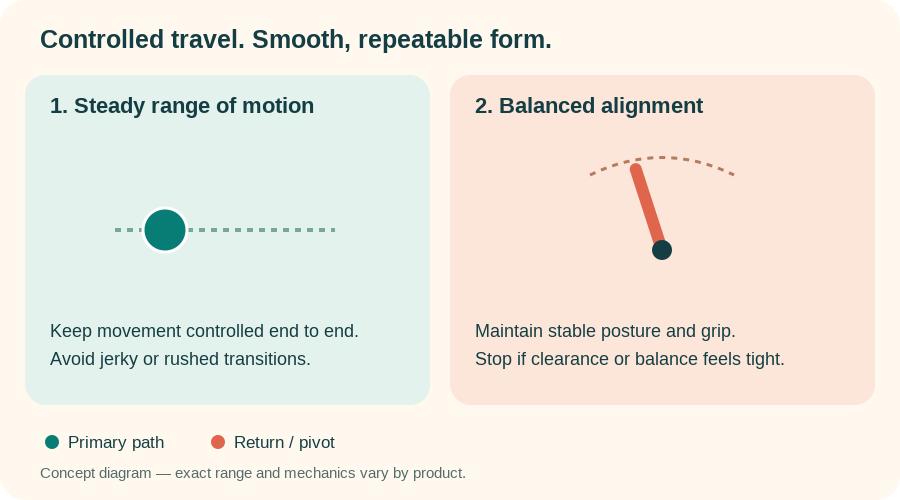
Simplified motion diagram. Exact range and mechanics vary by product.
- Under tension
The straight webbing carries your pull to the anchor.
- Slack develops
As the webbing droops, the strap stops carrying that pull. It can’t push back or support you while it’s loose.
- Tension returns
Once the slack is gone, the strap takes load again. That transition can feel abrupt compared with a steady pull.
Where the resistance comes from
In a standing row, your feet stay on the floor while you lean back with your arms extended. The floor supports you through your feet, while the straps and anchor take part of the load. When you bend your elbows, your torso moves toward the handles. You’re moving your body, not reeling in the straps.
A more upright row usually feels lighter. Start closer to horizontal and you’ll generally feel your arms and back working harder to pull you up. The TRX GO listing, for example, describes a manual trainer and puts “1” in its resistance-level field. That number doesn’t mean every position feels equally hard.
Choose your next step
Which model fits your needs?
See the differences, tradeoffs and who each model suits.
Compare the products →What changes when you use the handles or foot cradles?
The handles you pull against in a row can give you support in a squat. In a strap-assisted squat, your feet stay planted as you lower and stand again. The handles give you something to steady yourself against, and if you pull as you stand, your arms can help your legs.
A feet-in-cradles plank feels different again. Your hands or forearms are on the floor, and the loops support your feet. Instead of pulling yourself toward the anchor, you’re trying to hold still while your feet rest in loops that can sway.
Would straps earn a place in your routine?
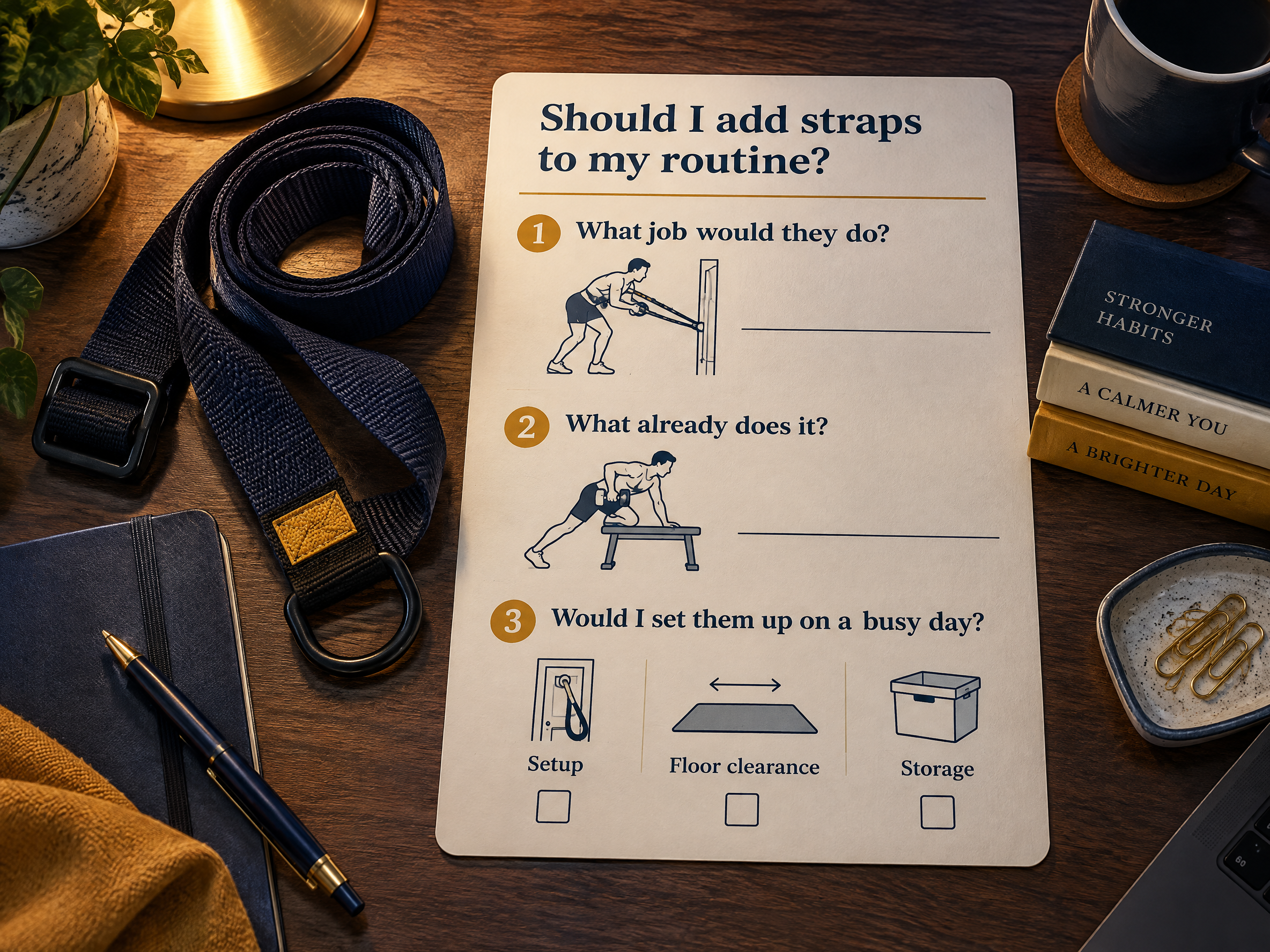
- Pick one job
Name a movement you’d actually add or change, rather than counting how many exercises the kit offers.
- Compare what you have
See whether an exercise or piece of equipment you already use does that job with less hassle.
- Picture a busy day
Think through getting the straps out, using the space and putting them away. Would you still do it when you’re short on time?
Shared anchors, split anchors and doorway kits
Strap layout tells you how the two sides hang. In a shared-anchor design, both sides hang from one attachment point. In a split-anchor design, each side can hang from its own point, so the straps can sit farther apart. The Lifeline Jungle Gym XT listing illustrates why it’s worth checking the exact bundle: it names the item “Jungle Gym XT Extension” but lists the contents only as “Suspension Training Kit,” which doesn’t confirm a complete split-anchor setup.
Attachment style is a separate question. A built-in door anchor is part of the trainer; a separate door anchor is an accessory. The Fitense kit lists both a door anchor and an outdoor anchor. The FITKIT FT06 listing highlights adjustable cam buckles but doesn’t specify the door-anchor arrangement. A buckle tells you how strap length changes, not what the trainer attaches to.
What owning suspension straps involves
One kit can cover several kinds of movement, and you can often change the difficulty without swapping weights. Some kits come with a storage bag, but a kit that’s easy to put away doesn’t necessarily fit your workout space. You still need a suitable attachment point and enough clear floor to lean back or stretch out. If the only candidate is a busy doorway, think about who needs to pass through it when you’d normally exercise.
If you mainly want a pulling exercise, a dumbbell row doesn’t need a strap anchor. If you like the feeling of tension building through a pull, try an elastic resistance band. And if your routine already gives you what you want from ordinary squats and floor planks, you don’t need straps to do either.
Questions before you commit
Do I need to be able to do a pull-up first?
No. A standing row keeps your feet on the floor, so your arms don’t have to support your full body weight. You can start with a more upright position rather than trying to hang from the handles.
Does the trainer’s weight rating tell me what my door can hold?
No. The trainer’s rating doesn’t establish what your door, frame or other supporting structure can handle. Check the manufacturer’s requirements for the attachment you intend to use, and don’t use it if you can’t confirm the structure is suitable.
Do I need an app or a subscription?
No, not to exercise with a manual trainer. An app can provide a timer or guided workouts, but it isn’t what creates the resistance.
Can two people of different heights share one set?
Yes, if the adjustment range works for both people and both meet the trainer’s stated user limits. Expect to change the strap length or starting position rather than leaving it at one person’s setting.
Choose your next step
Put your shortlist side by side
See the differences, tradeoffs and who each model suits.
Compare the products →Your next step
- Confirm the manufacturer allows the attachment you intend to use and that the supporting structure meets its requirements.
- Check that the exact kit includes the anchor and any foot cradles you expect.
- Look over the webbing, stitching and hardware before use.
If you’re curious but unsure about the feel, try a trainer that’s already set up at a gym or in a class. A few supported rows can tell you more than a spec sheet about whether you like leaning into the straps.