Review101
Do You Need a Home Treadmill? Weigh the Space, Cost, and Alternatives
Start with the walks or runs you keep missing. If having a treadmill at home would help you do them, check whether the belt, the room, and the full cost fit that routine.
Read the article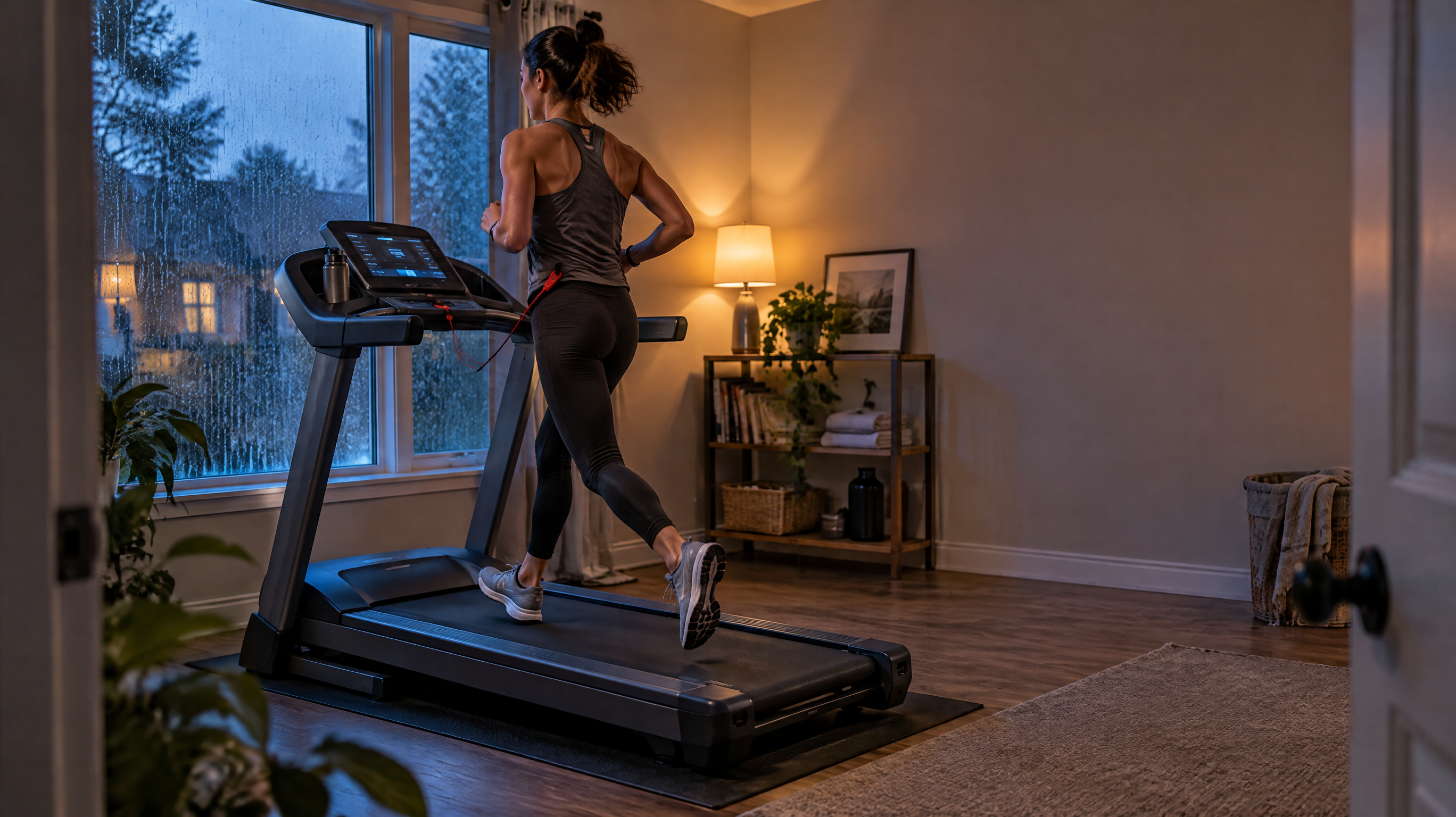
Some links may earn us a commission, at no extra cost to you. How we’re supported
In this article 7 sections
Start with your needs
Look here if slow desk walking is the main goal and the pad won’t block your workspace.
Look here if you have planned indoor walks or runs and a safe spot where the machine can stay ready to use.
Use a gym day pass to try the belt, or an indoor track if all you need is a place to walk out of the weather.
As an Amazon Associate, we earn from qualifying purchases. Research-based analysis; no hands-on testing.
The short answer
Buy if indoor access would remove a recurring barrier and you have a safe setup you’ll actually use. If you’re not sure you like treadmill workouts or can make time for them, try a few sessions before spending money on a machine.
Worth considering if
- Walkers who regularly lose outdoor sessions to weather or darkness.
- Runners with planned pace or incline sessions who need a reliable indoor option.
- Desk workers who already know which tasks they can do comfortably while walking slowly.
Hold off if
- Your only available spot can’t meet the manufacturer’s clearance or power requirements.
- You haven’t resolved floor vibration, household noise, or building restrictions.
- The seller won’t clarify opened-item returns or the cost of pickup.
- You’re counting on the purchase to create a routine you haven’t tried.
Choose your next step
Ready to compare?
See the differences, tradeoffs and who each model suits.
Compare the products →


What problem would a treadmill solve for you?
Think about the last few walks or runs you meant to take but skipped. If darkness, bad weather, or the trip to the gym got in the way, home access could help. If the problem was finding a free half hour, a treadmill won’t put one on the calendar.
Decide what you want the machine to do most often. Desk walking means going slowly enough to work comfortably. A scheduled indoor walk lets you focus on pace or hills without juggling a keyboard. Regular run training calls for enough belt space for your stride and controls you can reach while moving, especially if you do intervals.
The Superun under-desk walking pad lists a top speed of 3.8 mph. The Horizon 7.0 AT lists running and intervals among its intended uses. Those examples point to different jobs: start with the sessions you want to do, not the category name on the listing.
Test whether desk walking fits your work
See the movement
Follow the continuous moving belt and alternating walking stride.
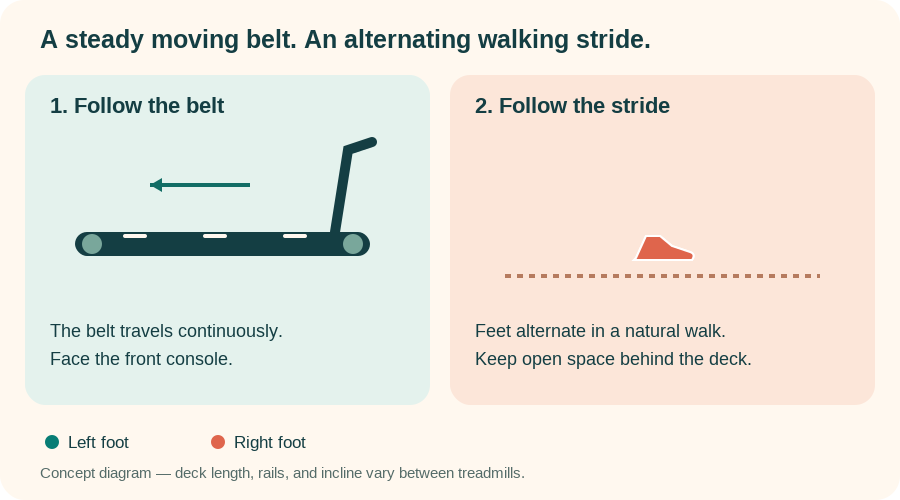
Simplified motion diagram. Deck length, rails, and incline vary by treadmill.
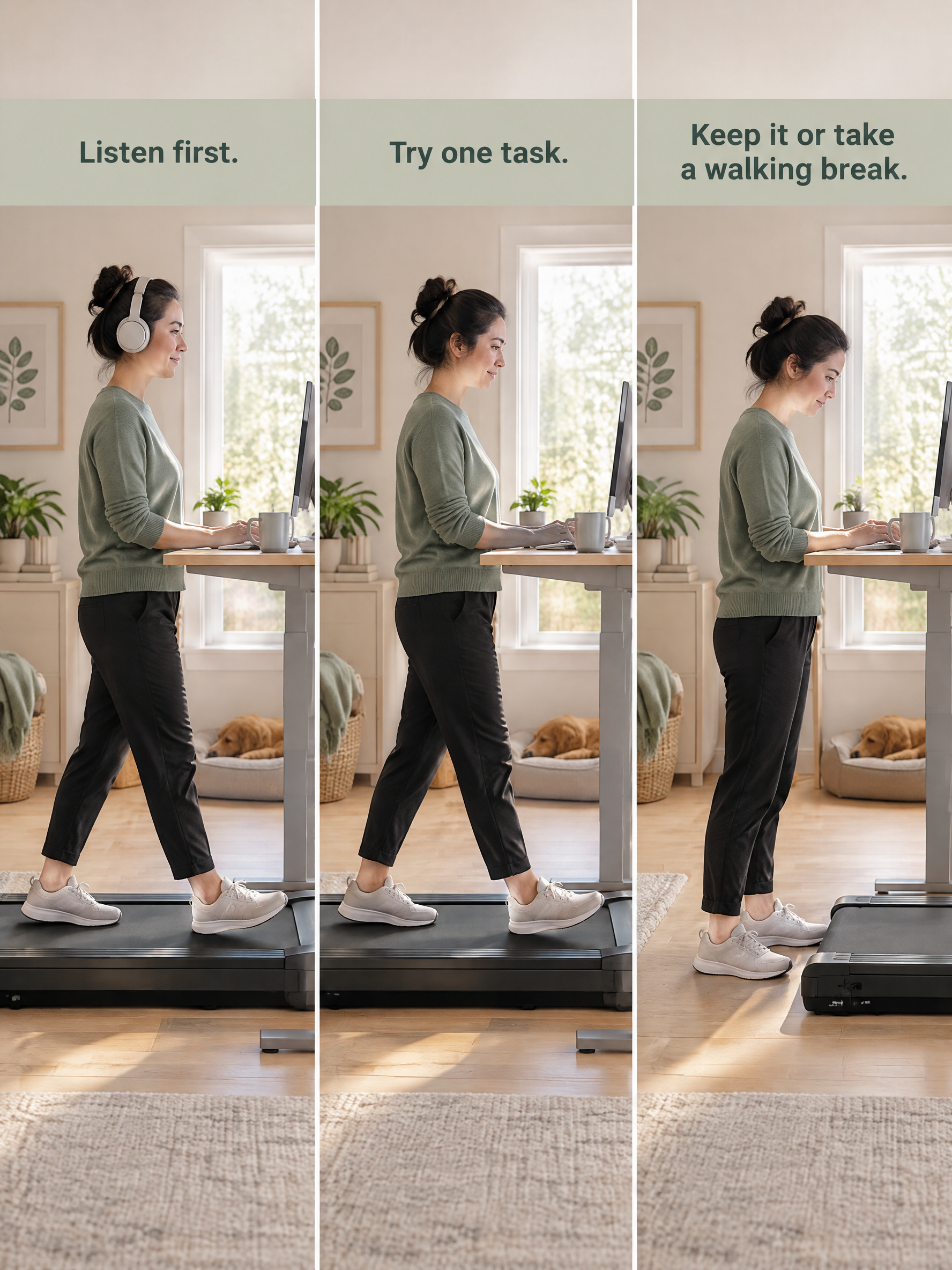
- Start with listening
On a borrowed or demo pad, try listening to a recording at an easy pace before adding reading or typing.
- Notice what interrupts your stride
Add one task you do often. If you keep looking down or changing your stride, that task is better done off the belt.
- Decide where walking belongs
If only a few tasks work well, ask whether those give you enough time on the pad to justify it. A separate walking break may make more sense.
Measure the workout spot and the storage spot separately
Tape out the treadmill’s operating footprint, then add the side and rear clearance required by the exact model’s manual. Check that you can step on and off without hitting furniture. For an incline model, account for the raised deck and the tallest user, especially under beams or ceiling fans. Check the manual’s power requirements and make sure the cord can reach a suitable outlet without crossing a walkway.
Folded dimensions tell you where a machine can go, not how easy it is to get there. The WELLFIT TM037PRO takes up a listed 50.4 by 18.5 inches of floor space, folds to 5.5 inches high, and weighs 57 pounds. The Horizon 7.0 AT goes from a listed 76 by 35 inches on the floor to 44 by 35 inches when folded, but still weighs 257 pounds. A pad that fits under a bed can be awkward to pull across a rug every morning. A folding treadmill can free up floor space without being practical to move between rooms.
Measure the boxed delivery route, too. The workout room may be large enough even if the stairs or the turn at the top aren’t.
Choose your next step
Which model fits your needs?
See the differences, tradeoffs and who each model suits.
Compare the products →What a compact treadmill gives up
On a motorized treadmill, the motor moves the belt at the speed you set. On an incline model, raising the deck lets you walk uphill without increasing that speed. Neither setting tells you whether the belt is long and wide enough for you to move naturally.
The UREVO Smart walking pad listing gives a 36-by-15-inch deck and a 6.2 mph top speed. The Horizon 7.0 AT lists a 60-by-20-inch deck and a 12 mph top speed. The smaller machine might reach your target pace, but that doesn’t mean there’s room for your running stride. If you can try a machine, see whether you can look ahead and move naturally at the pace you plan to use.
Check how you’ll change speed and stop the belt. The UREVO listing advertises app control, while the NordicTrack T 6.5 S listing describes one-touch speed and incline controls on the console. For intervals, what matters is whether you can make an adjustment without fumbling for a phone or remote. Treat the listed user-weight limit as a requirement, not proof of stability. Neither that limit nor advertised horsepower tells you how much vibration will carry through your floor or how the machine will hold up.
Rehearse putting a folding treadmill away
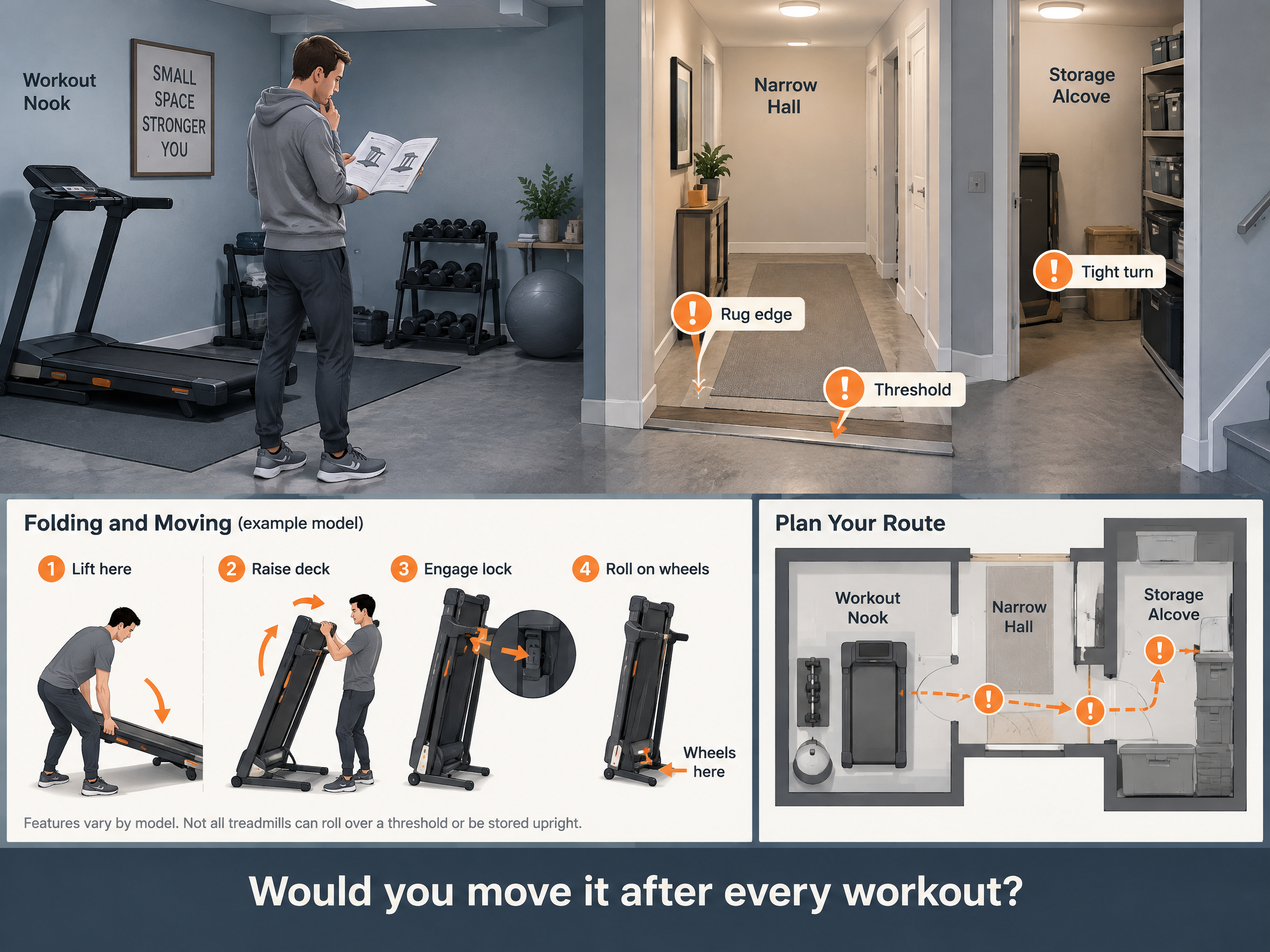
- Check the folding motion
Use the manual or a demo to see where you stand and what you have to lift or lower.
- Walk the storage route
Check the turns between the workout spot and the storage spot. Look for rug edges or thresholds the transport wheels would have to cross.
- Decide how often you’d move it
If it would be a chore to move after every workout, look for a setup that can stay in place or a machine you can store more easily.
Budget for delivery, upkeep, and a possible return
Ask where delivery ends: at the curb, at your door, or in the workout room. Find out whether assembly is included or costs extra. Once the treadmill is set up, follow the model’s manual for cleaning, belt adjustments, and lubrication if required.
The NordicTrack T 6.5 S and ProForm Carbon TL listings both advertise 30 days of iFIT access. Before activating the offer, check whether it renews automatically, what it costs to renew, and how to cancel. If you don’t plan to pay for a membership, confirm that the controls and workout stats you care about will still work.
Read the warranty and the return policy separately. Both listings describe different coverage periods for the frame and labor. That doesn’t tell you whether the seller will take back an opened, assembled machine that feels cramped or shakes the floor. Ask who arranges pickup, who pays return freight, and whether you need to keep the carton.
When access makes more sense than ownership
A convenient outdoor loop may be enough if you mainly need a route that starts at your door. An indoor track takes weather out of the equation without taking up space at home. A gym gives you access to a treadmill without the setup or maintenance, as long as its hours and commute don’t recreate the problem you’re trying to solve.
A gym day pass is a low-commitment way to find out whether you like walking or running on a belt. Try going at the time you’d normally work out. Enjoying a treadmill on a free Saturday isn’t the same as wanting to use one before work.
Hold off if you can’t meet the setup requirements, haven’t resolved concerns about noise or floor vibration, or would face a return bill you can’t comfortably absorb.
Questions before you commit
Can I put a treadmill on carpet?
Yes, if the manufacturer allows it and the machine can sit level without blocking ventilation. Thick carpet can make transport wheels harder to roll. If you want to use a mat, check what the manual recommends for your floor.
Will a treadmill mat stop my downstairs neighbor from hearing it?
Don’t count on a mat to stop footfall vibration. It can protect the floor, but what someone hears downstairs also depends on the building and how you use the machine. A quiet-motor claim doesn’t tell you how much of your footfall will carry.
Do I need incline for ordinary indoor walking?
No. If you want to replace flat outdoor walks, prioritize a belt that fits your stride and controls you can reach easily. If you do want hill sessions, check whether you can change the incline from the controls or need to stop and adjust it by hand.
What if children or pets share the workout room?
Use the treadmill only when children and pets can be kept out of the workout area. Afterward, follow the manual’s shutdown and storage instructions and remove the safety key if the machine has one. A folded deck does not make the machine childproof.
Choose your next step
Put your shortlist side by side
See the differences, tradeoffs and who each model suits.
Compare the products →Your next step
- Name the sessions you’d do and what keeps you from doing them now.
- Verify the exact model’s belt dimensions, speed range, and stop controls.
- Measure the workout area, storage spot, and boxed delivery route.
- Price delivery, assembly, any membership you want, and a possible return.
- Check the manual’s clearance, power, and upkeep requirements.
When you start comparing models, rule out anything that fails your room, stride, or budget requirements before paying for extras.