 Review101
How to Use a Vibration Plate: Setup, Form, Routine, and Care
Before you step on, match the manual to your machine and find a Stop control you can reach without bending. Then try a short, low-setting session to see whether the motion fits your workout.
Read the article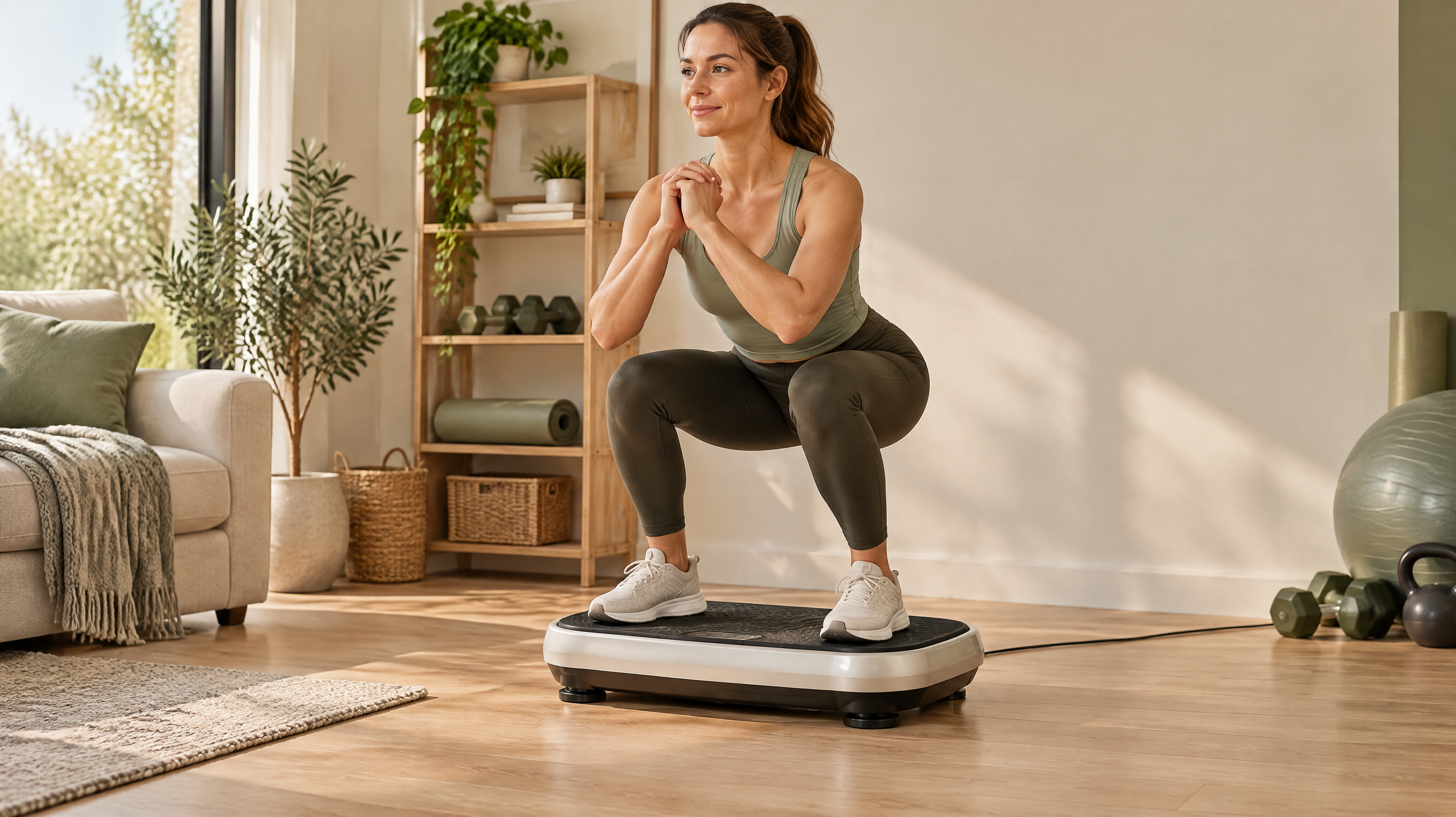
Some links may earn us a commission, at no extra cost to you. How we’re supported
In this article 8 sections
- What a vibration plate adds to a home workout
- Unbox the plate and match it to the manual
- Learn Start, Stop, and the settings before stepping on
- Get steady before adding movement or bands
- Build a routine around what feels repeatable
- Power down, inspect, and store the plate
- Questions before you commit
- Your next step
Start with your needs
Ask for a low-setting demo. How steady you feel matters more than the number of speeds.
Start with a brief session in an approved stance, with the bands off and Stop within reach.
If floor exercises already meet your goal, keep the space and skip the extra setup.
As an Amazon Associate, we earn from qualifying purchases. Research-based analysis; no hands-on testing.
The short answer
You don’t need a vibration plate to exercise at home. It’s worth considering if you like the feel of a moving platform and can keep your footing on it. If the motion distracts you or makes familiar exercises harder to control, stick with a stable floor.
Worth considering if
- People who enjoy the motion and want to vary exercises they already perform comfortably.
- Owners with a stable place for the plate and room to get on and off without stepping around obstacles.
Hold off if
- You’re unsteady on a stationary surface or would need support the plate isn’t designed to provide.
- A health condition or recent procedure raises questions about whole-body vibration. Read the manual’s warnings and ask a clinician before trying it.
- Your only setup spot would block a walkway or leave a cord across your path.
Choose your next step
Ready to compare?
See the differences, tradeoffs and who each model suits.
Compare the products →


What a vibration plate adds to a home workout
A motor moves the platform beneath you while you hold a stance or perform an exercise the manufacturer approves. You can stand still and still feel the surface move. If you’re deciding whether to buy one, try a brief demo at a low setting if possible. Notice whether you can stand comfortably and focus on your form without having to grab for support.
If you want a simple strength routine, chair sit-to-stands or resistance-band exercises on a stable floor don’t require a moving platform. If you mainly want to move more during the day, a walking break may be easier to fit in. A plate makes the most sense when you already know which part of your workout you’d use it for.
Check whether the plate fits your room
See the movement
Use a locked side view to compare one slow floor rehearsal with one approved repetition at a familiar low setting. Keep both feet and the full plate visible, with bands detached and no added shake effects.
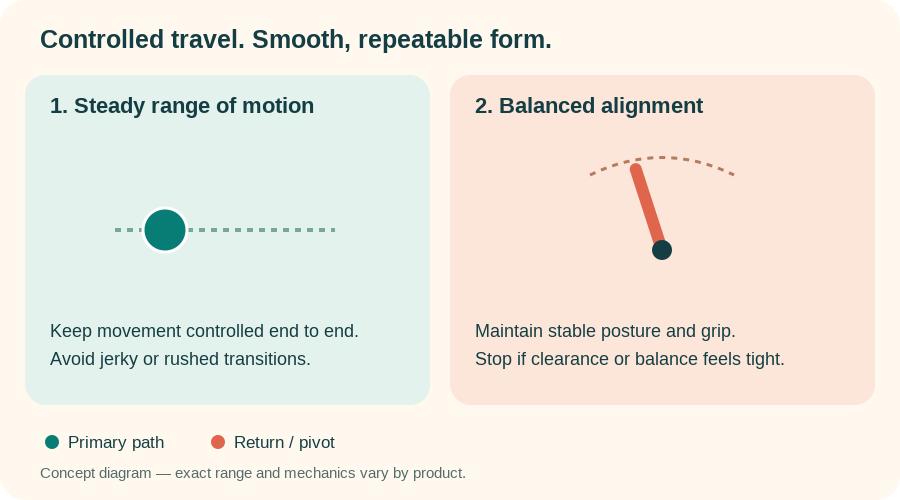
Simplified motion diagram. Exact range and mechanics vary by product.
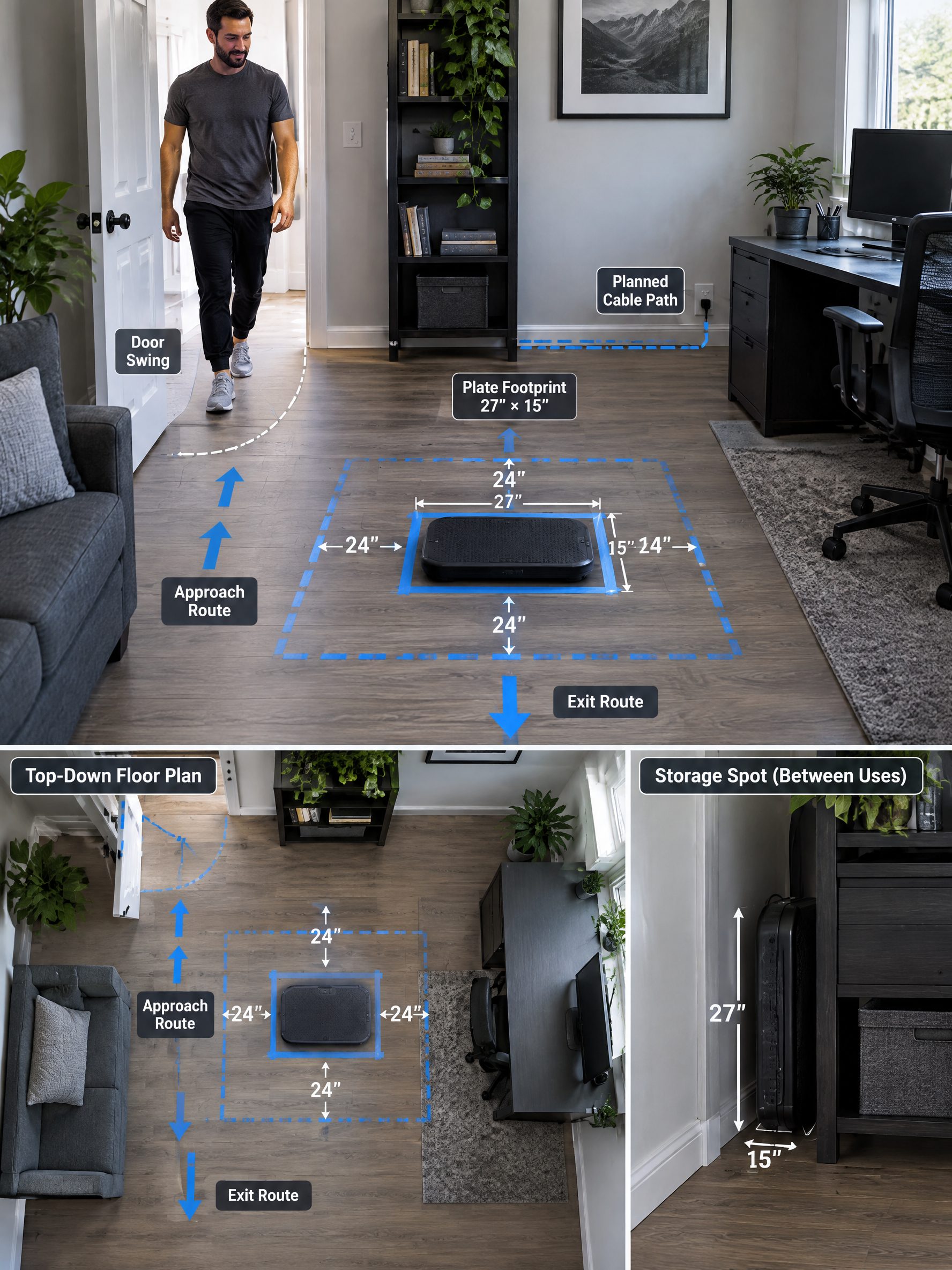
- Mark the footprint
Tape out the machine’s dimensions and the clearance specified in its manual.
- Walk the route
Approach and leave the marked space as if the plate were there. Check where the cable would run and whether doors or drawers open into the space.
- Plan where it goes afterward
Decide whether it can stay put. If you’d need to lift it awkwardly or move furniture every time, find another spot before buying.
Unbox the plate and match it to the manual
Read the model number on the machine’s label before connecting power. The standard black Lifepro Waver, for example, is listed as LP-WVR-BLK and comes with a power cord, remote, mini bands, and resistance bands. Check your own manual’s parts list against the box. If your plate has an upright handle, assemble it as directed and check that it’s secure.
Confirm how the platform gets power and whether the remote needs batteries. The MERACH CV30 listing says “Battery Powered” but also lists an included power cord. Don’t assume it runs cordless. Check the machine’s label and exact manual, and ask the manufacturer if the power requirements are still unclear.
Set the plate on a level, stable surface with the clearance specified in the manual. Keep the cord out of your step-off path. Before the first session, read the safety warnings and check the user weight limit and footwear guidance.
Choose your next step
Which model fits your needs?
See the differences, tradeoffs and who each model suits.
Compare the products →Learn Start, Stop, and the settings before stepping on
Find Start and Stop in the manual, then locate them on the panel or remote. The Lifepro Waver lists a remote and control panel; the MERACH V33 Pro lists remote and touch controls. If the panel is down by your feet, keep the remote within easy reach so you don’t have to bend down on a moving platform.
Both models list manual and automatic modes, but the labels don’t tell you how a preset behaves. Check which settings you can control in manual mode and whether an automatic program changes intensity as it runs. For your first session, choose the lowest suitable setting your manual allows and follow its instructions for when to step on and start the plate.
Decide whether to try an exercise on the plate
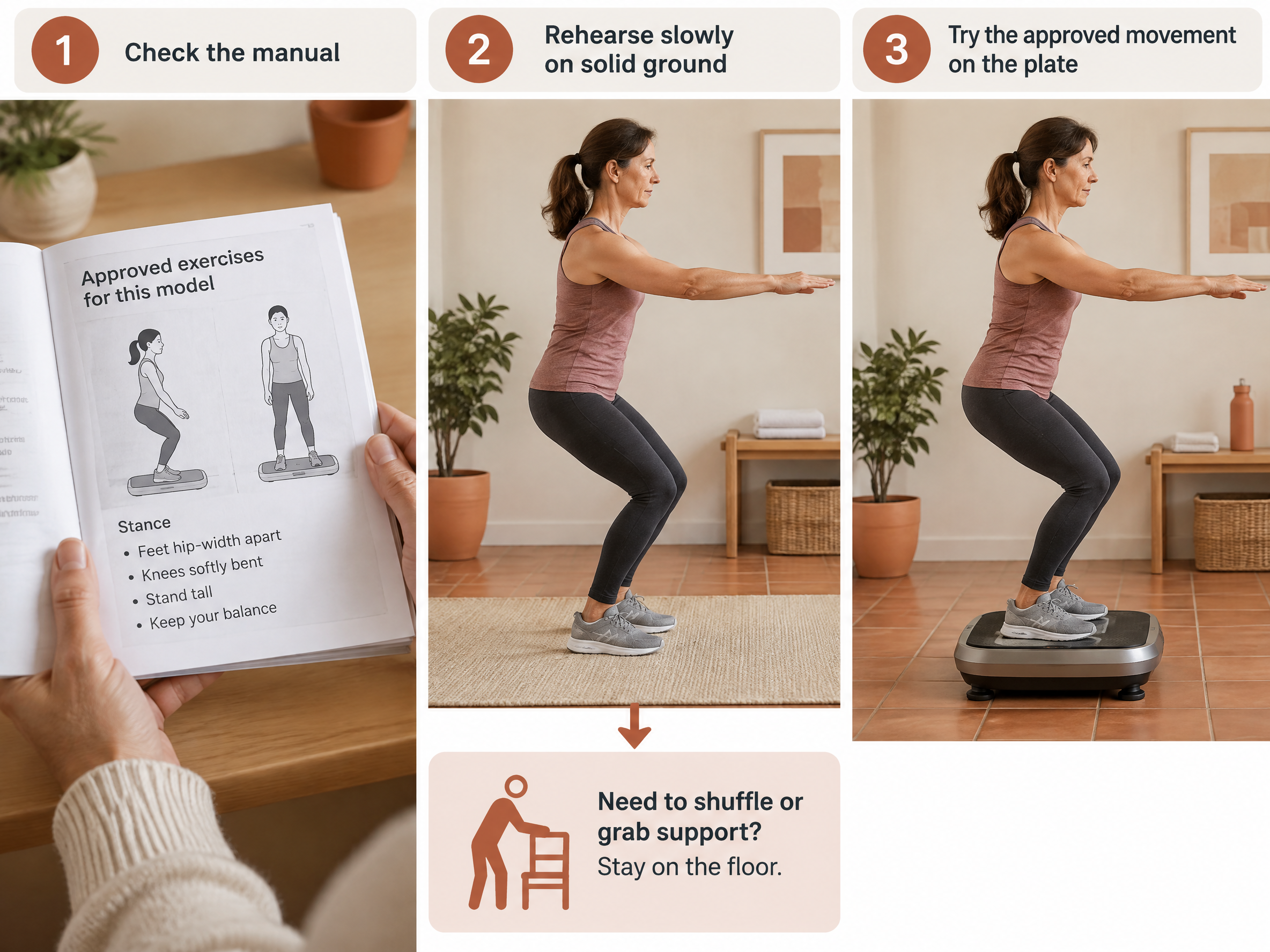
- Look for the exercise
Check that your exact manual approves the movement and shows the stance. If it doesn’t, keep the exercise on the floor.
- Rehearse on solid ground
Do the movement slowly. If you have to shuffle your feet or grab something to finish it, practice on the floor instead.
- Keep the setting familiar
Try the approved movement at the low setting you’ve already used comfortably. Leave the bands off so the movement is the only thing that changes.
Get steady before adding movement or bands
Start in a standing position shown in your manual. Keep both feet evenly in contact with the platform, soften your knees instead of locking them, and let them point in the same direction as your toes. Begin with a still stance so you can get used to the motion before adding an exercise.
An upright handle, like the adjustable one on the handle-equipped MERACH plate, is not the same as the grips on resistance bands, such as those included with the Lifepro Waver Mini. Use a fixed handle only as directed. Don’t rely on flexible bands for balance. If you add bands later, use only the attachment points and movements your manual approves.
If you feel unsteady, dizzy, or in pain, stop the plate and step off carefully once it’s still. You don’t need to finish the preset.
Build a routine around what feels repeatable
Keep your first sessions brief and within the manual’s limits. Try using the plate at a point in your routine that’s easy to remember, such as the start of a home workout. If getting it out and putting it away takes more effort than you expected, a different setup spot may help more than a new program.
Note the mode, setting, session length, and how steady you felt. Once your form is consistent, change only one variable at a time: the setting, the duration, or the exercise. If you start shifting your feet or losing your stance, return to the last setup you could control. There’s no universal session length or weekly schedule, and no need to work through every setting.
Power down, inspect, and store the plate
Switch the plate off and unplug a corded model before cleaning. Follow the manual’s cleaning instructions, keep moisture away from controls and connectors, and let the surface dry before storing it. Choose a dry spot where the cable won’t be pinched under the plate or pulled tight.
Check the cord, bands, and attachment points for wear and look for loose hardware. If the remote stops responding, verify the battery type and orientation before trying a fresh battery. Don’t assume all models take the same type: the Waver lists two AAA batteries, while the VT007 lists one CR2032. If a corded plate won’t power on, switch it off and unplug it before checking accessible cord connections.
Stop using the plate if you find damage, if it rocks on a properly prepared surface, or if it keeps making an unusual noise or moving erratically. Contact manufacturer support with the model number and a description of when the problem occurs. Don’t open the housing to investigate.
Questions before you commit
Can I use a vibration plate in an upstairs apartment?
Possibly, but a quiet motor doesn’t tell you whether the floor below will pick up the vibration. Check building rules and, if permitted, try a brief low-setting session during the day. If you add a mat, use one the manual permits and check that the plate still sits firmly.
Can I use a standing vibration plate while seated at my desk?
Only if your exact manual approves seated use and shows where to put your feet. A standing vibration plate isn’t an under-desk pedal exerciser. If your goal is to pedal while you work, a seated pedal exerciser is the more direct choice.
Is a secondhand plate worth considering if the remote is missing?
Only if you can operate it safely without the remote or the manufacturer can supply a compatible replacement. Even a model with both a panel and a remote, such as the Lifepro Waver, can be awkward to stop if the panel is at your feet. Before paying, confirm the model number and make sure you can reach Stop from your normal stance without losing your balance.
Choose your next step
Put your shortlist side by side
See the differences, tradeoffs and who each model suits.
Compare the products →Your next step
- Match the model label to the manual and check the parts in the box.
- Confirm the power source, remote batteries, and any handle assembly.
- Check floor stability, clearance, and the step-off path.
- Keep Stop within reach and choose a low setting the manual allows.
- Inspect the plate and accessories before use, and store them dry.
Keep the exact manual where you can find it again. Check it before you switch programs, attach bands, or move the plate to a new spot.