 Review101
What Is a Leg Extension and Leg Curl Combo Machine?
One frame lets you train the front and back of your thighs with two different knee movements. The two things to check first are how you’ll position yourself for curls and how you’ll change the weight.
Read the article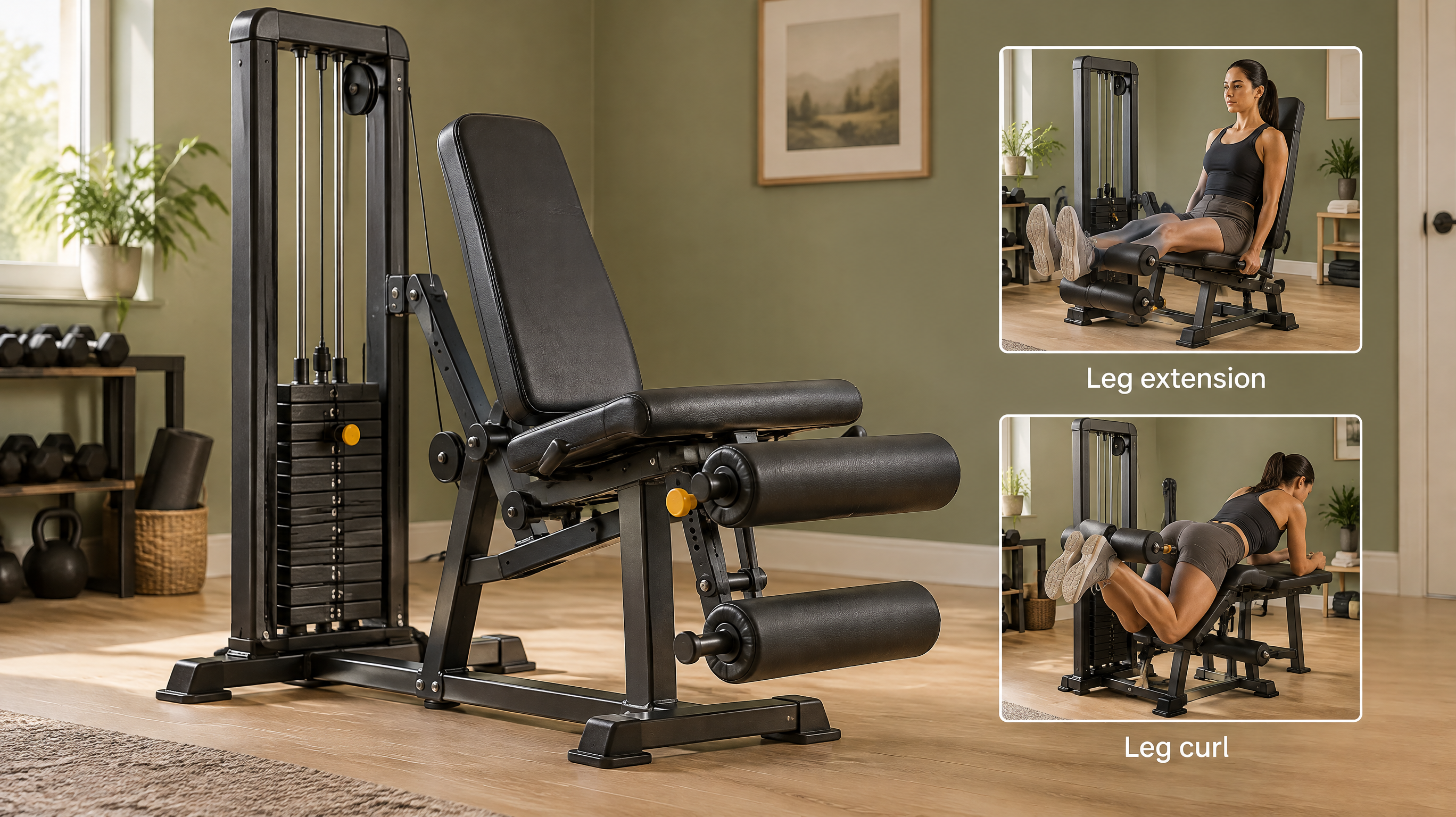
Some links may earn us a commission, at no extra cost to you. How we’re supported
In this article 8 sections
Start with your needs
You regularly do both movements and want them available at home on one frame.
You like extensions but haven’t tried the curl position the machine offers.
You want general leg training, or you only need one movement and can do it with equipment you already use.
As an Amazon Associate, we earn from qualifying purchases. Research-based analysis; no hands-on testing.
The short answer
You don’t need a combo machine to train your thighs. Its main benefit is giving you a dedicated place to do both resisted knee movements without making room for two separate machines.
Worth considering if
- Home lifters who regularly train both knee extension and knee flexion.
- People who want dedicated setups for both exercises but have room for only one frame.
Hold off if
- You can fit the frame but haven’t checked whether you can get on, move the arm, and change the load.
- You can’t verify that both setups fit you or that the starting resistance is manageable.
Choose your next step
Ready to compare?
See the differences, tradeoffs and who each model suits.
Compare the products →


Two movements on one machine
In a leg extension, you straighten a bent knee against resistance. The quadriceps at the front of your thigh do most of the work. In a leg curl, you bend your knee against resistance, bringing your heel toward the back of your thigh. That mainly trains the hamstrings.
The two exercises share a frame, but they don’t necessarily use the same body position. Depending on the design, you may reposition the roller arm, change the seat or bench setting, or both. The LIONSCOOL V4.0, for example, pairs a seated extension with a face-down curl.
How to switch from extensions to curls
See the movement
Use a short, locked side-view clip to contrast knee straightening during an extension with knee bending during a curl. Cut between the two configured modes and show the lever resting before any adjustment.
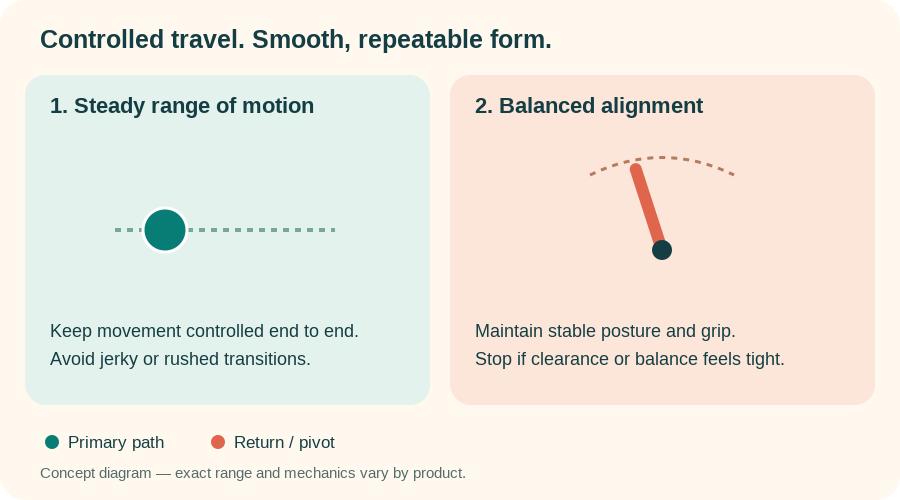
Simplified motion diagram. Exact range and mechanics vary by product.
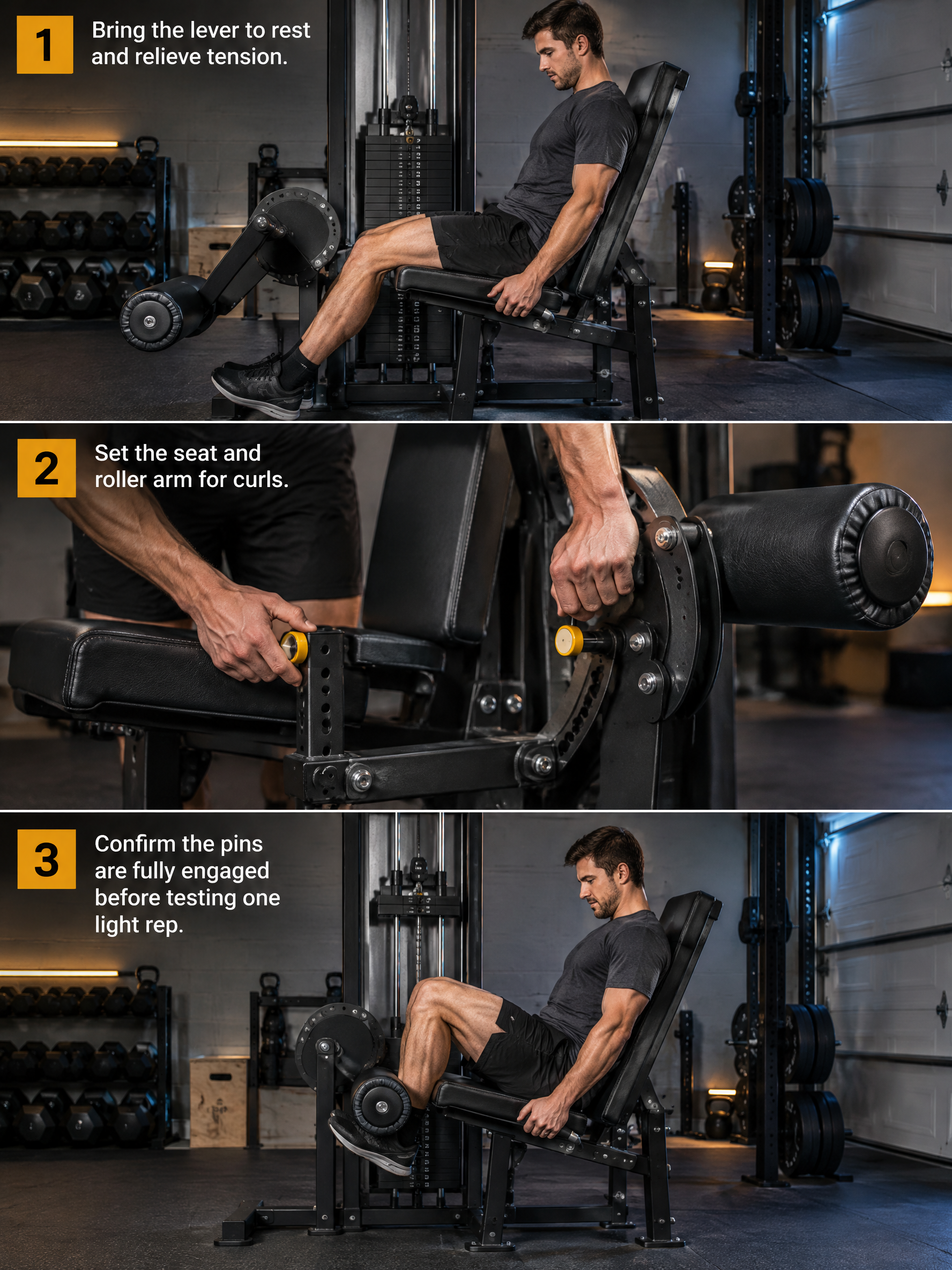
- Bring the lever to rest
Follow your manual’s instructions for taking tension off the mechanism before releasing any adjustment pin.
- Set up the curl
Use the model’s adjustments to set the seat or bench and put the roller arm in the curl starting position.
- Try a light rep
Check that the adjustment pins are fully engaged, then test the motion at a light load before starting your set.
How the roller pad, lever, and resistance work
Your lower leg presses against a padded roller: the front of the leg contacts it for extensions, and the back contacts it for curls. The roller moves with a lever arm that turns around a pivot. The load resists that turn, either directly through weights on the lever or through a mechanism such as a cable and pulley.
A listing that advertises a 1:1 resistance system, as YOLEO does, is describing the mechanism’s nominal transmission ratio. It isn’t telling you how much force you’ll feel at the roller throughout a rep. The leverage at the pad and the angle at which the load pulls affect how hard the arm is to turn, so two machines with the same advertised ratio can feel different.
Choose your next step
Which model fits your needs?
See the differences, tradeoffs and who each model suits.
Compare the products →Seated, lying, and standing leg curls
All three styles train knee bending. What changes is how you get into position and how the machine supports you. Read each exercise description separately: “seated extension and lying curl” means you sit for the extension only. Likewise, “single-leg extension” tells you nothing about whether the machine supports standing curls.
- Seated curl: You sit with your thighs supported and pull the lower-leg roller down and back. A thigh pad, if fitted, helps keep your thighs from lifting off the seat.
- Lying or prone curl: You lie face down and bring your heels up toward you. Try getting onto and off the bench as well as doing the curl; the roller’s starting position can make entry awkward.
- Standing curl: You support yourself on one leg while curling with the other. Check that you can reach the handhold comfortably so balance doesn’t cut the set short.
How to check whether the machine fits your room
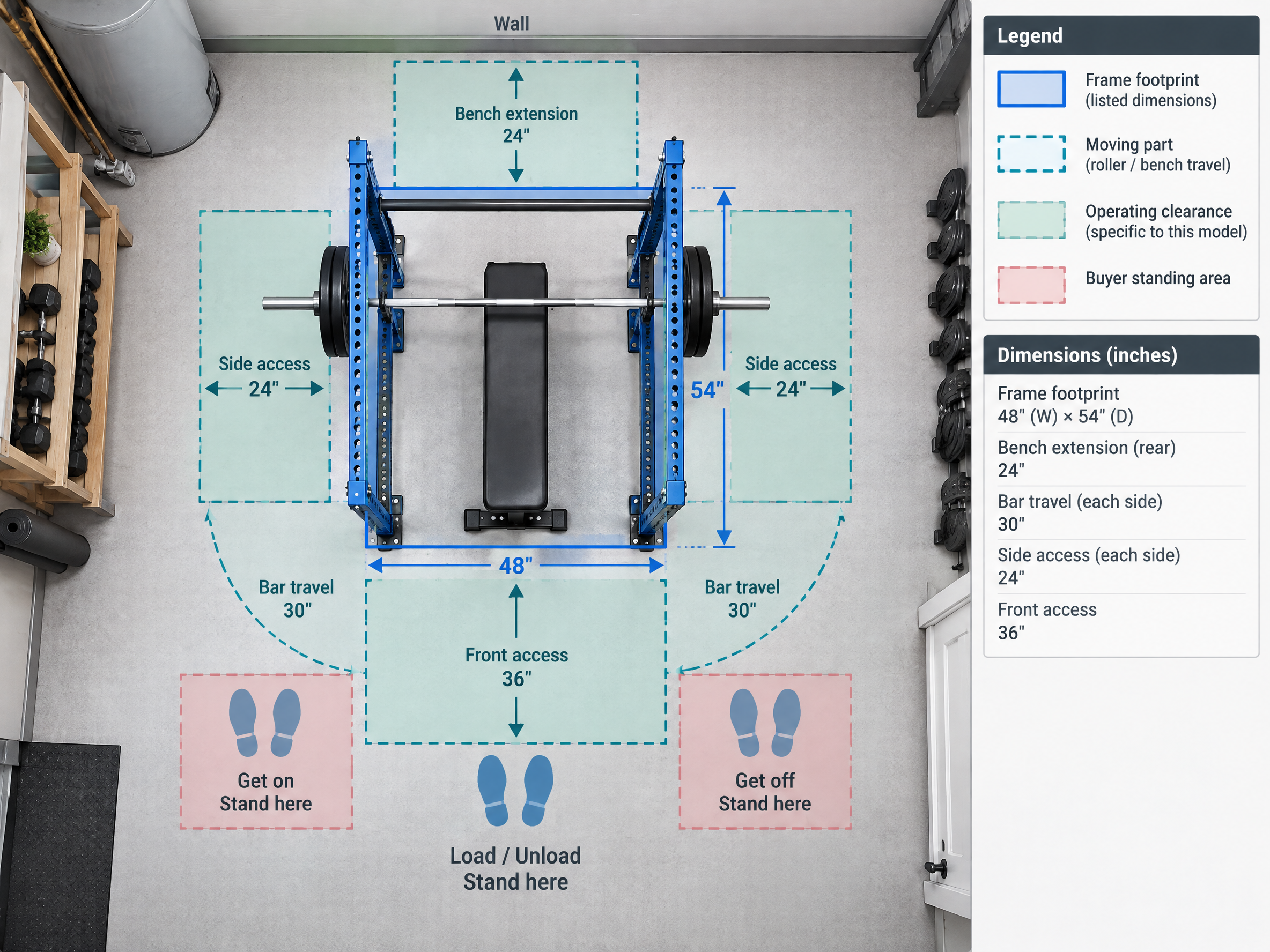
- Mark the frame
Use painter’s tape to outline the listed depth and width where you plan to put the machine.
- Allow for movement
Check the manual or ask the manufacturer how much room the roller arm needs to swing and whether the bench extends when you switch modes.
- Walk through a set
Stand where you’d get on and off, then where you’d change the load. Make sure a wall or another machine won’t block either task.
Plate-loaded versus built-in weight-stack resistance
On a plate-loaded machine, you slide compatible plates onto a loading sleeve. If you already own plates, check that the holes fit the sleeve. If you don’t, find out whether plates are included and where you’ll store them. The smallest plates you have determine how finely you can adjust the load.
With a built-in weight stack, you typically move a selector pin to choose how much of the stack to lift. That makes changes between users or exercises quicker, but you’re working with the machine’s available settings. Check the lightest setting and the size of the jumps, not just the maximum.
“Cable” describes how resistance is transmitted, not where the weight comes from. The LIONSCOOL V4.0 uses a cable with 2-inch plates, while GMWD’s 255-lb Weight Stack combo lists an included stack. Curl position and loading type are separate choices.
When a combo is worth making room for
A combo makes the most sense if both exercises already have a place in your routine and gym access is what keeps you from doing them. If you’re unsure, try both movements at a gym at a light load. Notice which curl setup you can get into easily and use without shifting around between reps.
If your goal is general thigh training, start with what you have. Squats or step-ups train the quads as part of a larger movement, and a Romanian deadlift trains the hamstrings at the hip. Those aren’t copies of the machine exercises. If resisted knee bending is the part you want, a band curl or slider curl takes much less room.
What ownership involves
Check the delivery route and assembly instructions, especially if the machine is going downstairs or through a tight turn. If several people will share it, check that each can reach the controls and get comfortable in both positions.
After assembly, follow the manual’s maintenance schedule. Keep the pads clean, check adjustment pins and hardware, and inspect cables for wear if the machine uses them.
Questions before you commit
How do I tell whether the machine fits my legs?
Check the fit in both modes at a light load. As a starting point, your knee should line up roughly with the lever pivot, and the roller should contact your lower leg rather than press into your knee. If you have to slide on the seat or lift your hips to finish a rep, try a different adjustment.
Should I use the same weight for extensions and curls?
Choose the load separately for each exercise. Start light in each mode and use a load you can move and lower under control rather than copying the setting from the other movement.
Does an empty plate-loaded machine start at zero resistance?
Not necessarily: the lever and other moving parts can still offer resistance without plates. If a light starting load matters to you, try the unloaded machine in both modes or ask the manufacturer what to expect.
Does the listed weight capacity tell me how much I can lift on the machine?
Not always. Look for the exercise loading limit rather than a total that may include plate storage. For example, the GMWD LE08 2.0 lists 330 lb for loading and 570 lb for storage, so its 900-lb total isn’t the exercise loading limit.
Choose your next step
Put your shortlist side by side
See the differences, tradeoffs and who each model suits.
Compare the products →Your next step
- Confirm the curl position and try both movements if you can.
- Check that the seat and roller adjust to fit everyone who’ll use it.
- Verify plate compatibility or the stack’s starting load and increments.
- Check operating clearance, the delivery route, and assembly requirements.
If you’re still unsure, try the curl position you’re considering before committing. A machine that’s easy to get into and adjust is more likely to make it into your routine.