Review101
What Is a Freestanding Power Tower? A Beginner’s Guide to Pull-Ups and Dips
A power tower puts an overhead pull-up bar and parallel dip handles on one floor-standing frame. Here’s how the two stations work, what different designs change, and when a simpler setup is enough.
Read the article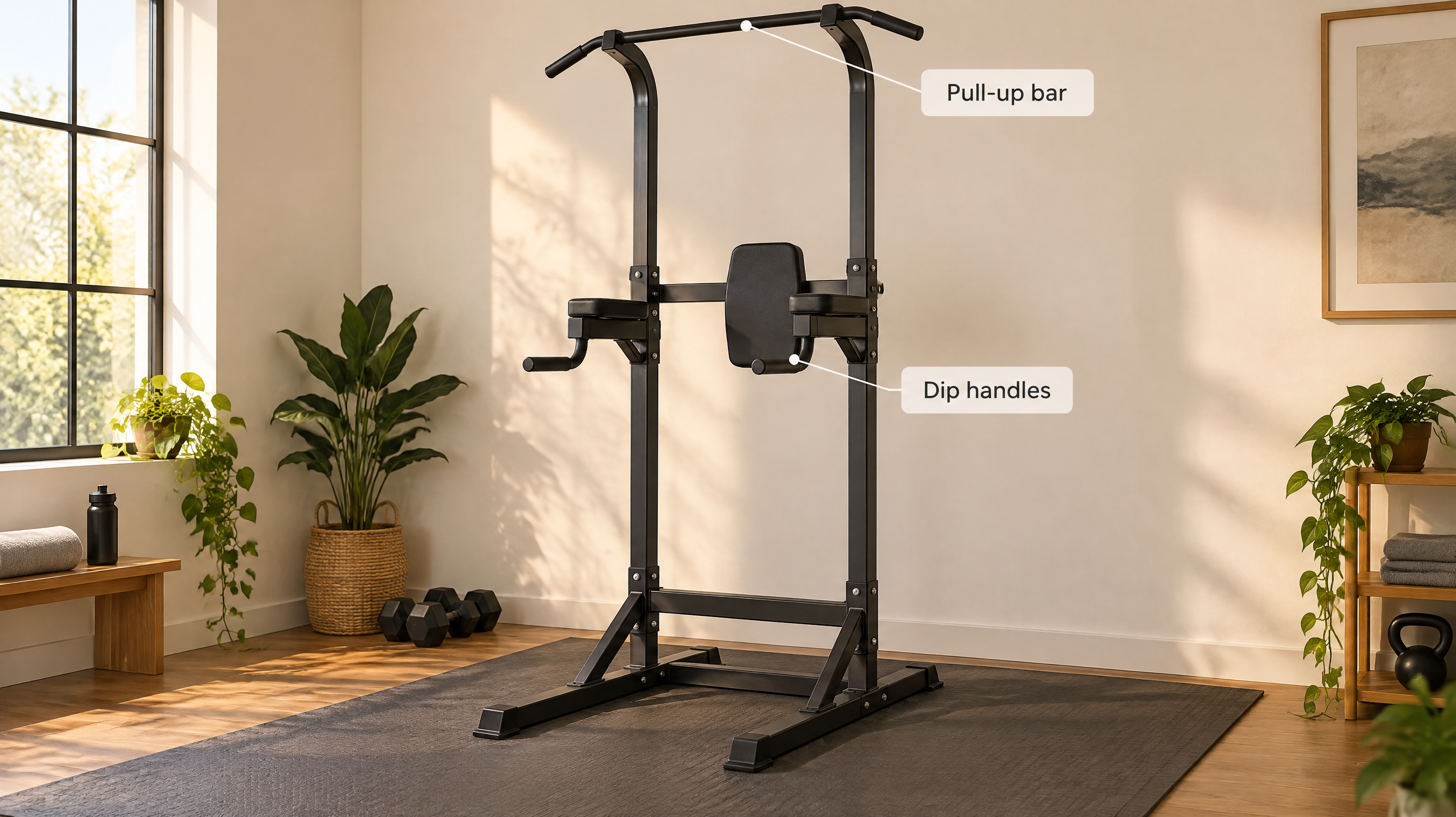
Some links may earn us a commission, at no extra cost to you. How we’re supported
In this article 7 sections
Start with your needs
Consider a tower if you’d use both regularly and don’t want to mount a bar in a doorway.
Look at a dedicated pull-up bar or a pair of dip stands instead of a full tower.
Visit a gym or park with both before deciding what belongs at home.
As an Amazon Associate, we earn from qualifying purchases. Research-based analysis; no hands-on testing.
The short answer
A freestanding power tower makes sense if you want regular access to both pull-ups and dips at home without mounting a bar in a doorway. If you mainly want one movement, a dedicated bar or a pair of dip stands may be all you need.
Worth considering if
- People who practice both movements and want easier access at home
- Beginners who have tried both stations and want to keep practicing
- Households that want two stations on one floor-standing frame
Hold off if
- You’re interested in only one of the two main stations
- You already have easy access to both elsewhere
- You need assistance from the start but haven’t confirmed that the tower supports the movement you want
Choose your next step
Ready to compare?
See the differences, tradeoffs and who each model suits.
Compare the products →

One frame, two main stations
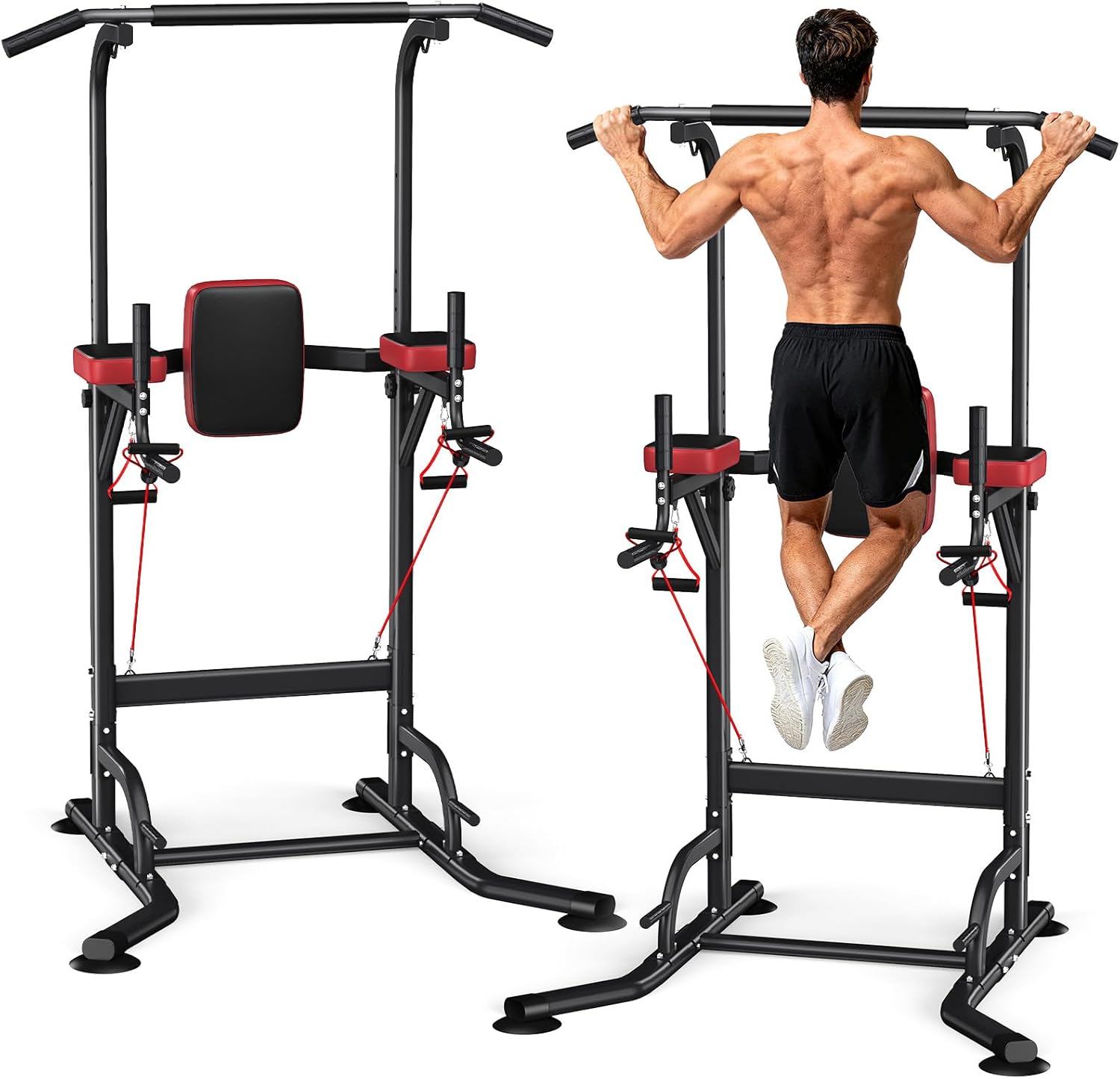
A freestanding power tower is an upright exercise frame supported by its own base on the floor. An overhead bar gives you a place to hang, while two parallel handles farther down the frame give you a place to support yourself for dips. A station is simply the part of the frame you use for a particular exercise.
A standalone pull-up bar gives you somewhere to hang but doesn’t necessarily have dip handles. A pair of dip stands gives you the handles but no overhead bar. The tower combines those two setups. Extra features can be useful, but they aren’t what makes it a power tower.
Try the two stations before you decide
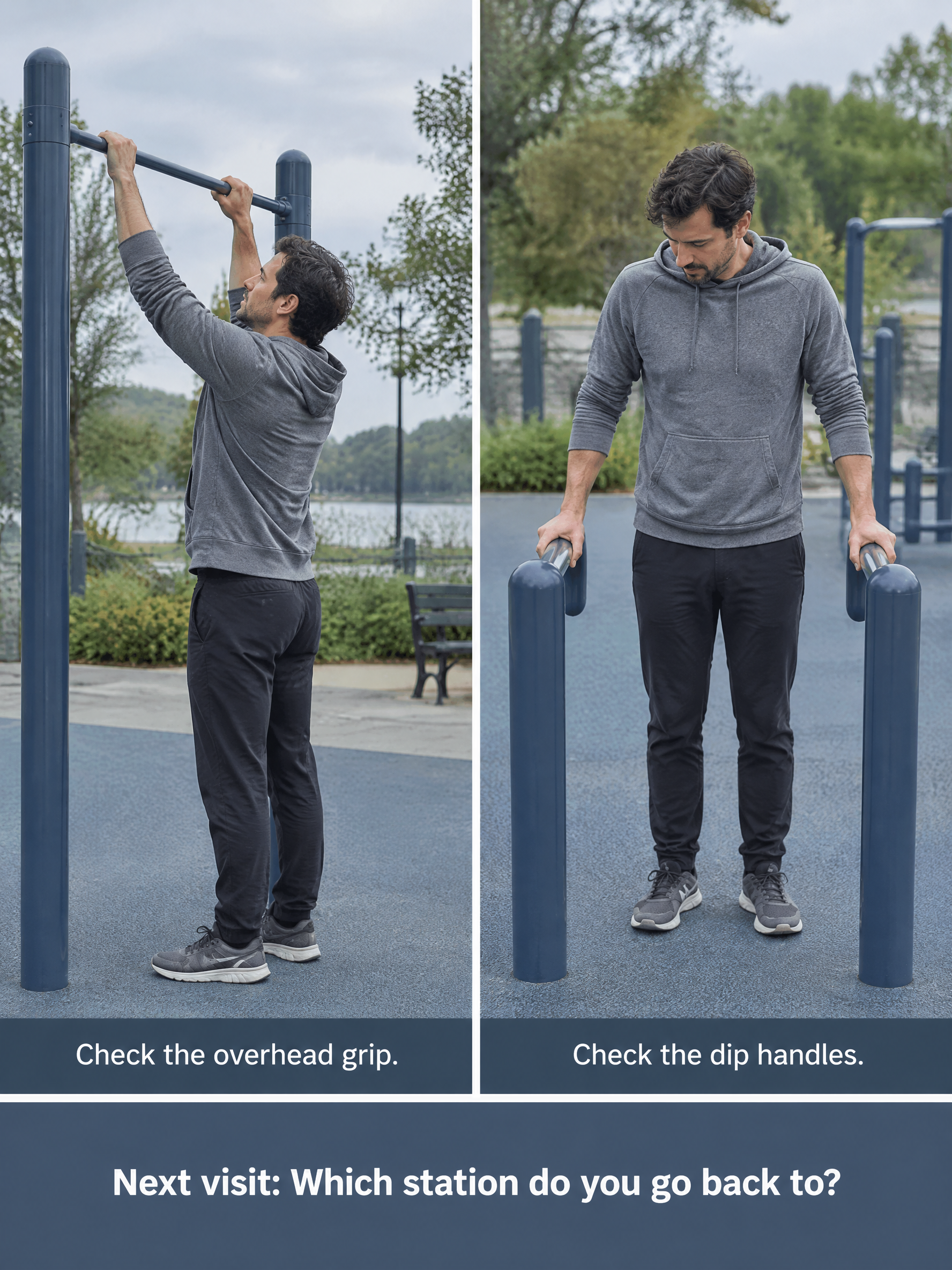
See the movement
Use two short clips to show the adult placing their hands on the overhead bar and then on the dip handles, with feet grounded. Hold each shot long enough to see hand spacing; skip full reps.
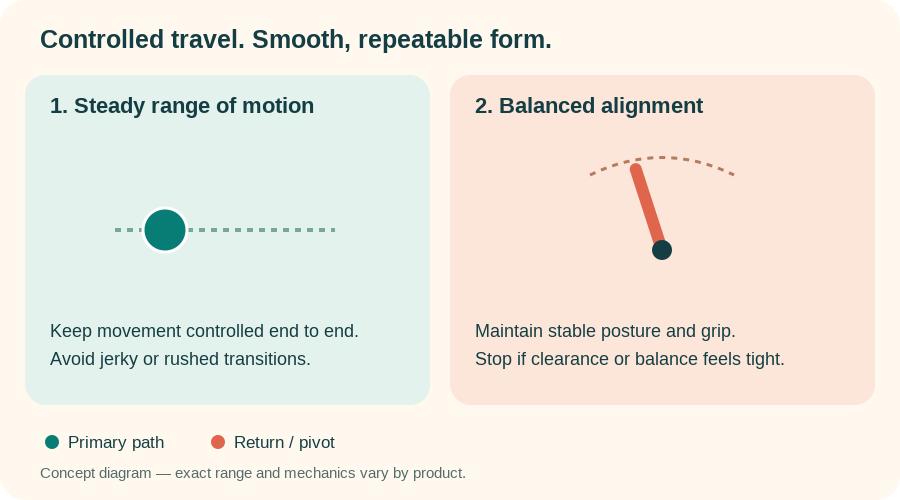
Simplified motion diagram. Exact range and mechanics vary by product.
- Find both stations
Look for an overhead bar and parallel dip handles at a gym or park. They don’t have to be on the same frame.
- Notice how each station feels
Check whether the overhead grip feels natural and whether the dip handles feel too close together or too far apart. You don’t need to complete a rep to notice either.
- See what you return to
On another visit, notice whether you seek out both stations or head straight to one. That’s a better clue than a long list of exercises on a box.
In a pull-up you hang; in a dip you support yourself
In a pull-up, you start below your hands, hanging from the overhead bar. You draw your body up toward the bar and lower it again. A standard pull-up uses a palms-away grip; a chin-up uses a palms-toward-you grip. The shape and position of the grips determine which hand positions the bar can accommodate.
In a dip, you start with your hands beside you, one on each handle, supporting your body between them. Your elbows bend as you lower and straighten as you rise. In both movements, you’re moving your body, not the bar or handles. The frame is meant to stay still, and gravity acting on your body supplies the resistance.
Choose your next step
Which model fits your needs?
See the differences, tradeoffs and who each model suits.
Compare the products →Height adjustment and exercise assistance do different jobs
Lowering an adjustable pull-up bar can make it easier to reach from the floor. Raising it can give you more room to hang with your legs straight. Once your feet are off the floor and nothing else is supporting you, though, the lower setting doesn’t reduce the weight you have to lift.
A purpose-designed assistance system reduces the effort by supporting part of your weight during the movement. One VEVOR tower listing, for example, mentions an assistance platform but doesn’t say how much help it provides or which exercises it supports. If you’re counting on assistance for pull-ups or dips, check the manual for that specific movement rather than assuming it covers both.
Check whether a listed feature comes with the tower
- Name the part you need
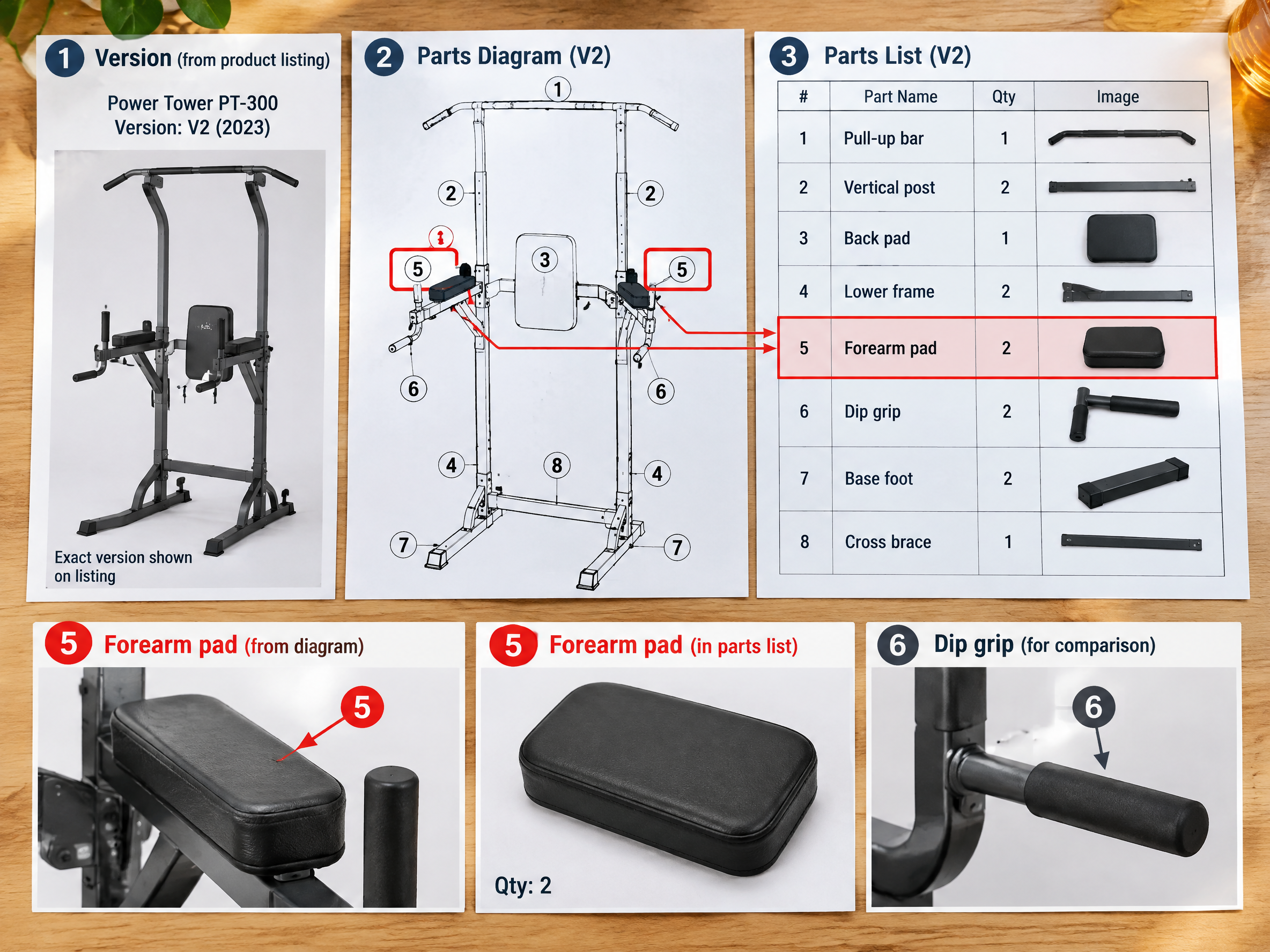
If you want supported knee raises, look for forearm pads rather than a broad promise of core exercises.
- Find it in the manual
Check the parts diagram for the pads and where they attach to the frame.
- Verify the exact version
Match the parts list to the version you’re considering. If you can’t confirm the part is included, don’t count on it.
Standard, folding, and outdoor towers
A conventional tower may use an H-shaped base: two floor rails joined by a crosspiece. A folding design changes how the frame stores between sessions, not how the two exercises work. Outdoor towers are explicitly marketed for use outside. A similar-looking steel frame isn’t necessarily intended to live outdoors.
Some towers add forearm pads for supported knee raises or low handles that give you a place to grip during push-ups. Those are additional stations, not standard features. A listing that mentions core exercises doesn’t necessarily establish that forearm pads are included.
What a tower adds to a home workout
The practical benefit is access: both movements are available at home, even if you don’t have a suitable doorway for a mounted bar. That matters most when getting to a gym or calisthenics park is what keeps you from practicing. If both stations are already easy to get to, owning a tower may add little to your routine.
Expect to assemble the frame according to the manual and check that the hardware and any adjustment locks are secure. With a folding tower, putting it away also means setting it up and securing it again before the next session. If you want the stations ready for a quick visit, that extra step is worth weighing against the benefit of folding it away.
Questions before you commit
Do I need to be able to do a full pull-up or dip before getting a tower?
No, but you don’t need to buy a tower to find out what kind of support helps you. If neither movement is accessible yet, try an assisted station at a gym first and see whether you like practicing both movements.
Does freestanding mean I can move the tower easily?
No. Freestanding describes how the frame is supported, not how easy it is to carry. A tower can fold for storage and still be awkward to move to another room.
Can I swing on a tower or do kipping pull-ups?
Only if the manufacturer explicitly permits that use. Kipping adds momentum that can rock a floor-standing frame, so don’t assume a tower meant for ordinary pull-ups can also handle swinging.
Can two people use the pull-up and dip stations at the same time?
Plan to take turns unless the manufacturer explicitly allows simultaneous use. The stations share a frame, and a listed weight limit alone doesn’t tell you whether it was designed for two people moving at once.
Choose your next step
Put your shortlist side by side
See the differences, tradeoffs and who each model suits.
Compare the products →Your next step
- Name the movements you’d actually practice at home.
- Check whether you already have convenient access to those stations.
- Separate the features you need from the extras you’re unlikely to use.
- Decide whether you’d rather leave the frame set up or put it away between sessions.
If both stations would get regular use, the power tower evaluation guide can help you decide whether the frame is worth the space.