Review101
What Is a Lat Pulldown and Low Row Machine?
One cable station lets you pull down from overhead and back toward your torso. Here’s how the two movements work, what changes from one design to another, and how to tell whether you need a dedicated station.
Read the article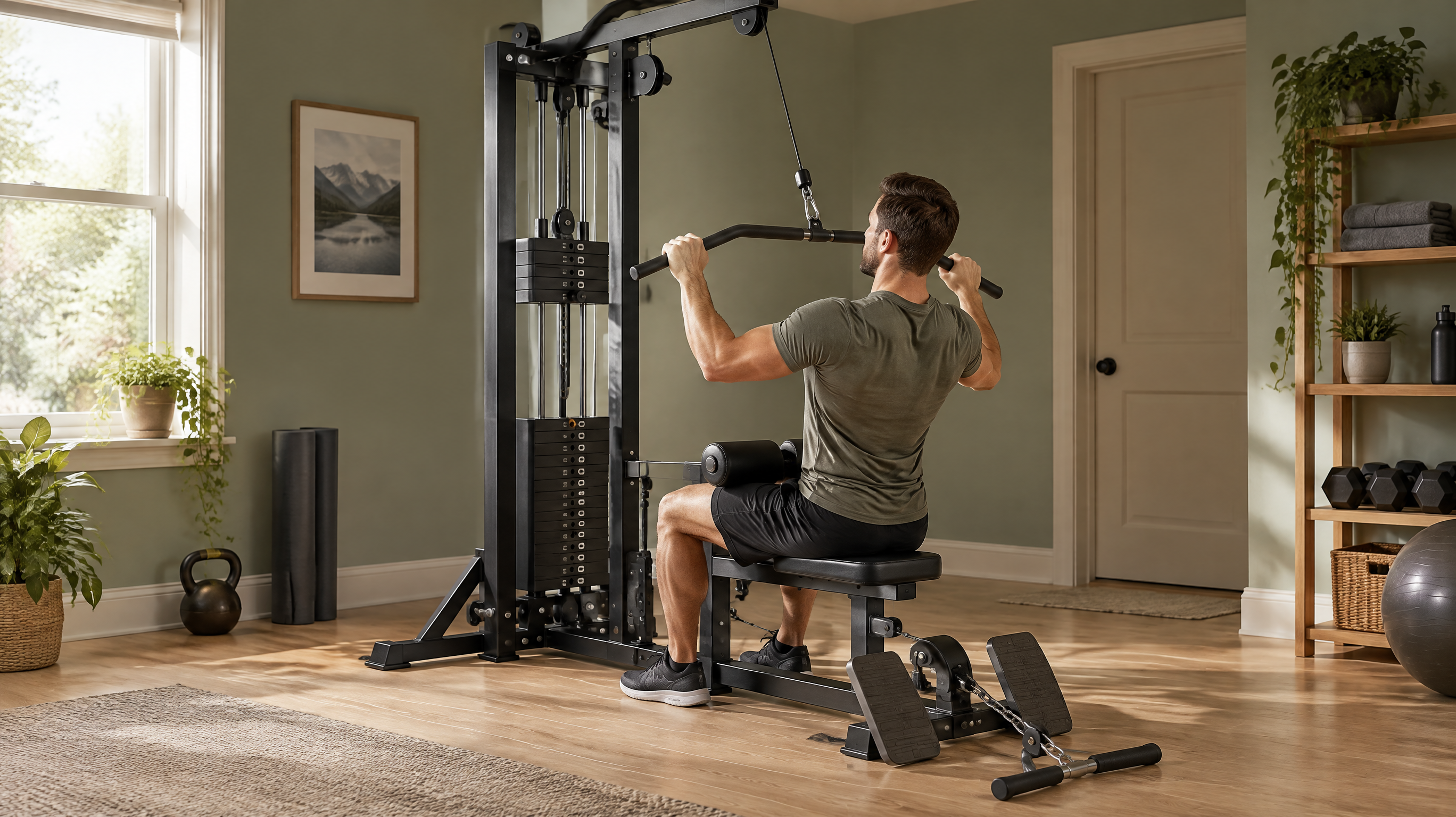
Some links may earn us a commission, at no extra cost to you. How we’re supported
In this article 7 sections
Start with your needs
Choose a dedicated setup if you want both pulls at home and have room to use them without rearranging the room.
Stick with an accessible gym cable station or other pulling exercises if they already cover what you want to do.
If you want a continuous stroke with a sliding seat and leg drive, a low cable row isn’t a substitute.
As an Amazon Associate, we earn from qualifying purchases. Research-based analysis; no hands-on testing.
The short answer
You don’t need a dedicated machine to train your back. A combo station makes sense if you want both pulling movements available at home and expect to use them often enough to keep the station set up.
Worth considering if
- People who expect to use both vertical and horizontal cable pulls regularly at home.
- People who prefer a seated, braced setup and have space for the full movement.
Hold off if
- You haven’t tried both movements and aren’t sure they’ll fit your routine.
- You already have convenient access to similar exercises or would miss the floor space.
- You haven’t confirmed that your room meets the installation requirements.
Choose your next step
Ready to compare?
See the differences, tradeoffs and who each model suits.
Compare the products →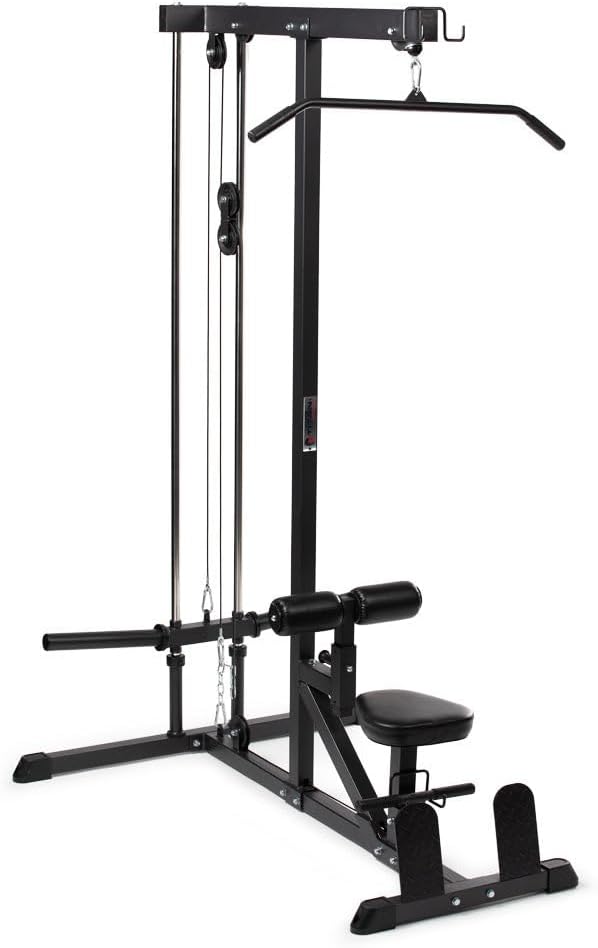


Two strength exercises, one machine
A lat pulldown starts with a bar or handle overhead. Usually seated, you pull it down toward your upper chest. A low cable row starts with a handle in front of you and a cable that exits low on the frame. With your feet braced, you pull the handle back toward your torso. Both movements use your back and arms; the pulldown is a vertical pull, and the row is a mostly horizontal pull.
A low cable row is not the same exercise as rowing on a cardio machine. On a typical cardio rower, the seat slides as your legs drive each stroke and your torso and arms follow. In a low cable row, your seat generally stays put and your feet brace rather than drive the movement. If a listing just says “rowing,” look for a low cable outlet and a braced pulling position rather than going by the name.
How to read a pulley ratio
See the movement
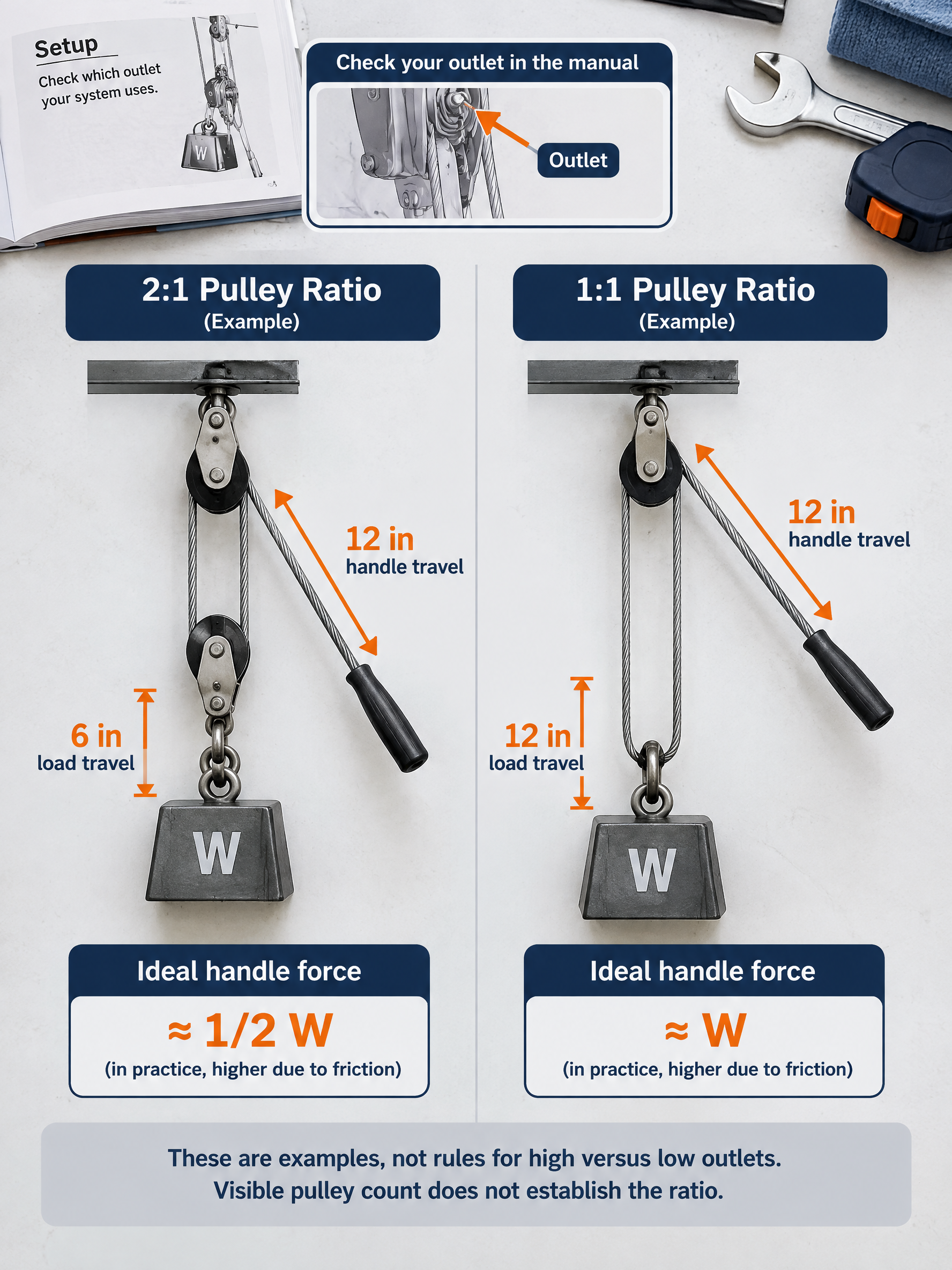
Use a short split-screen animation to show handle and load travel at 2:1 versus 1:1, then cut between the seated pulldown and row starting positions to show the changeover.
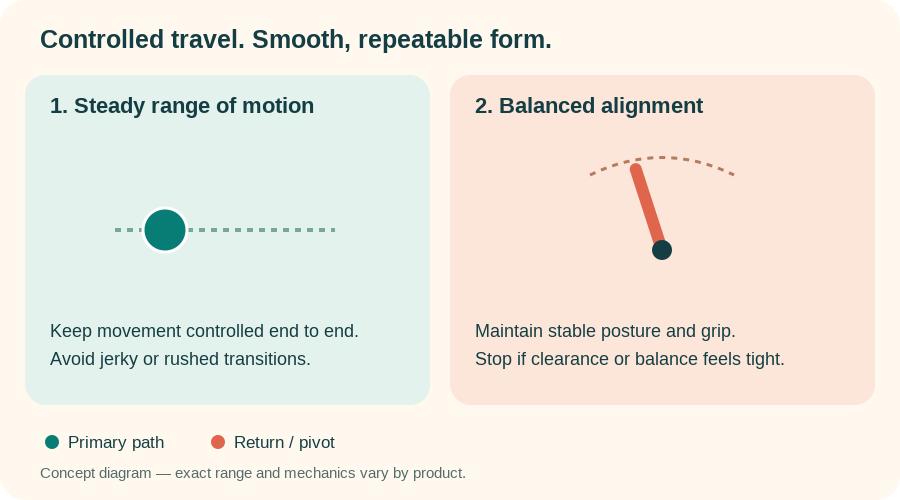
Simplified motion diagram. Exact range and mechanics vary by product.
- Find the ratio for your outlet
Check the manual for the high or low outlet you’ll use. Counting the pulleys you can see won’t tell you the ratio.
- Compare handle and weight travel
At 2:1, the handle travels twice as far as the weight rises. At 1:1, the handle and the weight move the same distance.
- Translate that into resistance
Ignoring friction, a 2:1 setup takes about half as much force at the handle as lifting the load directly. At 1:1, the handle force is roughly equal to the lifted weight.
How the high and low pulleys work
The handle clips to a cable that runs over pulleys. Pulling the handle lifts the selected plates in a weight stack or raises a carriage loaded with loose plates. As you guide the handle back, the weight lowers. The high outlet puts the cable above you for a downward pull. The low outlet puts it in front of you near the floor, so you can sit back from the tower and pull toward yourself.
Cable travel is how far the handle can move before the mechanism reaches its limit. If there isn’t enough travel for your setup, the cable can stop before you finish the pull. Handle resistance is a separate question: the cable routing can change how much force you need to lift the load, so a stack label or loading-post rating alone doesn’t tell you what the pull will feel like.
Choose your next step
Which model fits your needs?
See the differences, tradeoffs and who each model suits.
Compare the products →Plate-loaded, selectorized, wall-mounted, and foldable designs
Plate-loaded and selectorized tell you how you change the resistance. On a plate-loaded tower, you slide loose plates onto a loading post. That can make sense if you already own compatible plates, but each change means adding or removing them by hand. On a selectorized tower, you move a pin to choose how much of the built-in stack to lift. Load changes are simpler, but you’re working with the increments the stack provides.
Freestanding, wall-mounted, and foldable tell you how the station sits in the room or stores between uses. A wall-mounted tower puts the frame close to the wall, but you still need space in front for a row and a wall that meets the installation instructions. A folding design may clear space between uses; check what actually folds and how far it extends when open. Neither label tells you how the machine is loaded.
How to tell if a combo station fits you
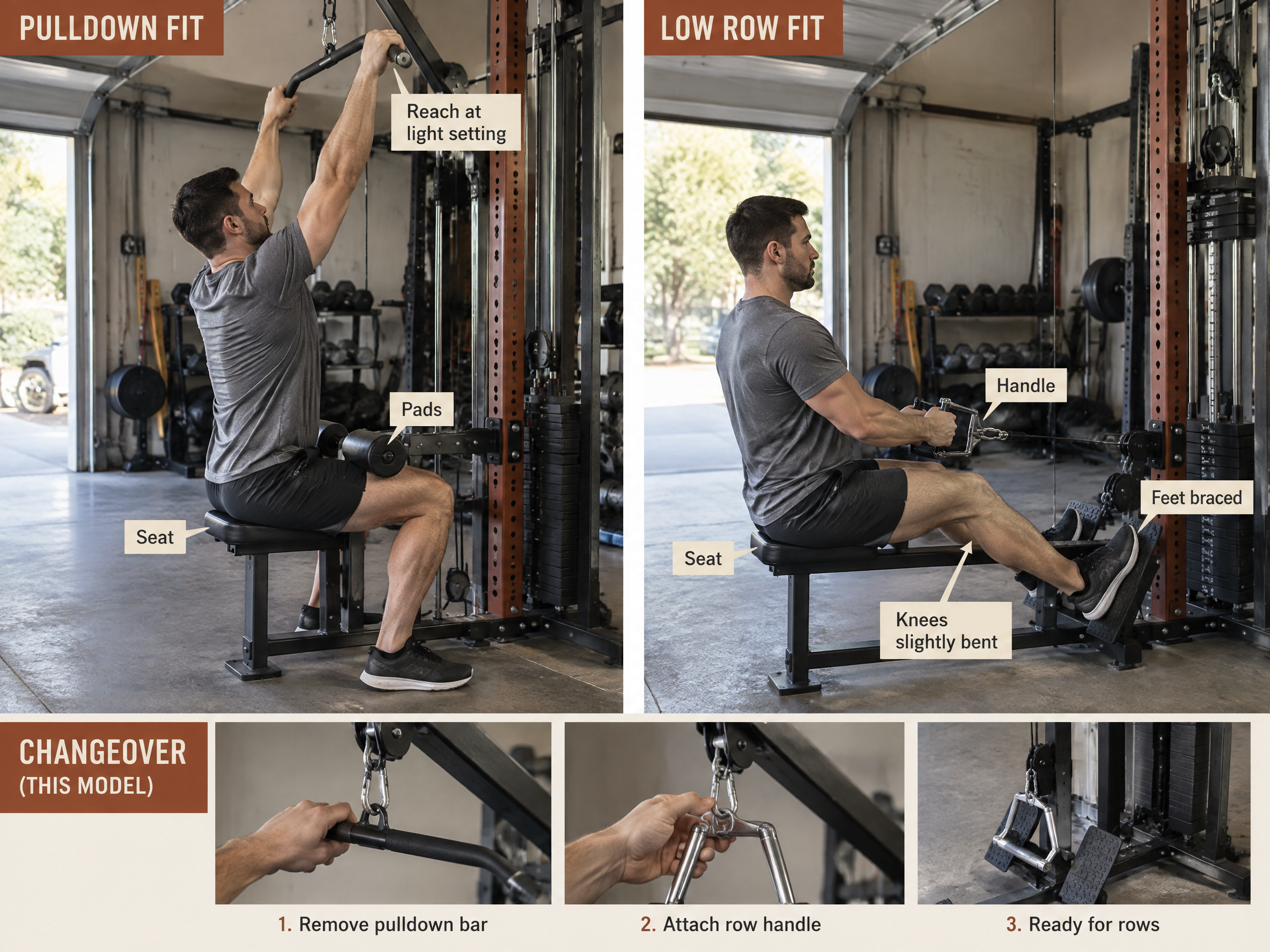
- Check your overhead reach
With the machine set light, see whether you can get into the pulldown position with the bar within reach and your thighs under the pads, without perching on the seat.
- Check your row position
Plant your feet against the support and reach for the row handle. See whether you can do both without straightening your knees fully or scooting forward.
- Switch between the two
Notice what you have to move or swap: a handle, a seat setting, or a separate bench. Decide whether that changeover is something you’d be happy doing regularly.
What a combo station adds to strength training
A combo gives you both pulling directions without setting up two separate stations. What makes it more convenient than a general cable tower is having the right supports where you need them: padded thigh rollers help keep you seated during a pulldown, and a footplate gives you something solid to press against during a row.
A long pulldown bar gives you room to vary your hand spacing. A short row bar or close-grip handle keeps your hands nearer together. Some stations list both bars, while others list a single cable bar. Check the included-parts list for the exact handles and supports rather than assuming everything pictured comes in the box.
What you can use instead, and what ownership involves
If you already have access to an adjustable cable station, you may be able to do both movements there with a suitable seat or brace. An assisted pull-up gives you a vertical pull, and a dumbbell row gives you a horizontal pull without a cable tower. If what you want is continuous rowing for conditioning, look at cardio rowers instead.
At home, measure the space you’ll use, not just the frame. Allow room above the tower for assembly and overhead handle access, in front for your legs and reach during rows, and beside a plate-loaded tower so you can slide the plates on and off. Read the manufacturer’s assembly, anchoring, and floor requirements before deciding where it will go.
Once it’s set up, follow the manual’s inspection guidance for the cable, attachment clips, and pulleys. If a cable frays or starts binding, stop using the station until the issue is resolved.
Questions before you commit
Can I use weight plates I already own?
Yes, if the plate holes fit the loading post or a manufacturer-approved adapter. Check whether the machine accepts standard or Olympic plates and whether any adapter and retaining clips you need are included.
Can two people use the high and low pulleys at the same time?
Assume one person at a time unless the manual explicitly allows simultaneous use. Two outlets can share one stack or carriage, so having two places to attach a handle doesn’t mean you have two independent stations.
What if the lightest setting is too heavy for me?
Check the starting resistance before you buy, not just the maximum. An empty plate carriage can still offer resistance, and a selectorized machine has a lightest selectable setting. If you can try the station, check whether you can move the handle smoothly from both outlets at the lowest setting.
Choose your next step
Put your shortlist side by side
See the differences, tradeoffs and who each model suits.
Compare the products →Your next step
- Confirm there’s a high outlet for pulldowns and a low outlet for rows.
- Check which seat, thigh pads, footplate, and handles are included.
- Measure working clearance, not just the frame or folded footprint.
- Verify plate compatibility or stack increments, and look up the pulley ratio.
- Read the assembly, anchoring, and maintenance instructions.
If either movement is new to you, try it at a gym before clearing a permanent spot at home. Notice whether you like the movement itself, not just the idea of having it available.