 Review101
What Is a Dual Adjustable Pulley Functional Trainer?
Two cable outlets let you change where the resistance comes from and use a separate handle in each hand. Here’s what moves when you pull, why outlet height matters, and what a simpler setup can do instead.
Read the article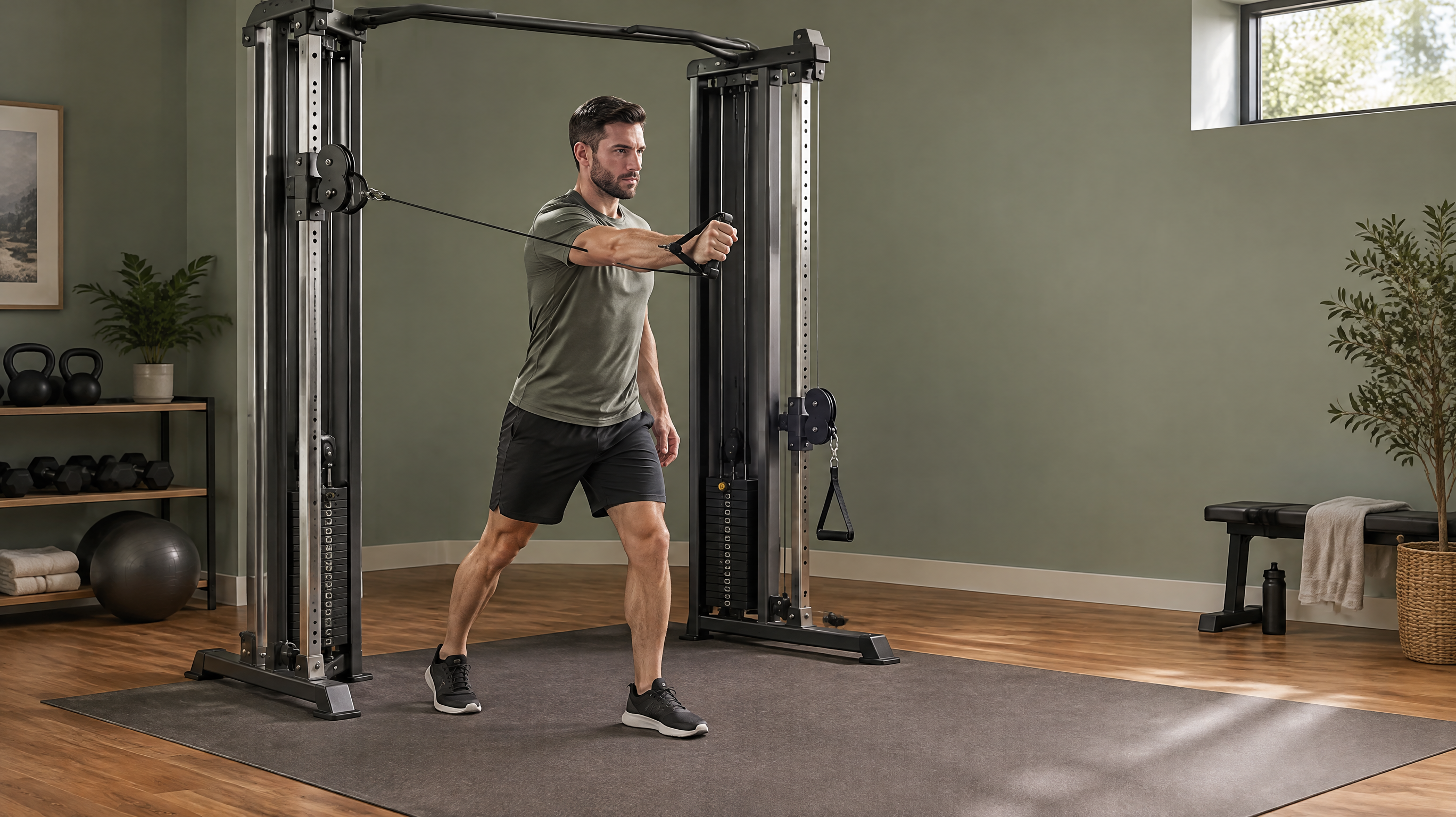
Some links may earn us a commission, at no extra cost to you. How we’re supported
In this article 8 sections
- What makes it a dual adjustable pulley trainer?
- What a swivel pulley and a 2:1 cable ratio do
- How outlet height changes the exercise
- Stacks and plates describe the load; wall mount describes the installation
- What two cables add to a routine
- What living with a cable trainer involves
- Questions before you commit
- Your next step
Start with your needs
Try a few light reps at different heights and feel how the direction of pull changes.
See whether a single pulley, a securely anchored band, or a dumbbell version covers it.
Notice when you need one outlet, when you need both, and whether the handles need different loads.
As an Amazon Associate, we earn from qualifying purchases. Research-based analysis; no hands-on testing.
The short answer
You don’t need a dual adjustable pulley trainer to build strength. Its advantage is giving you several directions of pull at one station, with the option of a separate handle for each hand. If you want to add just one cable exercise, a single adjustable pulley or a band with a suitable anchor may be enough.
Worth considering if
- People whose routines use low, middle, and high lines of pull.
- Anyone who combines single-arm work with two-arm exercises that use separate handles.
Hold off if
- One cable exercise is all you want to add, or your current equipment already covers your routine.
- You haven’t tried cable training and aren’t sure you enjoy the movements.
- You lack clear training space or, for a wall station, a suitable mounting surface.
Choose your next step
Ready to compare?
See the differences, tradeoffs and who each model suits.
Compare the products →


What makes it a dual adjustable pulley trainer?
A dual adjustable pulley functional trainer is a strength machine with two height-adjustable cable outlets. Each outlet is where a cable comes out of the frame. You slide the outlet assembly, called a carriage, up or down a rail and lock it in place. A handle, rope, or bar clips to the cable end. A weight stack or removable plates supply the resistance.
“Dual” counts the adjustable outlets, not the pulley wheels inside the frame or the number of weight stacks. The Body-Solid GFT100 is a dual-stack example. The Body-Solid Powerline PFT50 also has two adjustable swivel outlets, but they share one 210-pound stack. Looking at the handles alone won’t tell you which layout you’re using.
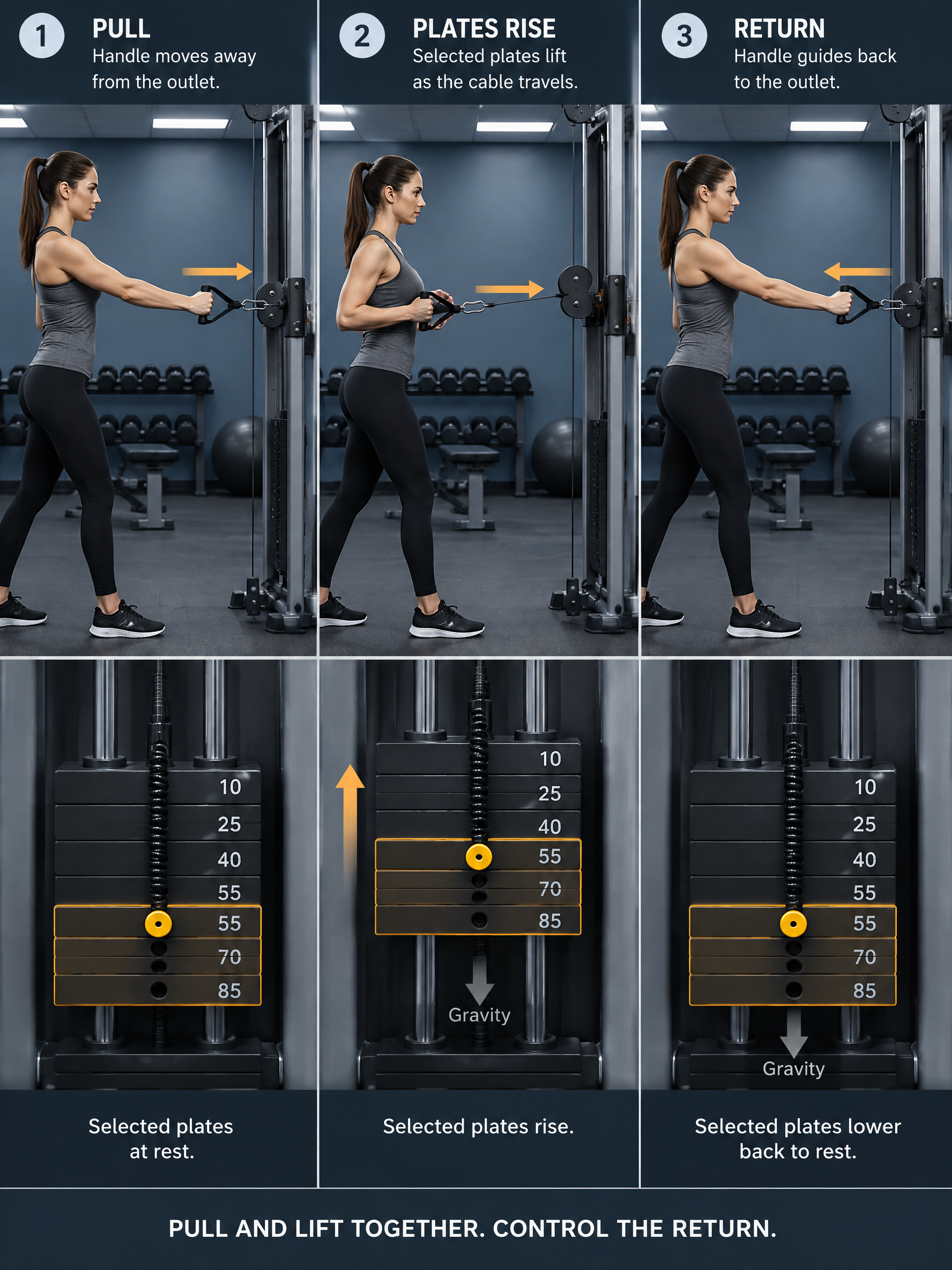
One cable rep: from handle to load and back
See the movement
Use a short side-view clip with a synchronized stack inset: the handle moves away as the selected plates rise, then returns under control as the plates settle. A separate overhead clip can show the unloaded step-in and full fly rehearsal.
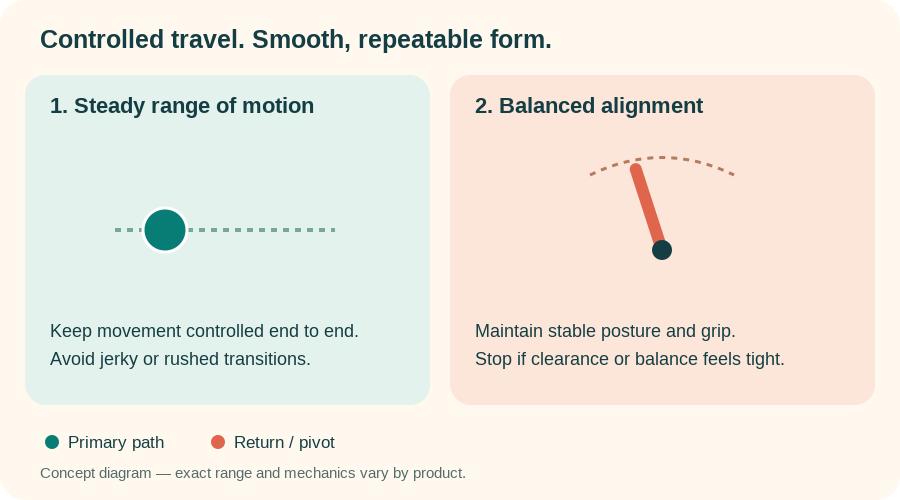
Simplified motion diagram. Exact range and mechanics vary by product.
- Pull the handle
As your hand moves away from the outlet, it draws the cable through the pulley system.
- Lift the load
The cable raises the selected stack plates or the loaded carriage. Gravity pulling down on that load is what you resist at the handle.
- Guide the return
Keep hold of the handle and let it travel back under control so the load lowers instead of dropping.
What a swivel pulley and a 2:1 cable ratio do
The carriage sets the outlet height. A swivel head does a different job: it pivots to follow the cable as your hand moves. That matters during a fly, for example, when your hand sweeps inward instead of pulling straight away from the frame.
A cable ratio describes how far the handle moves relative to the load. In a nominal 2:1 setup, pulling one handle 12 inches lifts the load about 6 inches. The trade-off is that moving the handle twice as far as the load takes about half the force: a selected 100-pound load takes roughly 50 pounds of pull at that handle, ignoring friction. At 1:1, handle travel and load travel are roughly equal, and so are the ideal handle force and the selected weight.
GMWD lists both 1:1 and 2:1 ratios for its G7 Pro, but the supplied specs don’t explain how each mode is configured. A ratio is useful only when you know which handle or attachment setup it applies to.
Choose your next step
Which model fits your needs?
See the differences, tradeoffs and who each model suits.
Compare the products →How outlet height changes the exercise
The cable pulls your hand toward the outlet. Raise or lower that outlet and you change the direction you work against without changing the weight. Your stance matters, too: stepping back changes the cable angle even when the carriage stays put.
A position count tells you how many places the carriage can lock, not whether those heights suit you. Start with where the outlet needs to be relative to your body for the exercise.
- Low outlet: On a standing cable curl, the cable pulls down toward the outlet as you curl your hand up.
- Chest-height outlets: On a fly, the cables pull out toward their respective outlets as you bring your hands together.
- High outlet: On a triceps pressdown, the cable pulls up as you press a rope or bar down.
Rehearse the movement to check your space
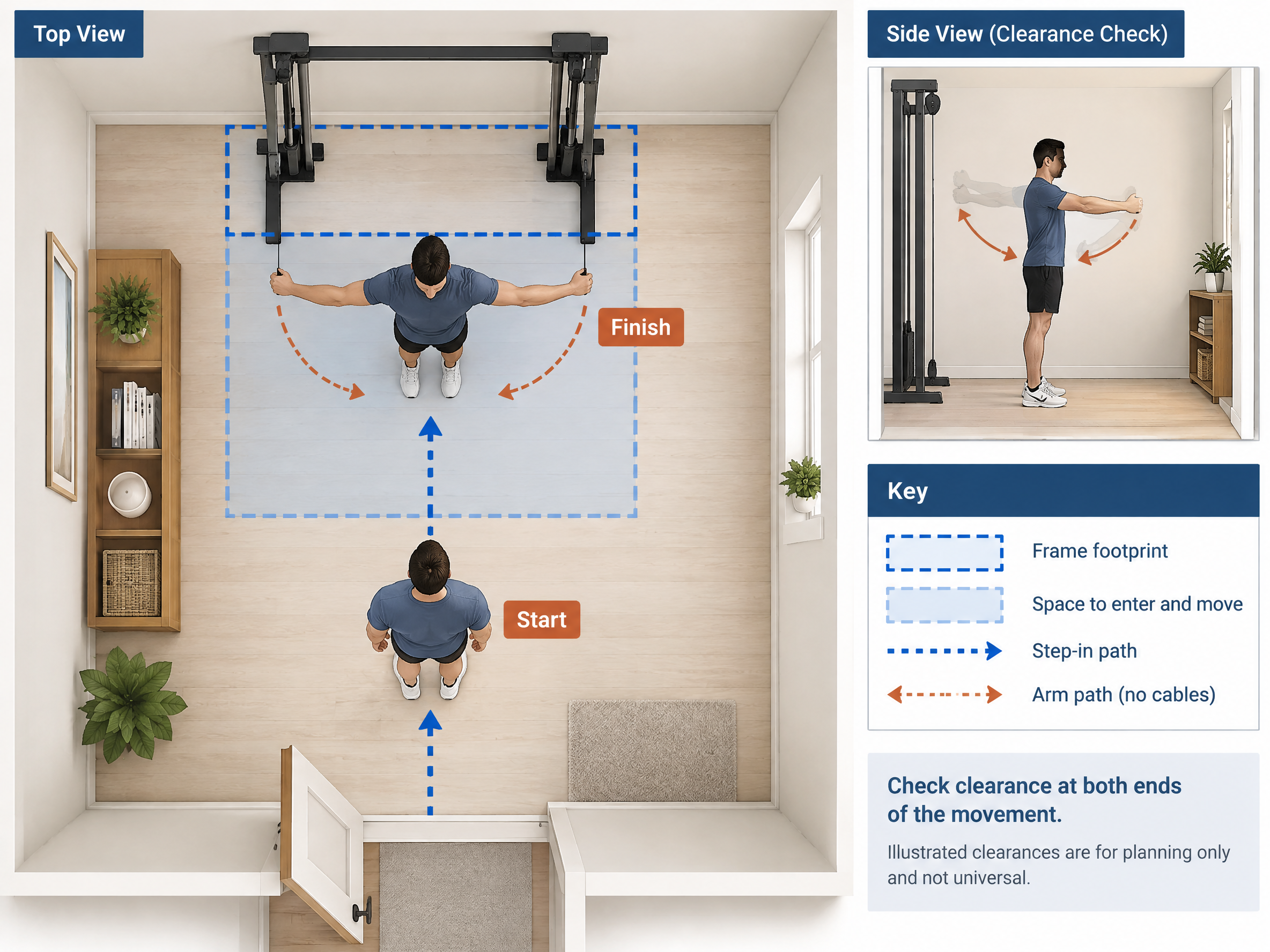
- Pick a space-hungry exercise
Choose a movement you expect to do that takes up room, like a standing fly or a press with a bench.
- Mark the setup
Outline the frame on the floor. Set the bench where it would go, or stand where you’d begin the exercise.
- Rehearse the full rep
Move through it without resistance. Check for clearance at the start and finish, including room to step into position.
Stacks and plates describe the load; wall mount describes the installation
A selectorized trainer has built-in weights you select with a pin. Two independent stacks let you choose a load for each side. A shared stack has one weight setting, and what happens when you pull both cables depends on how they’re routed. On a plate-loaded trainer, you add removable plates to the loading carriage instead of moving a selector pin.
Frame layout is a separate question. On a wide cable crossover, the outlets sit farther apart, so they pull more from the sides when you stand centered between them. A narrow wall station brings the outlets closer together. “Wall mount” tells you how the unit is secured, not whether it uses a stack or removable plates.
What two cables add to a routine
Use one outlet for a single-arm row, or hold a separate D-handle in each hand for a press or fly. Unlike a rigid bar, separate handles let each arm follow its own path. That freedom of movement is different from independent load selection: two handles don’t necessarily let you set a different weight for each hand.
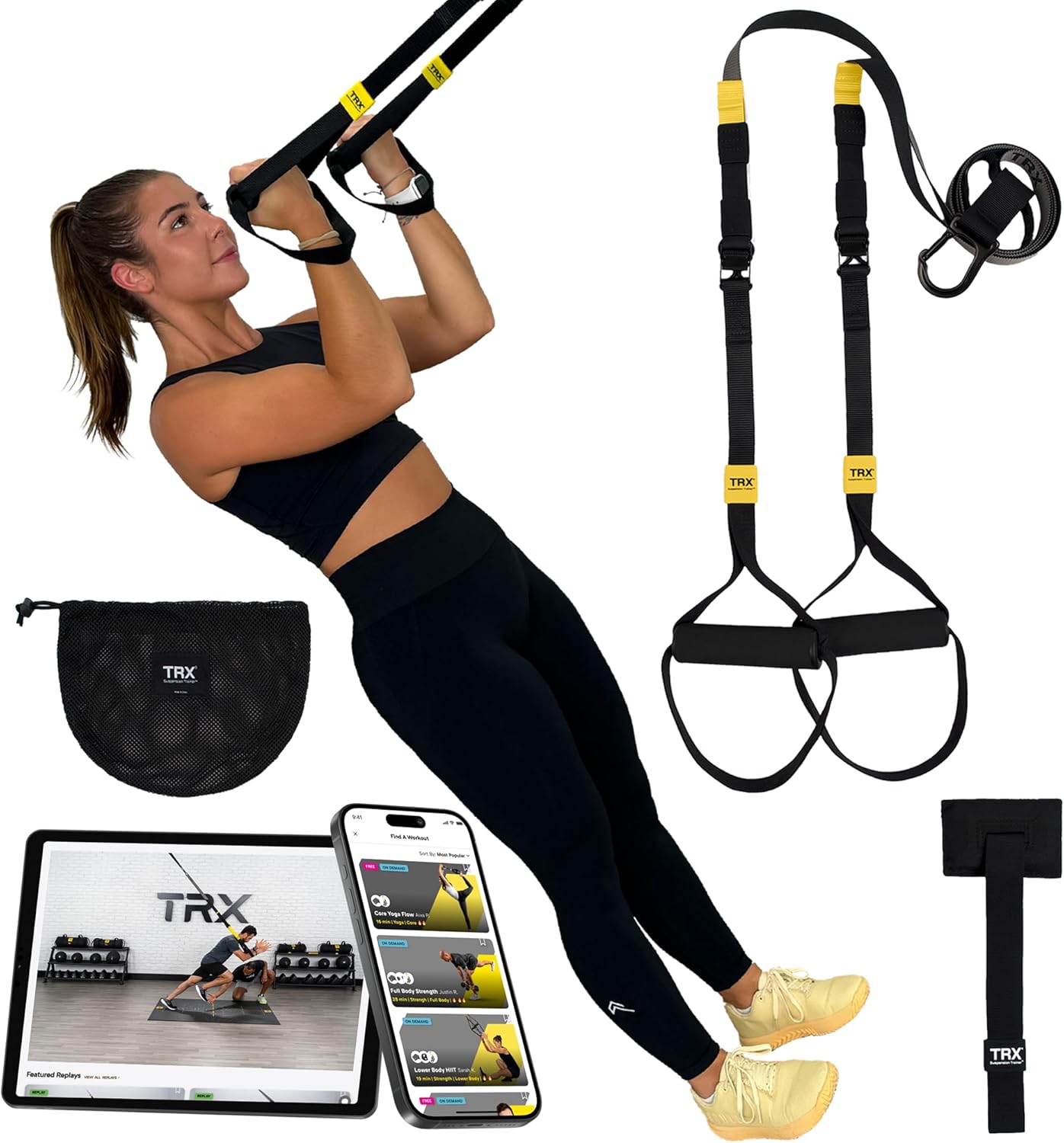
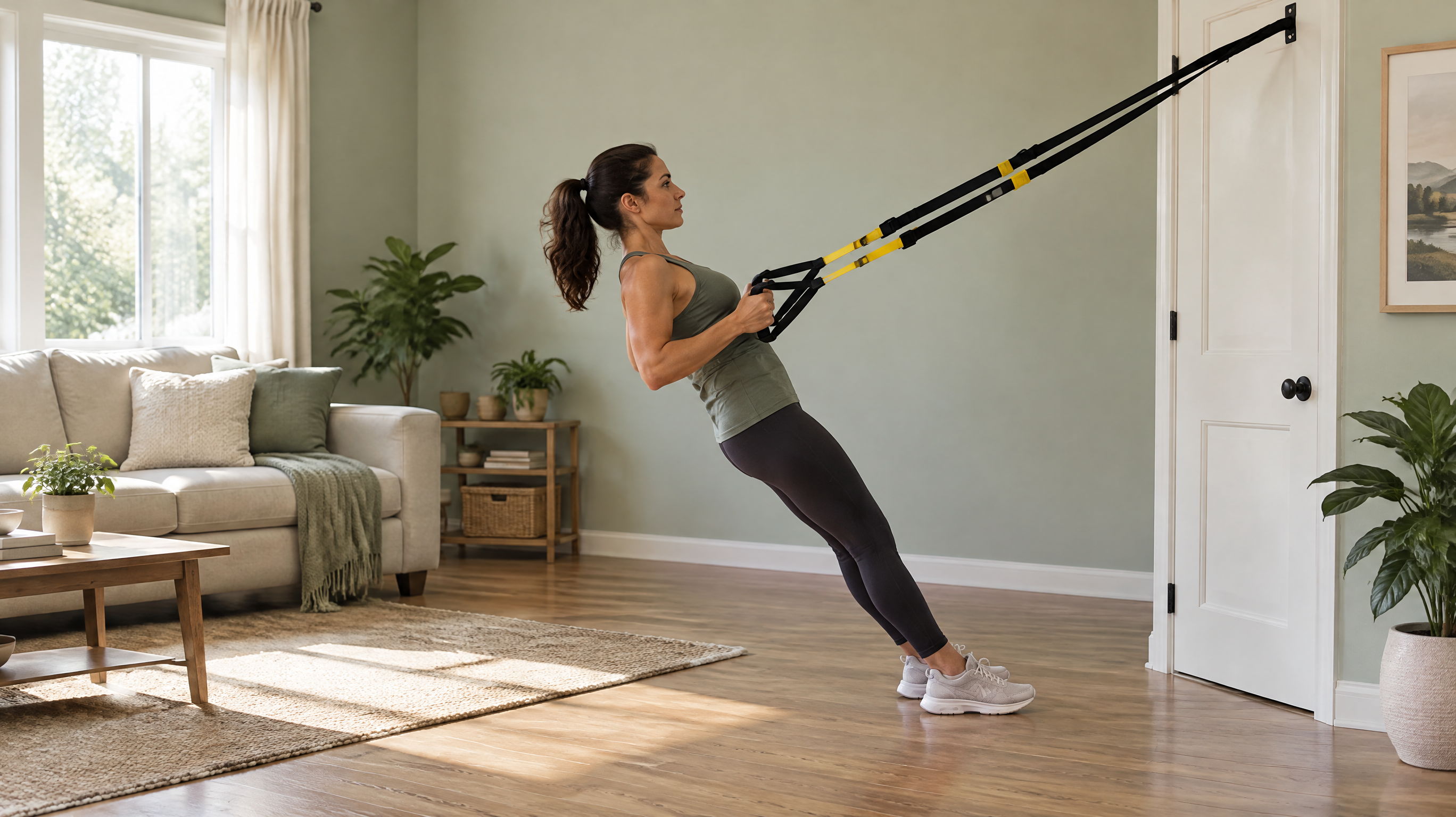
A single adjustable pulley can cover many of the same movements one arm at a time. A band can give you an angled pull from a suitable anchor, though the pull generally increases as the band stretches. Dumbbells work well when you don’t need resistance coming from the side. If you have access to a gym cable station, try a low curl, a two-handle fly, and a high pressdown with light resistance. Notice which movements you’d actually want in your routine.
What living with a cable trainer involves
A frame’s dimensions don’t tell you how much room you need to train. A compact wall station still needs clear space in front of it, and the wall and anchors must meet the manufacturer’s installation requirements.
Between exercises, expect to move the carriages, swap attachments, and change the load. A selector pin makes load changes quick; with plate loading, you’ll handle and store the plates yourself. Before pulling, make sure the carriage pins are seated and the attachment clips are closed. Follow the manual’s inspection guidance and stop using the station if you spot a frayed cable or damaged hardware.
Questions before you commit
Do I need a bench to use a functional trainer?
No. Curls, pressdowns, standing rows, and flyes can all be done without one. A bench is useful if you want back support for a seated press or chest support for a row.
Can I connect both cables to one bar?
Yes, if the manufacturer supports that setup and you have a compatible dual-hook bar or connecting bracket. Check the manual for how to attach it and what resistance to expect; don’t assume it simply doubles the pull at one handle.
Why does the stack touch down before I finish the return?
There may be too little cable pulled out at the start of the rep. With the load resting, try stepping slightly farther from the outlet, then test the full motion with a light setting. If the handle hits a hard stop at the other end, reset your position rather than forcing it.
Can two people use the station at the same time?
Only if the manufacturer allows it and both people can move without their bodies, handles, or cables getting in each other’s way. Separate stacks can give each person their own load, but they don’t guarantee enough room. If you’re unsure, take turns.
Choose your next step
Put your shortlist side by side
See the differences, tradeoffs and who each model suits.
Compare the products →Your next step
- Name the cable exercises you’d do regularly and note which ones need two handles.
- Try the movements at a gym if you can, and notice where you set the outlets.
- Identify what each outlet pulls and which setup the stated cable ratio applies to.
- Account for working clearance, storage, and any mounting requirements.
Next time you see a cable station, trace each handle back to its outlet and load. You’ll be able to tell what the two sides share and what you can adjust separately.