 Review101
Weighted Vests for Workouts: What They Do and How They Work
A weighted vest adds resistance to a walk, step-up, or pull-up without putting anything in your hands. Here’s how the main designs work and when a vest is worth using instead of gear you already own.
Read the article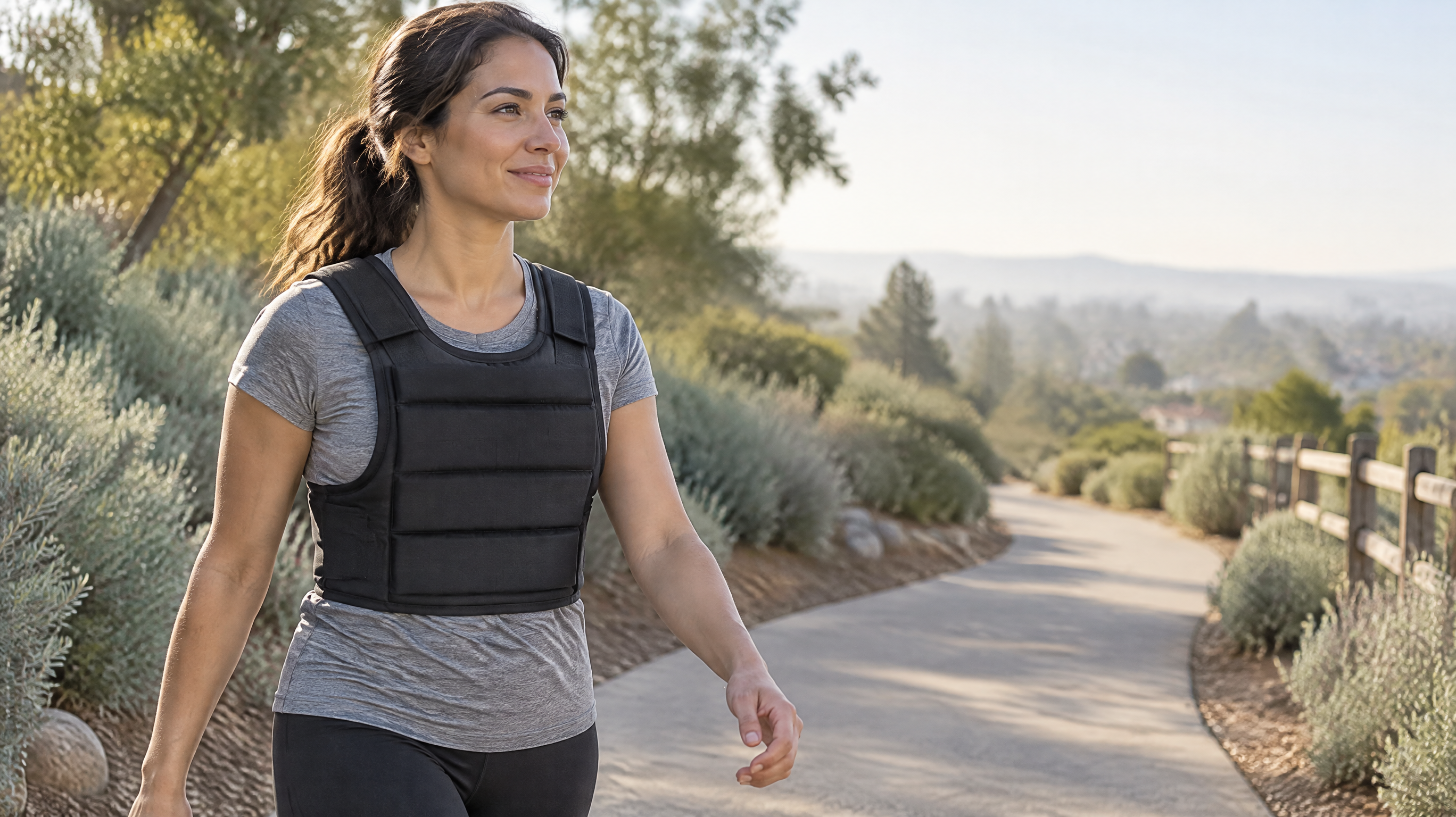
Some links may earn us a commission, at no extra cost to you. How we’re supported
In this article 8 sections
Start with your needs
You want to load a familiar movement without tying up your hands.
Use a hill for a harder walk or dumbbells for a harder step-up.
If the movement is hard to control without weight, don’t add weight to fix it.
As an Amazon Associate, we earn from qualifying purchases. Research-based analysis; no hands-on testing.
The short answer
You don’t need a weighted vest to make a workout harder. Its main advantage is that it adds load to a movement you already control while leaving your hands free.
Worth considering if
- Walkers who want a hands-free load close to the body
- Calisthenics users who want to load an exercise while holding a bar
- People who want different loads for different activities and have an adjustable vest in mind
Hold off if
- The movement already causes discomfort without added weight.
- The vest restricts breathing, rubs, or shifts even after you adjust the fit.
Choose your next step
Ready to compare?
See the differences, tradeoffs and who each model suits.
Compare the products →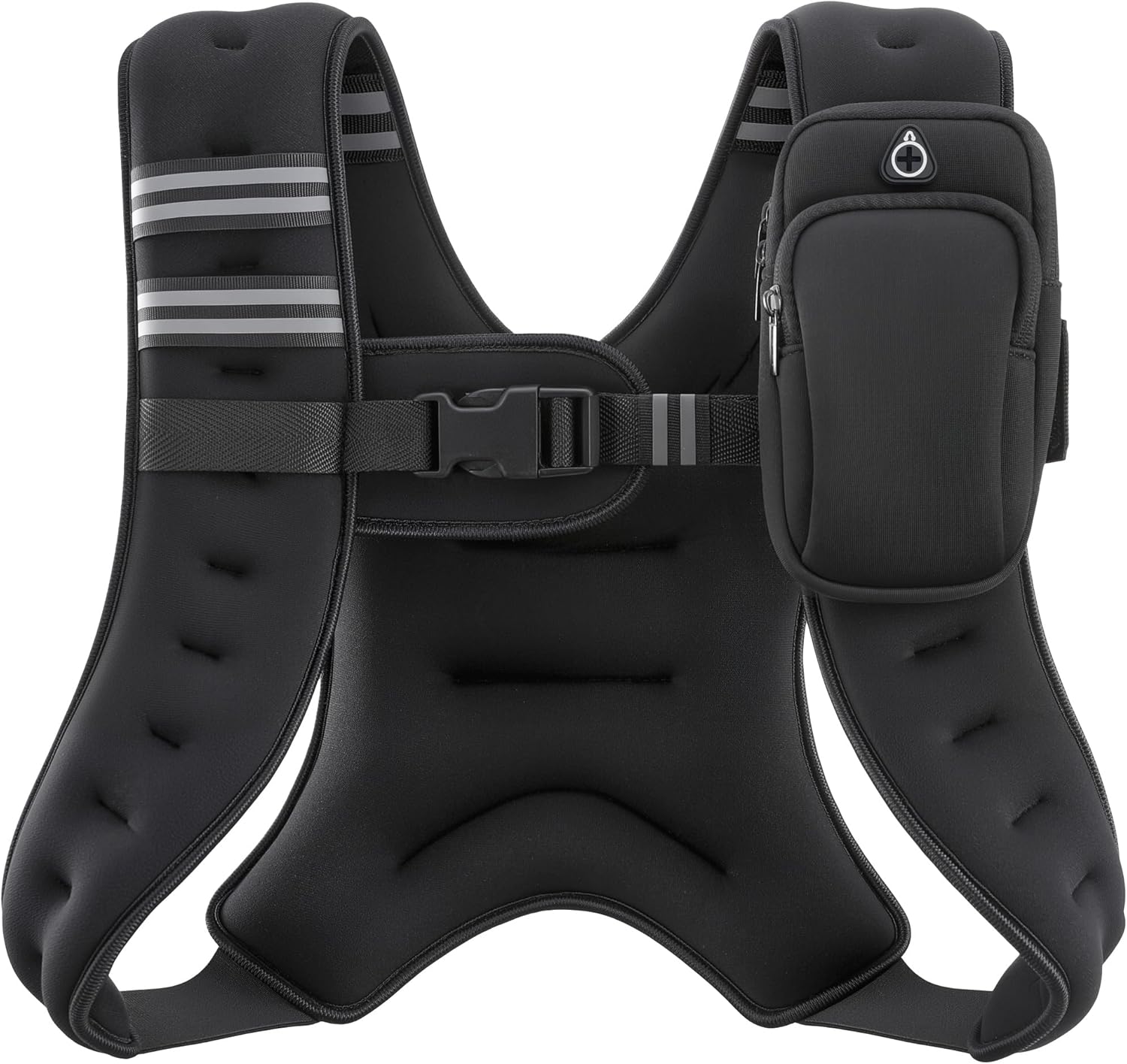


What is a weighted vest?
A weighted vest is wearable resistance. It holds extra weight close to your torso, so you move or support it along with your body. It doesn’t power or guide the exercise. A step-up is still a step-up; you just have more weight to lift onto the platform.
Fit and load are separate. The 12 lb ZELUS Reflective Weighted Vest uses iron sand for its load and adjustable buckles for its fit. Tightening a buckle pulls the vest closer to your body. It doesn’t change what the vest weighs.
Read a listing without mistaking the range for the load
See the movement
Use a locked-off side view to show a few easy steps at the lightest available setup. A subtle marker makes vest shift visible; pause on the two cues: adjust fit if it shifts or rubs, or reduce the load or remove the vest if it stays put but the steps are hard to control.
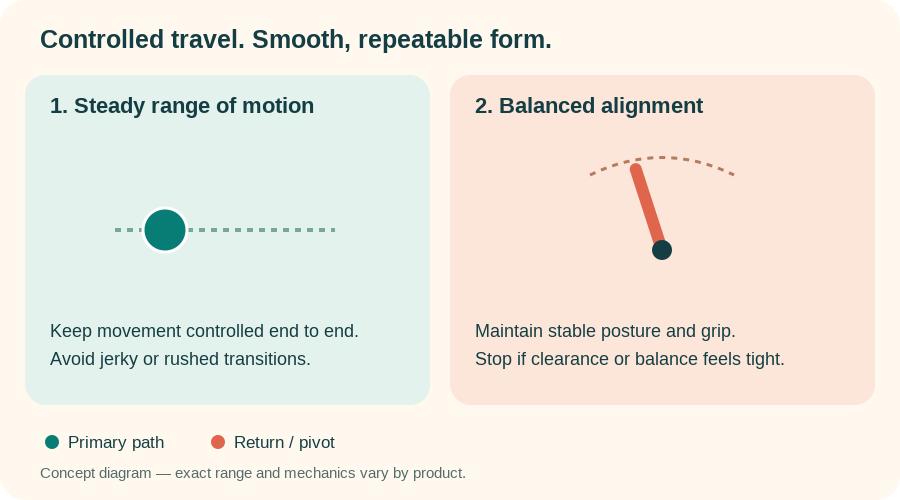
Simplified motion diagram. Exact range and mechanics vary by product.
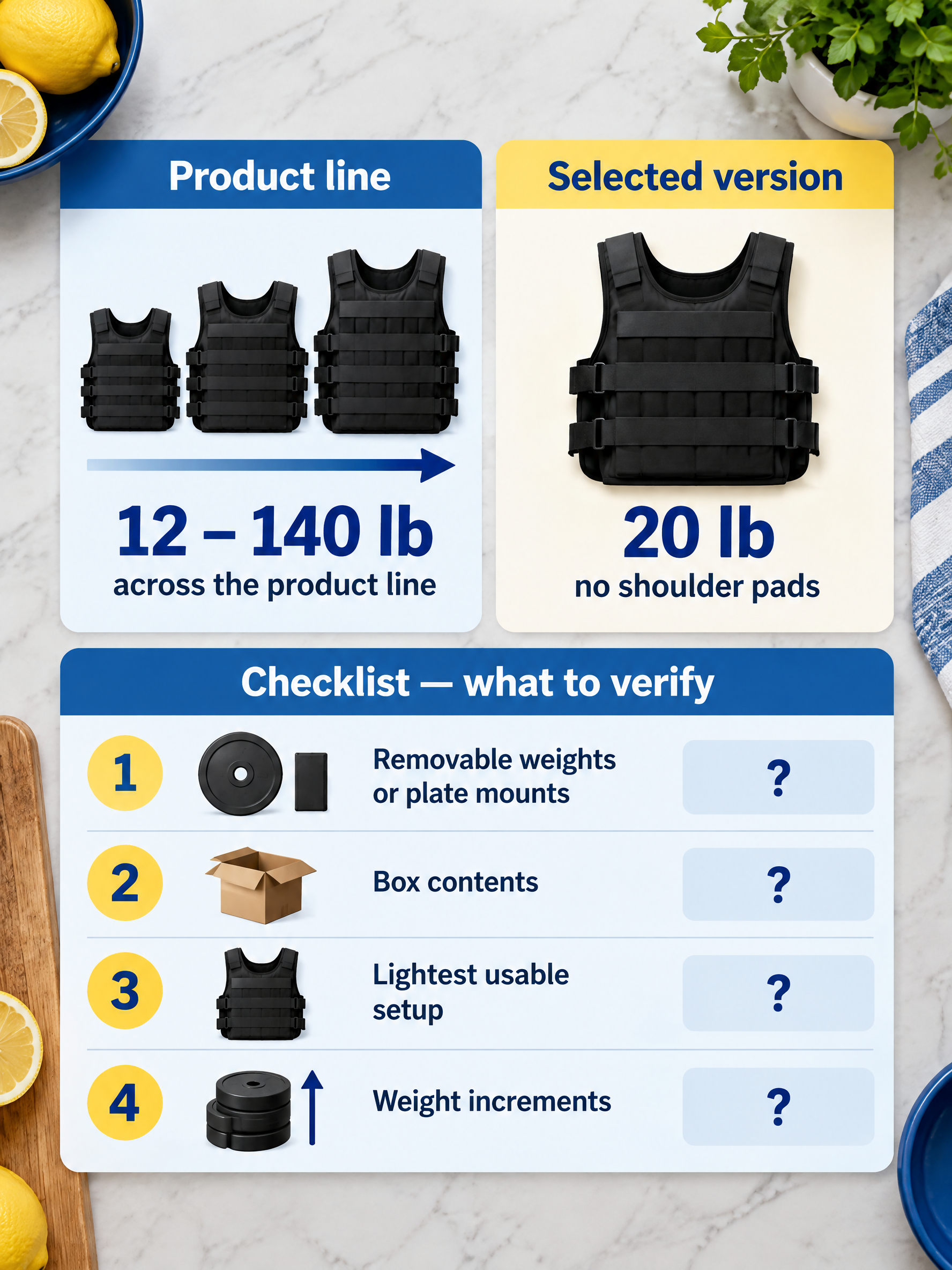
- Find the selected version
Start with the size or configuration field. One RUNmax listing mentions a 12–140 lb line but identifies the selected version as 20 lb without shoulder pads.
- Check what can change
Look for removable weights or plate mounts on that exact version. A range across the product line is not a range one vest can adjust through.
- Confirm what you can use on day one
Check what comes in the box, the lightest usable setup, and the size of each weight increment. Capacity alone doesn’t answer any of those questions.
How added weight changes familiar movements
On a walk, you carry the extra weight from step to step. On a step-up, you raise it with your body and control it on the way back down. On a pull-up, your hands can stay on the bar while you lift both yourself and the vest.
Compare that with holding dumbbells for a step-up. The dumbbells hang from your hands, so grip is part of the task. A vest puts the weight on your torso instead and leaves a hand available for the rail. The vest doesn’t provide balance support or change its weight when you reach the hardest part of a repetition.
Choose your next step
Which model fits your needs?
See the differences, tradeoffs and who each model suits.
Compare the products →Fixed loads, removable inserts, and plate-loaded vests
The loading system tells you whether you pick a weight when you buy the vest or can change it later. Look for an explicit description of how the weight changes, not just the word “adjustable.”
- Fixed load: The 12 lb ZELUS Reflective Vest illustrates a set load carried as iron sand. There are no separate inserts to keep track of, but a strap adjustment won’t give you a lighter setup.
- Removable inserts: You change the load by adding or removing pieces. ZELUS lists its adjustable model at 4–10 lb; the 40 lb ERIC FLAG model uses removable iron weights. The top number alone doesn’t tell you the lightest setup or how large each change in weight will be.
- Plate-loaded: The vest has mounts for compatible plates instead of pockets for inserts. The Kensui EZ-VEST PRO uses 2-inch Olympic plates, sold separately. It may make sense if you already own plates that fit; otherwise, the advertised capacity is not what you get in the box.
Tell a fit problem from a load problem
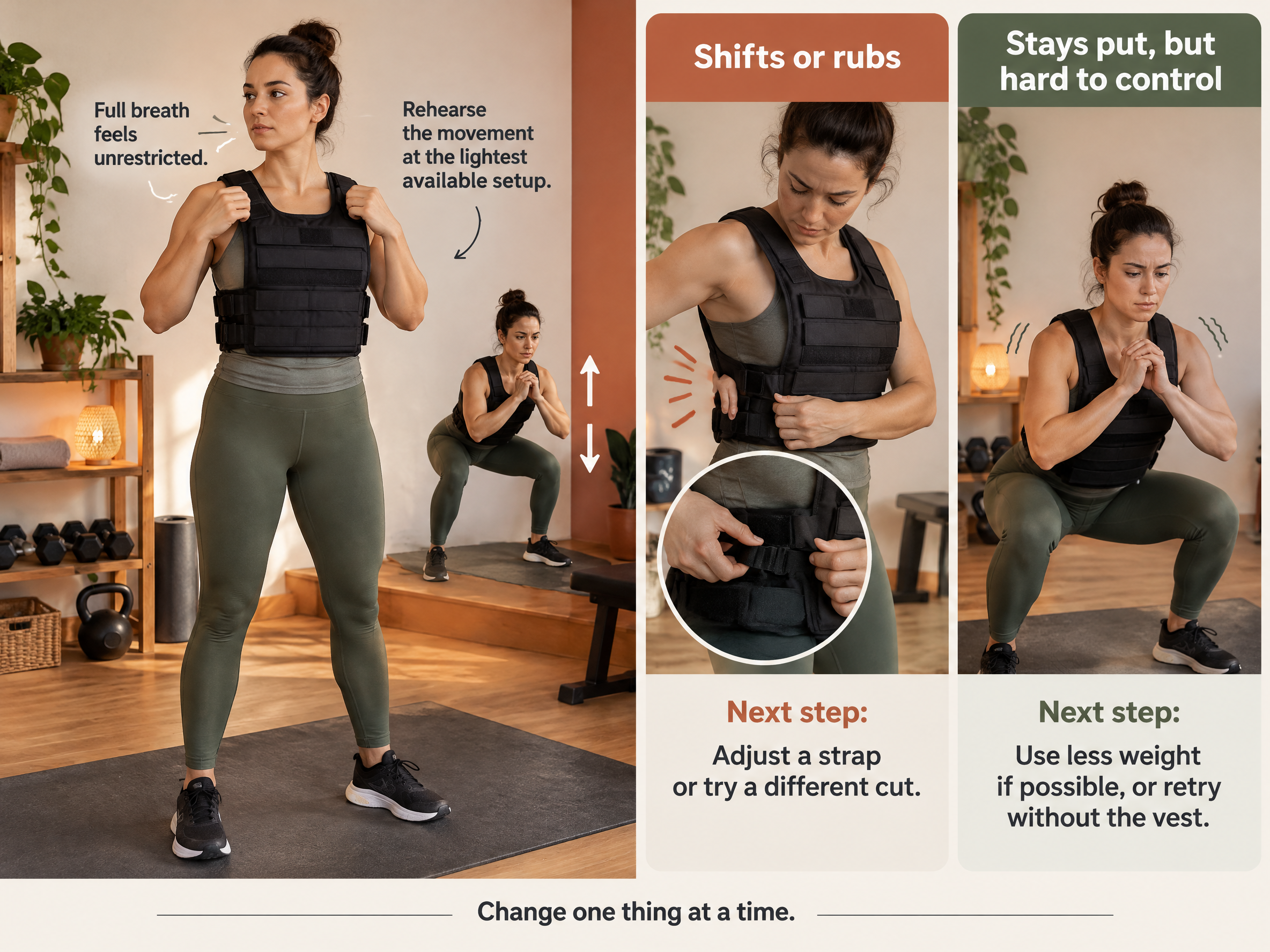
- Set the fit
Wear your usual workout layer and adjust the straps so the vest sits close without restricting a full breath.
- Rehearse the movement
Use the lightest available setup and try the movement you bought it for. Notice whether the vest shifts or catches, or whether the movement itself is harder to control.
- Change one thing
If the vest shifts or rubs, adjust the straps or try another cut. If it stays put but the movement is hard to control, reduce the load if possible or try the movement without the vest.
Why the cut and weight placement matter
Two vests that weigh the same can feel different when you bend or reach. A short cut like the MiR Short leaves more of the lower torso uncovered, which matters if a longer hem gets in the way when you raise a knee. The GORUCK Spy Ruck listing describes a contoured cut, while the Hyperwear Hyper Vest FIT for Women leaves weight modules off the chest.
Those are differences in shape and placement, not guarantees of comfort. A vest that feels fine standing still may press against your ribs when you bend or rub at the shoulders when you reach overhead.
What a vest adds to walking, running, and strength training
For walking, a vest gives you something to carry without requiring a faster pace. If you just want a more demanding walk, a hill or a brisker pace might do the job. A backpack you already own can also carry weight hands-free, though it puts the load behind you instead of against your torso.
Running is a different fit test. A vest that sits still on a walk can bounce or rub with repeated landings. A listing that names both walking and running doesn’t tell you how the vest will move at your pace. If you’re still getting comfortable running without weight, there’s no need to add it.
In strength training, a vest is particularly useful when your hands already have a job, as they do in pull-ups. For step-ups or squats, dumbbells you already own may give you the resistance you want if holding them isn’t a problem.
What owning a weighted vest involves
Make room to air the vest out after a sweaty workout and to store any weights you remove. With inserts or plates, follow the manufacturer’s loading instructions rather than assuming any open pocket or compatible-looking plate will work.
Check the care instructions before washing. The Hyperwear Hyper Vest ELITE, for example, calls for removing the weights, machine washing cold on a gentle cycle, and air drying. If you expect to use a vest often, think about whether you’ll want to unload and reload it each time it needs a wash.
Questions before you commit
Does the number on the label include the vest itself?
Not always. One listing may give the item weight, while another gives the rated capacity. To know what you’ll actually carry, check for separate empty and loaded weights or weigh the assembled vest.
Should I wear a weighted vest all day to get more use out of it?
No. If you bought it for workouts, put it on for the activity you want to load and take it off afterward. There’s no need to leave it on through errands or desk time just because you own it.
Can I wear a weighted vest under a jacket?
Yes, if you can close the jacket and still breathe and move freely. Try the layers together before heading out. If the vest has reflective trim, don’t count on it being visible under the jacket.
Can I leave some weight pockets empty?
Yes, if the vest is designed for partial loading. Follow the maker’s instructions for which pockets to fill and how to secure the inserts, rather than putting all the remaining weight wherever it fits.
Choose your next step
Put your shortlist side by side
See the differences, tradeoffs and who each model suits.
Compare the products →Your next step
- Name the movement you want to load and what you need your hands free for.
- Check the lightest usable weight for the exact version.
- Confirm what weights come in the box and how they’re secured.
- Try the vest in motion over your usual workout layers if you can.
- Read the care instructions and plan where to keep loose weights.
If you’re unsure, try the no-purchase option on your next workout. It’ll help you tell whether you need more resistance or specifically want that resistance on your torso.