Review101
Rowing Machines for Beginners: How They Work and What Muscles They Use
An indoor rowing stroke feels more like a leg push followed by a short pull than an arm exercise. Here’s what moves, where the resistance comes from, and how to tell whether you’d enjoy it for cardio.
Read the article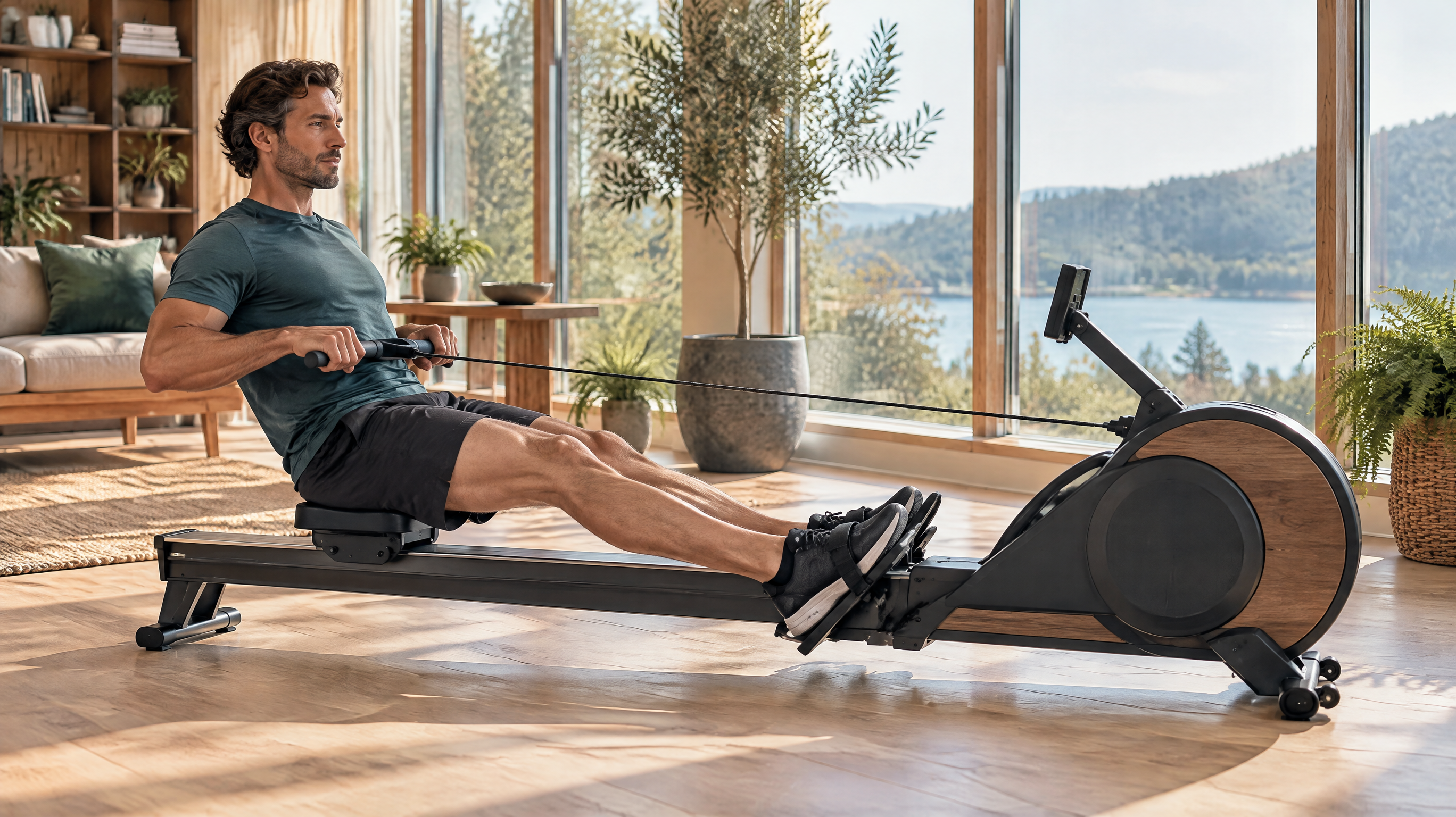
Some links may earn us a commission, at no extra cost to you. How we’re supported
In this article 7 sections
Start with your needs
Use a gym or community-center rower if you’re curious but haven’t felt the sliding stroke.
If access is convenient and you enjoy the workout, you don’t need to give up floor space at home.
If the slide and pull don’t appeal, try stationary cycling for seated cardio or brisk walking for an upright option.
As an Amazon Associate, we earn from qualifying purchases. Research-based analysis; no hands-on testing.
The short answer
You don’t need a rowing machine for cardio. Try one if you want a seated workout that involves both your legs and upper body. If you already enjoy walking or cycling and can do it regularly, there’s no need to switch.
Worth considering if
- People who enjoy a rhythmic, seated workout
- Anyone who wants both their legs and upper body involved in one cardio session
- People who like to vary their effort without interrupting the movement
Hold off if
- A low seat is hard to get onto or the repeated bend feels uncomfortable
- You haven’t tried rowing and would have to rearrange a room to use one at home
- You already have a cardio routine you enjoy and don’t want another machine to maintain
Choose your next step
Ready to compare?
See the differences, tradeoffs and who each model suits.
Compare the products →


What does a rowing machine do?
On a typical indoor rower, you sit on a seat that rolls along a rail and brace your feet against footplates. As you push against the footplates, the seat rolls away from them and you draw the handle toward you against resistance. The frame stays in place; the sliding seat gives your legs room to straighten and bend again.
On a center-pull rower, both hands share one handle attached to a strap, cord, or chain. A full-motion rower can have two moving arms instead, one for each hand, as on the Sunny Health & Fitness Smart Full Motion Rower. The handle layout changes the path your hands follow. It doesn’t, by itself, tell you what creates the resistance.
What happens inside a center-pull flywheel rower
See the movement
Follow the sliding seat drive along the rail and the connected handle stroke.
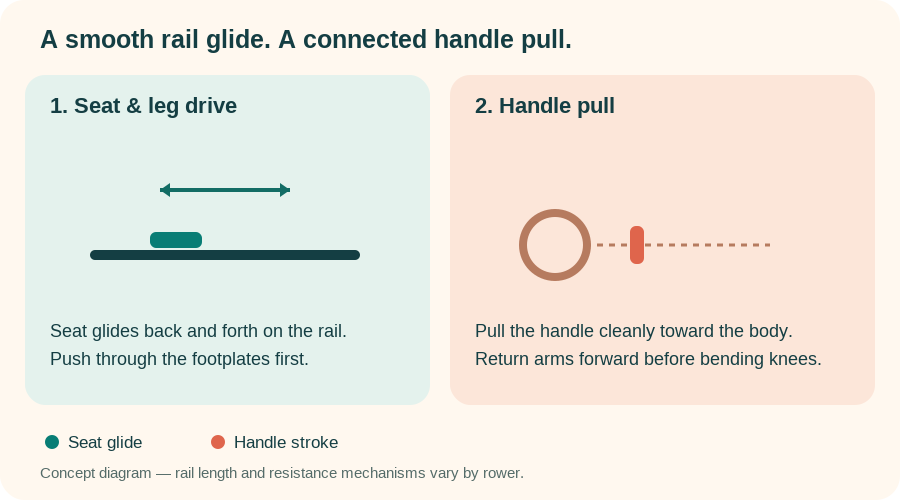
Simplified motion diagram. Rail length and resistance vary by rower.
- Turn the flywheel
As the handle travels toward you, the strap or chain unwinds and turns the flywheel.
- Feel the load
Drag or braking opposes the spin. That opposition travels back through the strap or chain, so you feel it in the handle.
- Take up the slack
As the handle travels back toward the machine, a return mechanism gathers the strap or chain for the next stroke.
What muscles does a rowing machine work?
The working part of the stroke is called the drive. It starts with a push through your feet. The quadriceps at the front of your thighs help straighten your knees, and your glutes help extend your hips. Your abdominal and back muscles steady your trunk so the force from that leg push carries through to the handle.
As the handle comes in, your lats and upper-back muscles help draw your upper arms back, while your biceps help bend your elbows. The pull is the part you can see most clearly, but your arms are finishing work your legs started.
The trip forward is the recovery. The handle moves away, your knees bend, and the seat rolls back toward the footplates. You’re still controlling the movement, but you’re resetting for the next drive, not making a second hard pull. That contrast gives rowing its push-and-glide rhythm.
Choose your next step
Which model fits your needs?
See the differences, tradeoffs and who each model suits.
Compare the products →Air, water, magnetic, and hydraulic rowers
The resistance mechanism is what pushes back during the drive. A damper, dial, or numbered level changes how that resistance feels on a particular machine. Level numbers aren’t a common scale across rowers, and you don’t have to turn the setting up to put more effort into a stroke.
A hybrid combines mechanisms rather than creating a fifth type. The Merach R60N, for example, lists both air and magnetic resistance.
- Air: The stroke spins a fan. As the fan turns faster, air drag increases, so a firmer drive can feel heavier at the same setting. On models with a damper, it changes airflow to the fan rather than setting how hard you have to row.
- Water: The stroke turns a paddle inside a tank. The water swishes and pushes back more as the paddle moves faster. On designs that allow fill adjustments, changing the amount of water changes the feel, but you can vary your effort without touching the tank.
- Magnetic: A magnetic brake resists a spinning flywheel without rubbing against it. On adjustable models, a dial or electronic control changes the braking effect; you still choose your own rhythm.
- Hydraulic: A piston moves inside a cylinder, and restricted fluid flow resists that movement. On adjustable designs, a control changes how much the cylinder pushes back. The load comes from the cylinder rather than a spinning fan or paddle.
How to tell whether rowing belongs in your routine
- Set the score aside
Give a shared rower an easy trial without chasing a pace, distance, or calorie target.
- Separate unfamiliar from uncomfortable
Notice what feels less awkward as you get used to the motion and what still bothers you, such as getting off the low seat.
- Compare it on an ordinary day
Give an accessible alternative the same low-pressure trial. Which would you actually pick when time is short?
What can you get out of an indoor rowing workout?
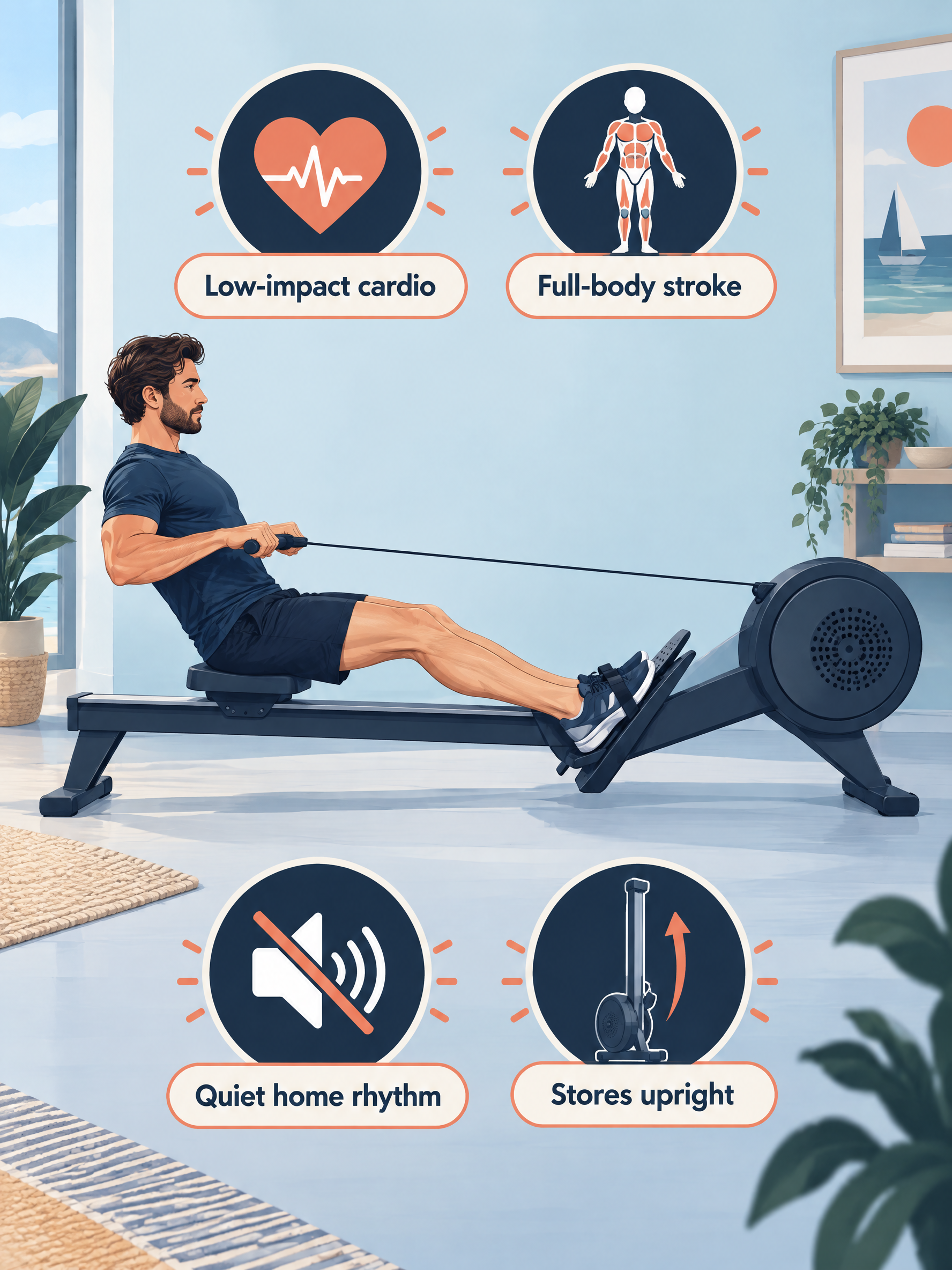
Rowing lets you raise your heart rate and breathing while seated, without the repeated foot landings of running. Your upper and lower body work together, and once the motion feels familiar, you can alternate easier and firmer drives without getting off the machine or reaching for a dial.
Time and stroke count are enough to start making sense of a session. A magnetic rower such as the Merach Q1S and a compact hydraulic rower such as the Sunny Health & Fitness SF-RW1205SMART both list those readouts. Time tells you how long you rowed; count tells you how many strokes you took. More strokes in the same amount of time means a quicker average rhythm, not necessarily more effort in each drive. Treat the calorie readout as an estimate, not a measure of what you personally burned or a prediction of weight loss.
When a rower fits your routine
If you like rowing but have reliable access to a shared machine, that may be all you need. If getting onto a low seat is difficult or the repeated knee bend feels uncomfortable, there’s no reason to force the fit. A stationary bike offers seated cardio with a continuous pedaling rhythm and no repeated pull. Brisk walking is an equipment-free option if you’d rather stay upright.
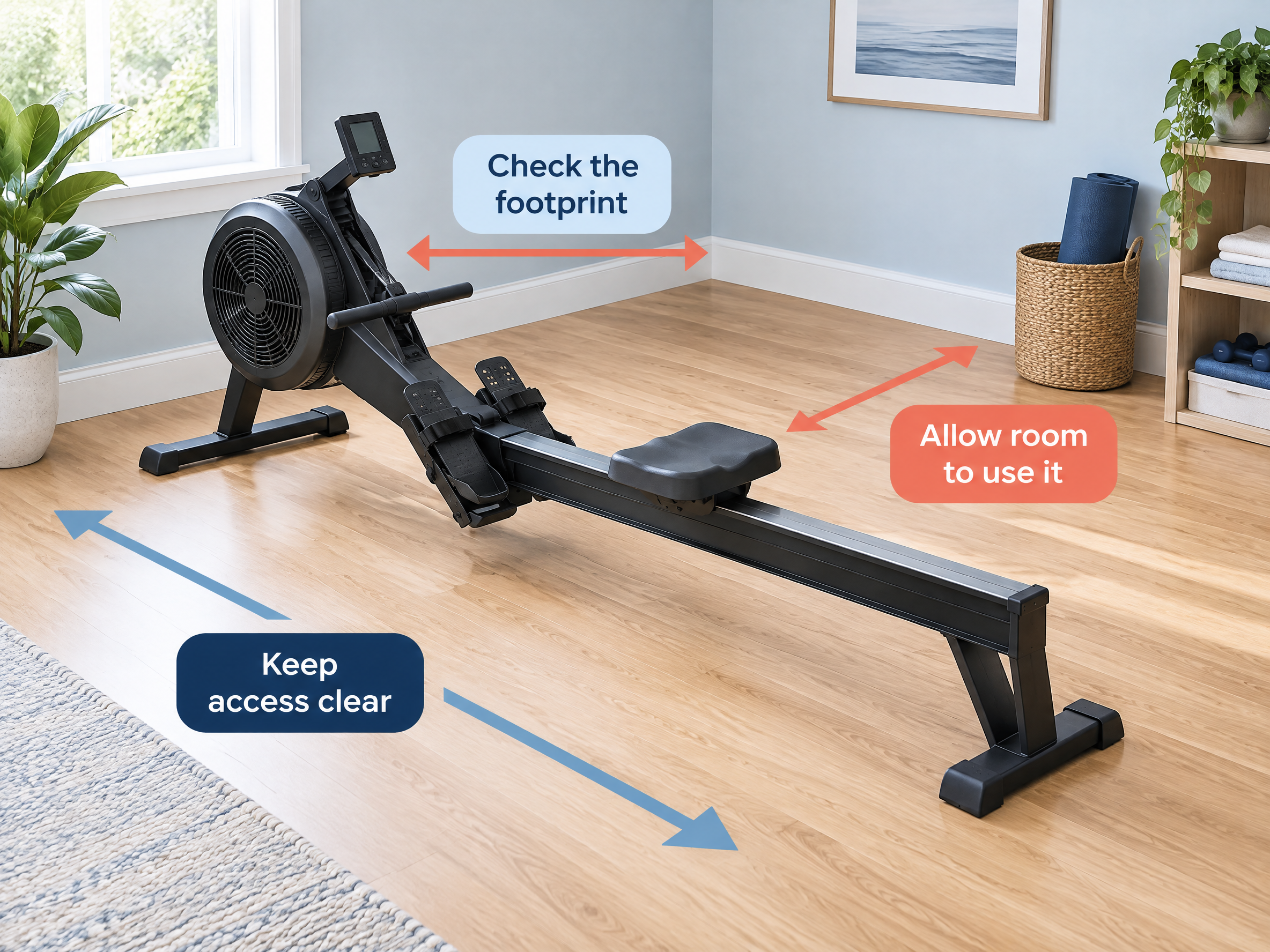
At home, plan for the space a rower takes up in use, not just in storage. You’ll want a clear approach to the seat and a place where the sound won’t disrupt others. If you’ll have to move the machine out of a closet every time, think about whether you’d still use it on a busy day.
Routine care usually means wiping off sweat, keeping the rail clear of grit, and following the manual for upkeep. A water rower adds tank care, so check the manufacturer’s instructions for maintaining the water.
Questions before you commit
Do I need special shoes or gloves to use a rowing machine?
No. Start with comfortable athletic shoes that sit securely against the footplates, and keep loose laces clear of moving parts. Gloves are optional.
Can two people of different heights use the same rower?
Often, but both people should try the full motion. A taller person needs enough rail travel to finish the leg drive, while a shorter person needs to be able to reach the handle without straining. Check that the foot straps hold both users’ shoes securely.
Can rowing replace strength training?
Not if getting stronger is your main goal. Indoor rowing uses several muscle groups, but the repeated stroke is better suited to sustained effort than to progressively loading specific movements. It can complement strength training without replacing it.
Choose your next step
Put your shortlist side by side
See the differences, tradeoffs and who each model suits.
Compare the products →Your next step
- Try a shared rower before committing space at home.
- Check that you can get on and off comfortably and that the sliding motion suits you.
- Account for space in use, sound, storage, and cleanup.
- Compare rowing with an activity you can already get to easily.
On your first visit, ask gym staff which monitor readout shows elapsed time. That’s one number you can use without learning the whole display.