 Review101
Portable Exercise Equipment for Beginners: Types, Movements, and Uses
Suspension straps can go in a travel bag; a mini stepper can move out of the way after a workout. Both are portable, but they change how you exercise in very different ways.
Read the article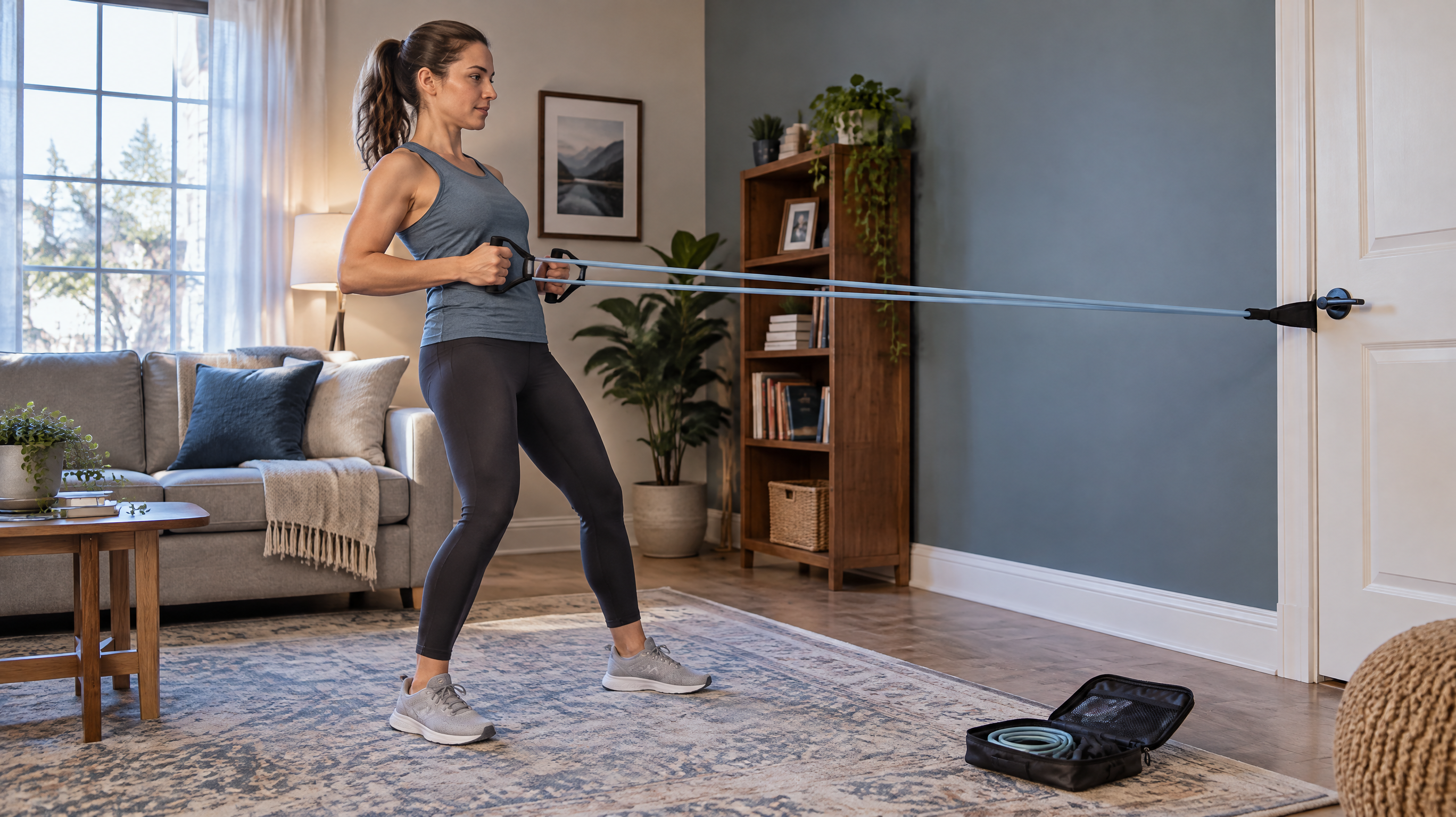
Some links may earn us a commission, at no extra cost to you. How we’re supported
In this article 7 sections
Start with your needs
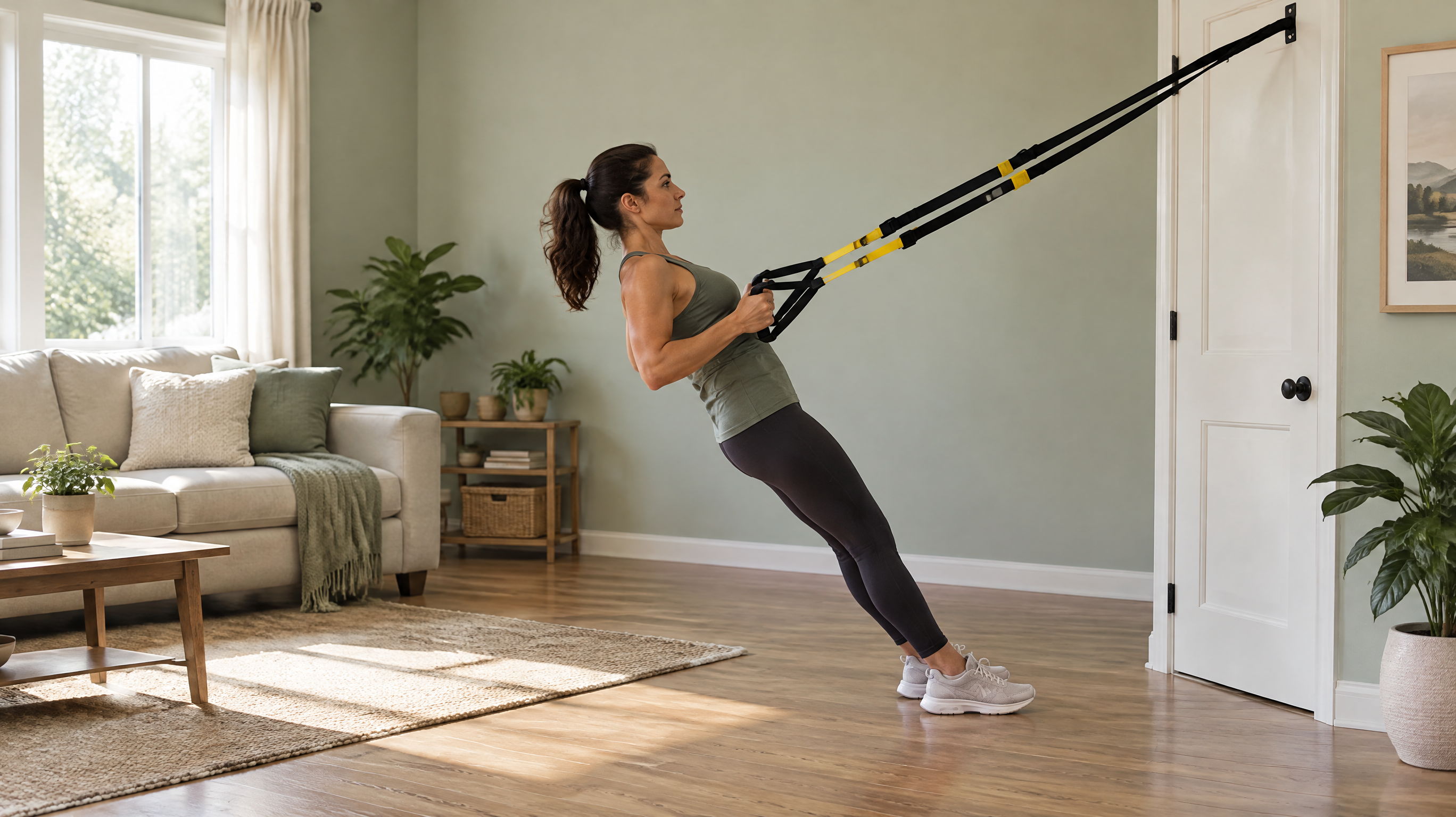
Plan for the room at the other end. If you can’t count on a suitable anchor, choose movements that don’t require one.
Check what you’ll actually need to lift, fold, or detach. A compact footprint won’t help if the gear is awkward to put away.
Try walks, sit-to-stands from a sturdy chair, or counter push-ups. Add gear only if you can name what’s missing.
As an Amazon Associate, we earn from qualifying purchases. Research-based analysis; no hands-on testing.
The short answer
You don’t need portable exercise equipment to get started. It’s useful when it gives you a movement you can’t easily do now, makes an exercise easier to adjust, or helps you fit activity into a space you already use.
Worth considering if
- People who want to practice a pulling movement or add adjustable resistance at home.
- Anyone who works out in a shared room and needs the floor back afterward.
- Travelers who know where and how they’ll set up.
Hold off if
- You haven’t tried the movement and don’t know whether you’ll want to repeat it.
- You lack the required anchor, stable surface, or clearance.
- Your current routine already gives you the movements you want.
Choose your next step
Ready to compare?
See the differences, tradeoffs and who each model suits.
Compare the products →


What does “portable” mean for workout equipment?
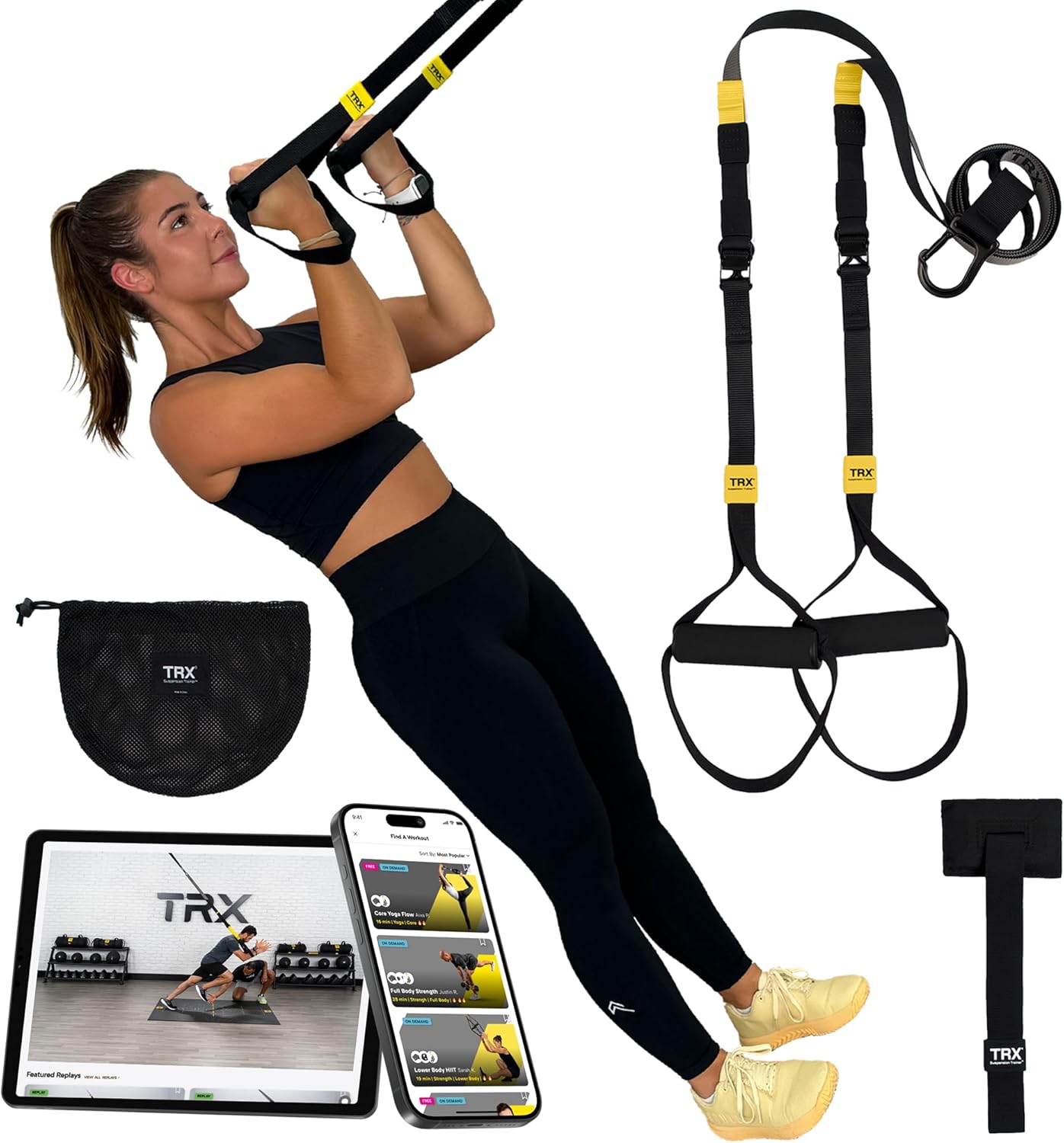
Some gear is made to travel; some is simply easy to put away. The TRX GO suspension trainer has a listed weight of about 1.5 pounds, while the Sunny mini stepper weighs about 13 pounds and measures roughly 16 by 12 by 14 inches. The straps are easier to pack. The stepper makes more sense if you want to reclaim a patch of floor after a workout.
Item weight tells you what you’ll have to carry. Storage dimensions tell you whether it’ll fit in a bag, closet, or under a bed. Neither tells you how much room you’ll need to exercise: straps need a suitable anchor and room to lean, while a stepper needs a level surface and enough clearance to get on and off.
Try the motion before deciding
See the movement
Show one slow pull and controlled return under light tension. Use a fixed side view so the viewer can see the full band path and attachment without a cut hiding the return.
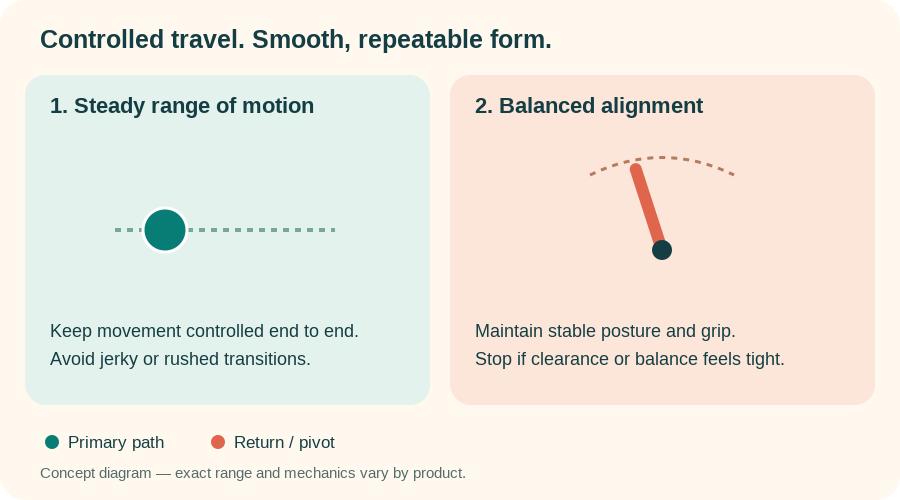
Simplified motion diagram. Exact range and mechanics vary by product.
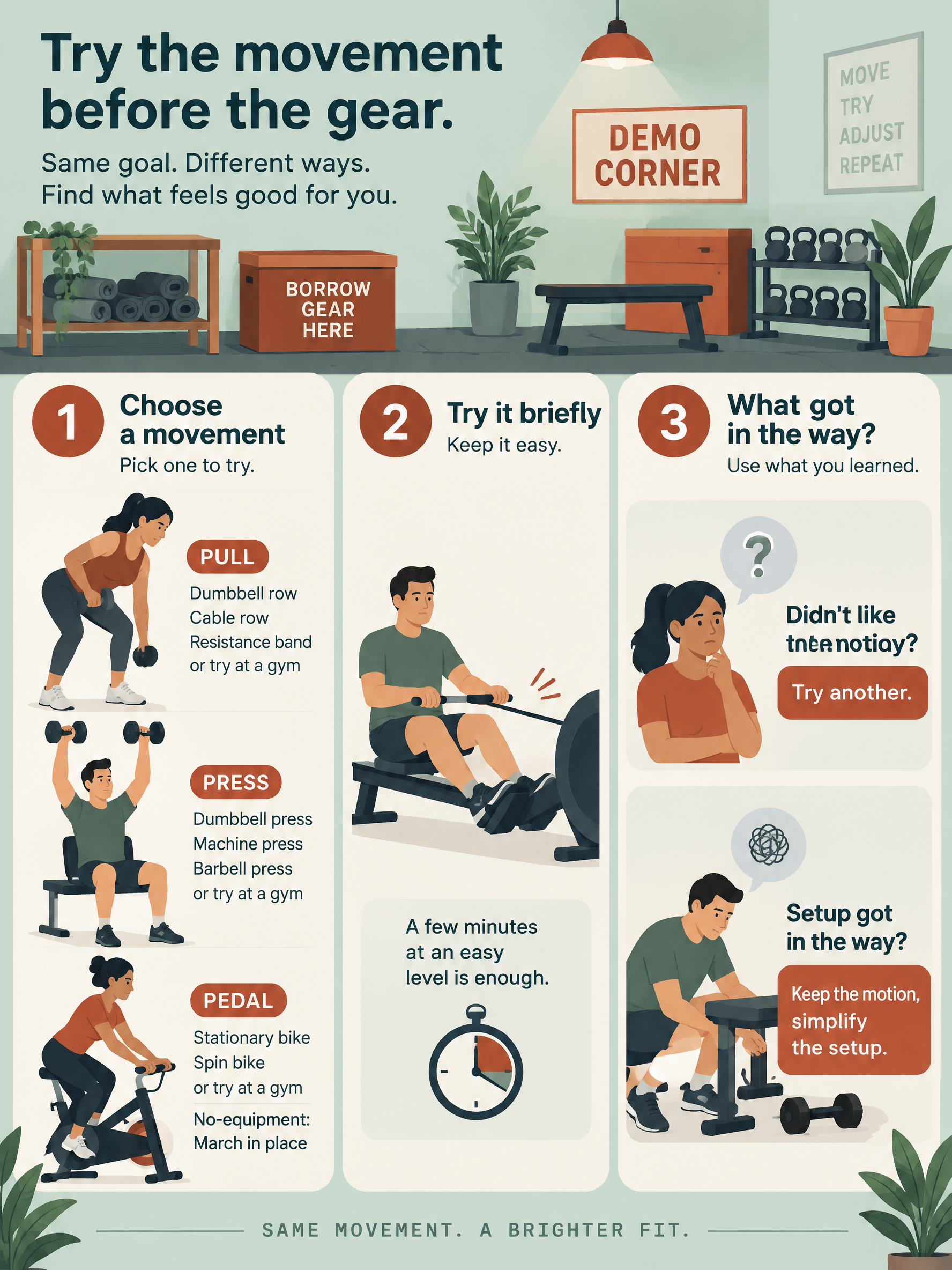
- Pick one movement
Decide whether you want to practice a pull, a press, or a steady rhythm such as pedaling. Start with the motion, not the number of exercises on the box.
- Try it briefly
Borrow the gear, try it at a gym, or sample a no-equipment version where one exists. Start at a difficulty you can control.
- Name what got in the way
If you disliked the motion, try a different type. If you liked it but the setup got in the way, look for a simpler way to do that same movement.
Bodyweight equipment: push-up boards and suspension straps
A push-up board gives you set places to put your hands, which makes a grip easier to repeat. The board itself doesn’t add resistance: you’re still pressing against a portion of your body weight. If a floor push-up is too hard, raising your hands to a wall or sturdy counter is a more direct way to make it easier than switching grips.
Suspension straps give you a way to pull against your body weight. In a suspension row, your feet stay on the floor as you lean back and pull your chest toward the handles. Start more upright for an easier row; lean farther back for a harder one. The straps don’t need to stretch. Changing your body angle changes how much of your weight you have to pull.
Choose your next step
Which model fits your needs?
See the differences, tradeoffs and who each model suits.
Compare the products →Resistance equipment: bands, bars, and cables
An elastic band generally pulls harder the farther you stretch it. In a band curl, that can mean a light pull at the start and more tension as your hand rises. A dumbbell’s weight, by contrast, stays the same throughout the curl, even though some positions can feel harder than others.
A Pilates bar or workout bar gives both hands a shared grip instead of separate handles. A band system with a base adds a platform to stand on and a place to attach the bands. The bar and base change how you hold or anchor the exercise; the bands still provide the elastic pull.
Some cable systems let you choose how resistance is applied. The TOUSAINS HIVEGYM, for example, lists constant, concentric, and eccentric modes. In a curl, the concentric phase is the lift and the eccentric phase is the controlled lowering. A phase-specific mode lets you emphasize one part of the movement.
Check what any number in pounds actually describes. The HIVEGYM’s listed 66-pound maximum resistance is cable pull, not the weight of the 4.4-pound unit. A user-weight limit, such as the Sunny stepper’s listed 300-pound capacity, tells you how much user weight the equipment is designed to support.
Set up a first session with resistance bands
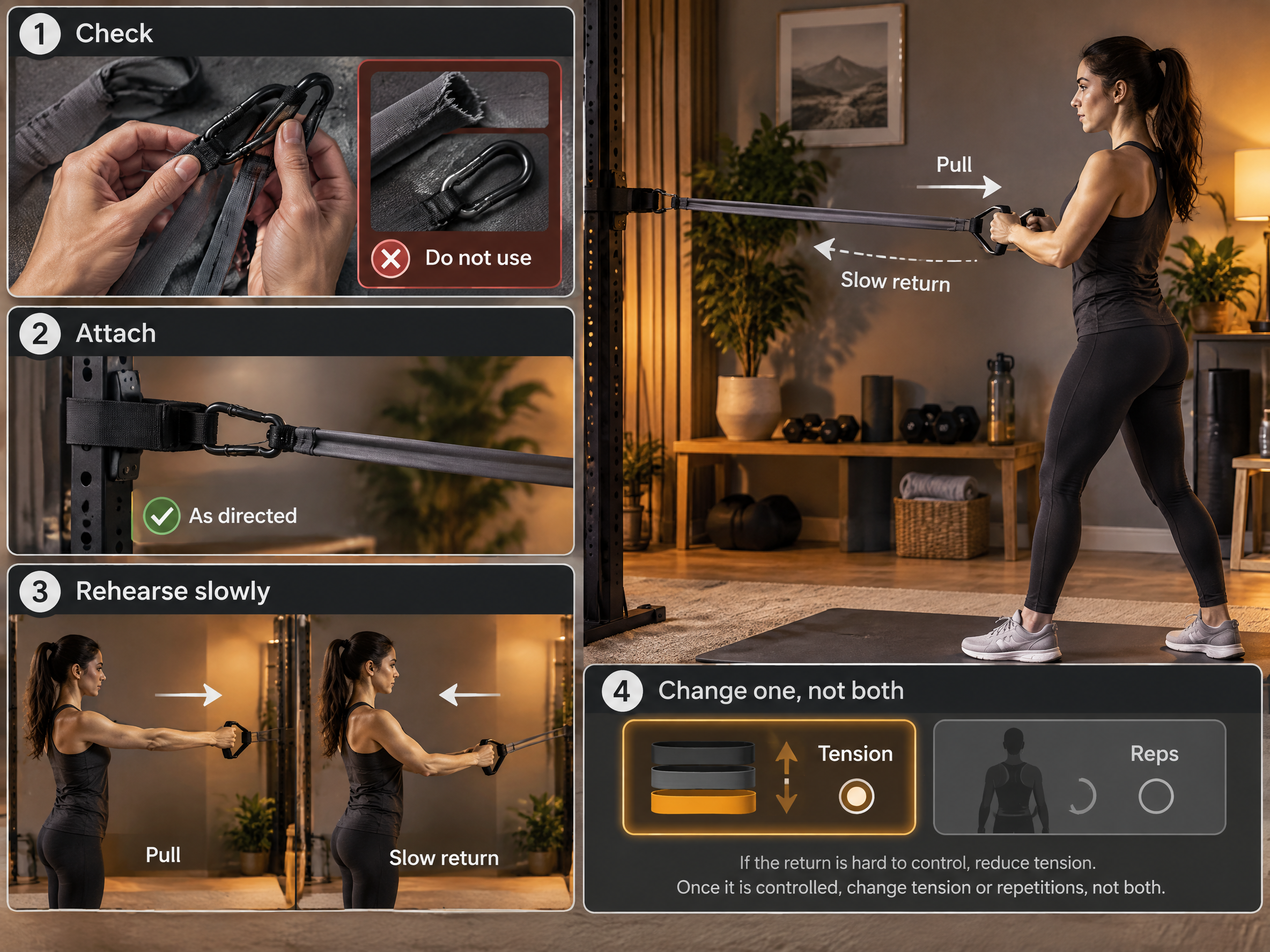
- Inspect and attach
Check the band for cracks or tears and the clips for wear. Follow the manual’s attachment method.
- Rehearse with light tension
Move slowly in both directions. Check that the band clears sharp edges and that you can control its return without letting it snap back.
- Adjust one thing at a time
If you can’t control the return, reduce the tension. Once the movement feels controlled, change either the tension or the number of repetitions, not both at once.
Compact cardio: stepping, pedaling, and rebounding
On a hydraulic mini stepper, you stand and shift your weight from foot to foot, pressing the pedals down against resistance. With an under-desk pedal exerciser, the chair supports you while your feet turn in circles. Before counting on pedaling at a desk, check that your knees clear the underside and that your chair won’t roll or slide.
A rebounder is a small exercise trampoline. The mat gives when you press down and springs back, so the motion is a bounce rather than a step or a pedal stroke. A folding frame can save storage space, but you still need room around and above the rebounder during use. The BCAN example is 40 inches across and weighs about 26 pounds.
These formats are generally easier to move or stow at home than to pack for a trip. If all you want is a regular stretch of activity, a walk may fit your day just as well. A familiar staircase can also give you a feel for repeated stepping, though it won’t feel identical to a hydraulic machine.
Specialty gear for Pilates, balance, chest, and abs
A reformer-style Pilates board lets a hand or foot slide along a path. Part of the work is controlling how far it travels and how it returns; elastic straps can add a pull to work against. A rocking balance board instead tilts beneath you, so the challenge is making small weight shifts to stay steady.
A handheld hydraulic chest exerciser resists as you squeeze the handles together. A dedicated ab trainer, such as the Wonder Core Smart, is designed around abdominal exercises. A focused tool can be handy when you already know what you want to practice, but it won’t give you the same range of movements as a more versatile strength setup or a way to do sustained cardio.
Questions before you commit
Can I attach workout straps or bands to any door?
No. Use a door only if the equipment instructions permit it and the door, frame, and closing direction meet the anchor requirements. Make sure nobody can open it while you’re exercising.
Will compact workout equipment be quiet enough for an upstairs apartment?
Not necessarily. Footfalls and vibration can travel through the floor even when the equipment itself is quiet. If possible, test the motion in the room where you’ll use it, and use a mat only if the manual allows it and the equipment remains stable.
How much upkeep does portable equipment need?
Most basic upkeep is cleaning, inspecting for wear, and storing the gear as directed. Wipe off sweat after use and check that any folding parts lock before your next session. Replace worn load-bearing parts as directed rather than improvising a repair.
Choose your next step
Put your shortlist side by side
See the differences, tradeoffs and who each model suits.
Compare the products →Your next step
- Name the movement you want to do and when you’ll do it.
- Measure the storage spot and the clear space you’ll need during use.
- Check the floor, chair, or anchor against the setup instructions.
- Know which parts you’ll need to attach, unfold, or charge.
Picture an ordinary workout day: where the gear starts, how it gets set up, and where it goes afterward. If that routine feels easy to repeat, the equipment is portable in the way that matters to you.