 Review101
Olympic Bumper Plates for Weightlifting: What They Are and How They Work
Bumper plates give a barbell a rubber rim to land on. A light, full-diameter pair can also keep the bar at the same starting height while you learn the snatch or clean.
Read the article
Some links may earn us a commission, at no extra cost to you. How we’re supported
In this article 7 sections
Start with your needs
You train Olympic lifts in a designated drop area, or want a lighter load without lowering the bar’s starting position.
You’re unsure what starting load you need or whether you’ll train often enough at home to justify a platform.
Your plates fit, you lower lifts under control, and you don’t need a full-height start with light loads.
As an Amazon Associate, we earn from qualifying purchases. Research-based analysis; no hands-on testing.
The short answer
Use bumpers if you train the snatch or clean and jerk where barbell drops are permitted, or if you need a light load at full starting height. If you mainly squat, press, or lower deadlifts under control, you probably don’t need to replace plates that already fit.
Worth considering if
- Beginners practicing the snatch or clean from the floor with light, full-diameter plates.
- Weightlifters who use a platform where barbell drops are permitted.
Hold off if
- You haven’t confirmed that your space can handle the impact, vibration, and noise.
- The empty bar is already too heavy for technique work.
- Your gym already provides suitable bumpers, or your current plates meet your needs.
Choose your next step
Ready to compare?
See the differences, tradeoffs and who each model suits.
Compare the products →

What makes a bumper plate different from an iron plate?
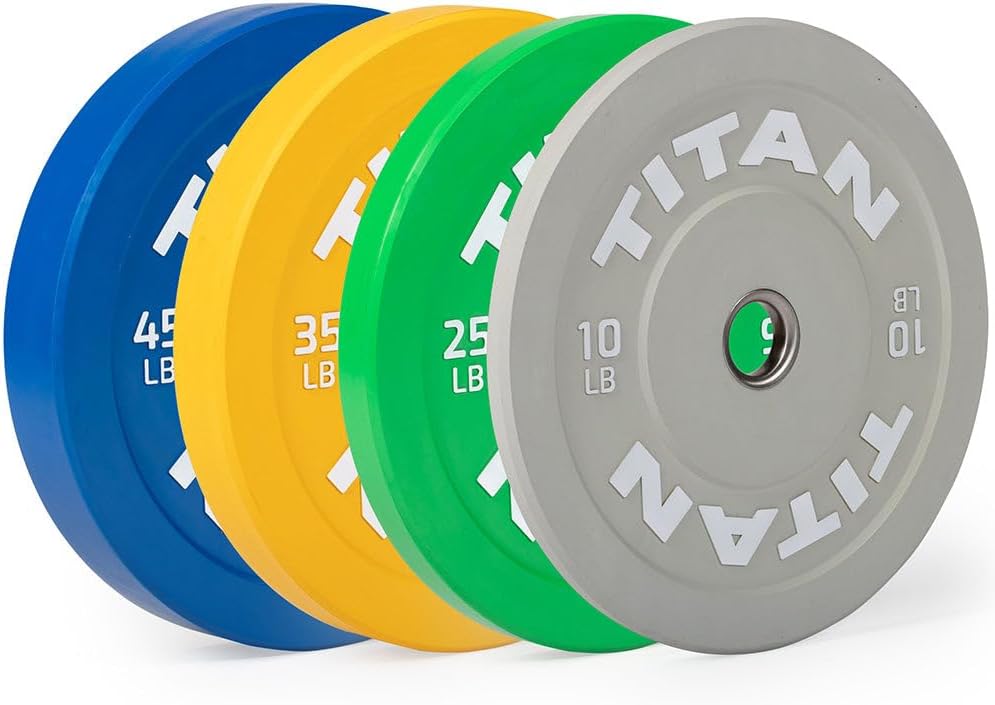
A rubber bumper has a substantial rubber body, so the rim itself is built to take a landing. A rubber-coated iron plate is still mostly metal: the coating can help prevent scuffs, but it doesn’t make the plate suitable for drops. If a listing just says “rubber,” check whether that describes the body or only the coating.
A common design puts a steel hub at the center, where the plate meets the bar, and rubber around the outside. XMASTER’s competition-style listing, for example, specifies a steel hub and natural rubber. “Olympic” usually describes the sleeve the plate fits, not whether it can be dropped or is approved for competition. An iron plate can fit an Olympic bar, too.
Build your first practice load
See the movement
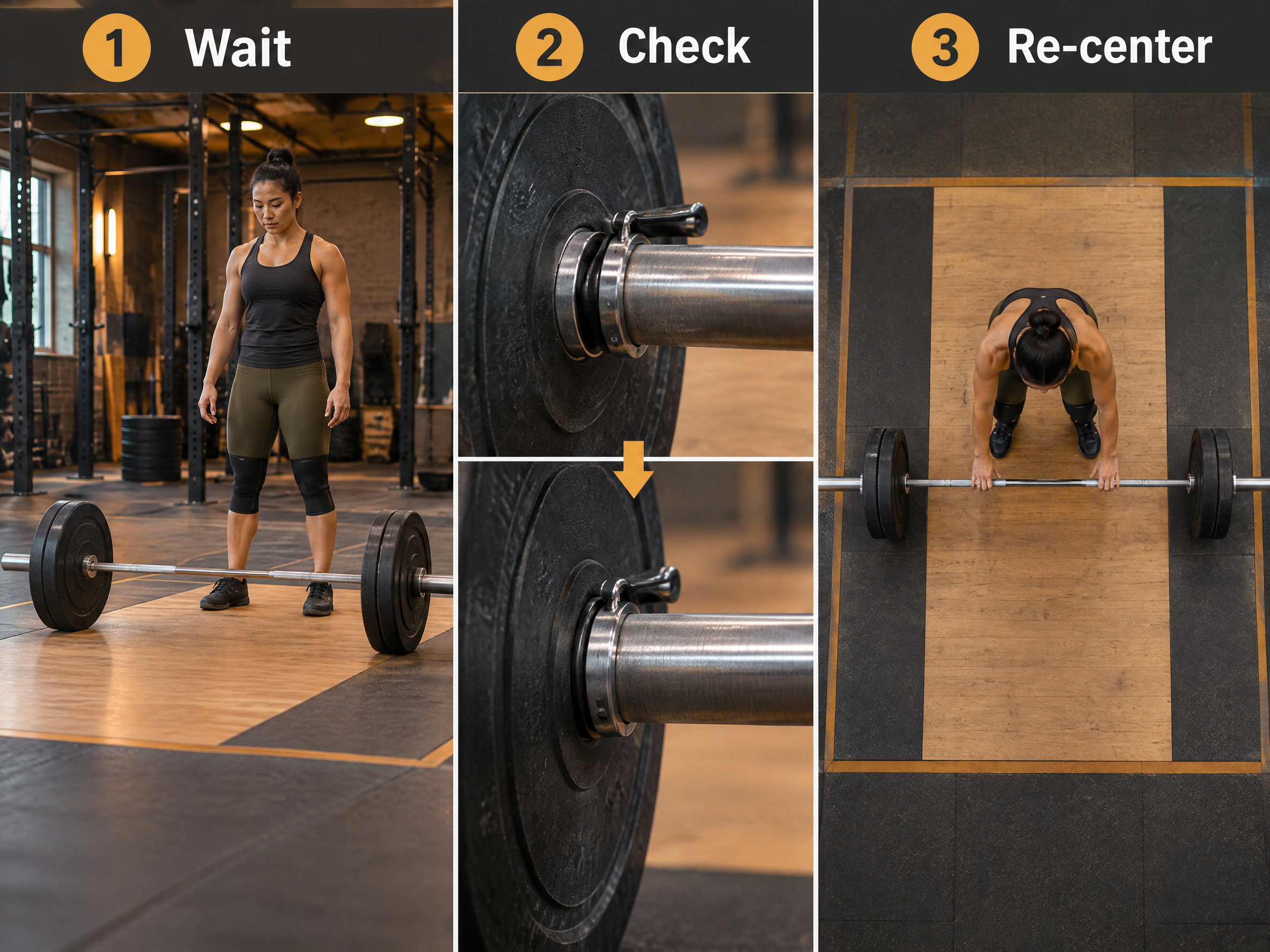
Open just after a permitted landing. Hold a wide shot as the bar settles and the lifter stays clear, then cut to the collar check and finish overhead with the bar re-centered.
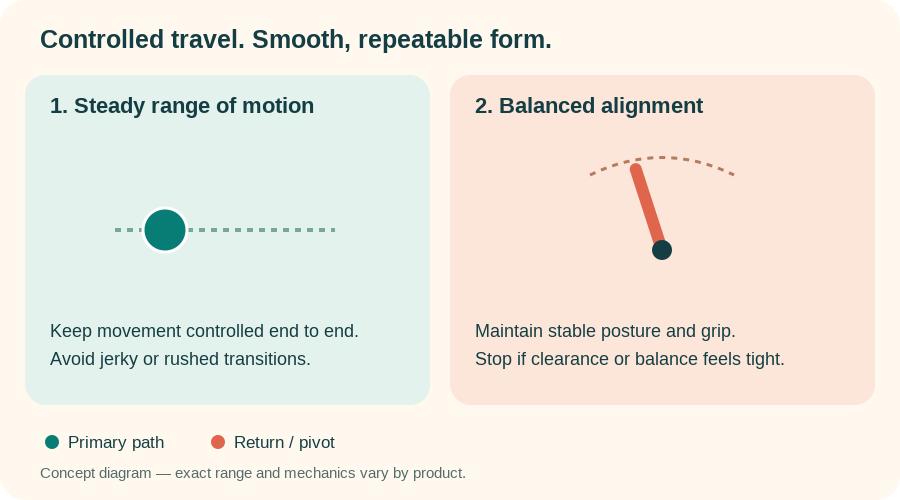
Simplified motion diagram. Exact range and mechanics vary by product.
- Weigh the bar into the plan
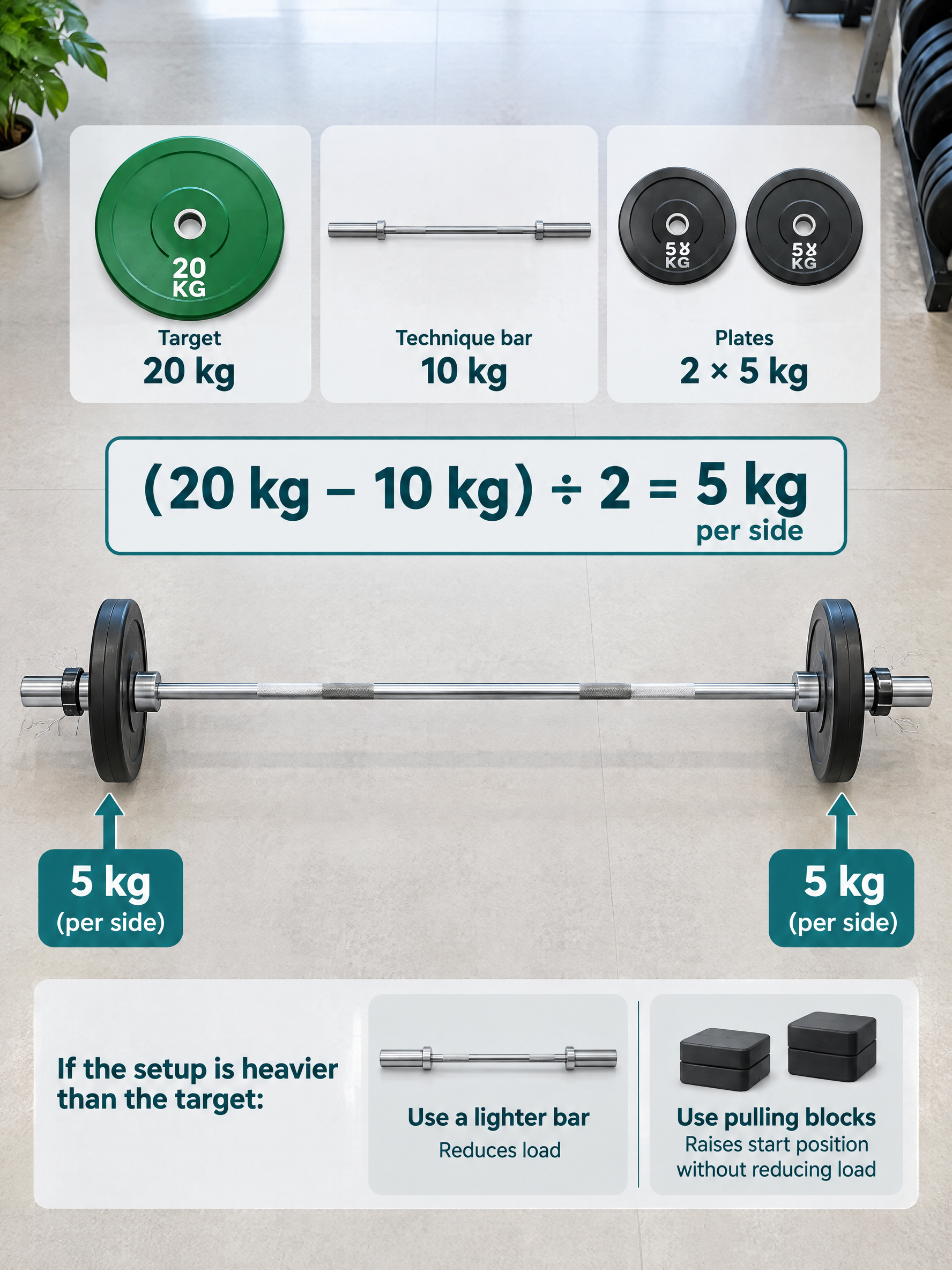
Find the bar’s weight before choosing plates. If the bar alone is heavier than your target, start with a lighter technique bar.
- Work out the load per side
Subtract the bar’s weight from your target and divide the remainder by two. Use pounds or kilograms throughout.
- Choose matching plates
Use the same plate setup on both ends. If the lightest full-diameter pair puts you over your target, don’t force the jump; try a lighter bar or use pulling blocks for controlled starts.
How Olympic bumper plates fit and take a landing
The plate’s center hole slides over the bar’s nominal 2-inch Olympic sleeve, the thicker section at either end. BalanceFrom, for example, lists a 2-inch hole on its rubber plates. Load both ends evenly and fasten compatible collars snugly outside the plates to limit outward movement. Collars hold the plates in place; they don’t stop the bar from bouncing or drifting.
On a level landing, the rubber rims contact the platform and deform briefly. The platform still takes the impact. Rebound is how much the bar springs back after contact; noise is the thud and rattle you hear. A plate that rebounds less may be easier to keep within the lifting area, but “low bounce” doesn’t mean quiet or safe for an unsuitable floor.
Choose your next step
Which model fits your needs?
See the differences, tradeoffs and who each model suits.
Compare the products →Why plate diameter matters for the snatch and clean and jerk
On a flat floor with matching plates on both ends, the largest plates touching the floor set the height of the bar. Swap them for smaller plates and the bar starts lower. That changes how far you reach and the position you practice at the start of the snatch or clean. The jerk starts from the shoulders, so plate diameter doesn’t set its starting height.
A light, full-diameter bumper or technique plate can give you the same floor setup as a heavier pair without making you lift that heavier load. Check the actual outer diameter of the exact weight you plan to use. Also check whether the maker permits drops with just that pair on the bar: full diameter tells you the starting height, not what the plate can withstand.
Reset after a permitted landing
- Let the bar settle
Give the bar room to stop moving rather than reaching for it mid-bounce.
- Check for movement
Once the bar stops, look for gaps or a shifted collar. Reseat the plates and refasten the collars if needed.
- Re-center before lifting
If the bar drifted, move it back to the middle of the lifting area so the next landing stays clear of the platform edge.
Training bumpers, crumb rubber, and competition-style plates
Training bumpers are for everyday lifting. Crumb rubber is a construction choice, not a separate quality tier: small rubber particles are bound together to form the plate. Marcy lists dense recycled crumb rubber on one of its bumpers. Compare thickness if you’ll load several pairs at once; thicker plates leave less sleeve space for more weight and a collar.
Some competition-style plates have a broad metal hub and a stated weight tolerance. XMASTER, for example, claims a tolerance of ±0.1%, which describes how close the maker says the plate is to its marked weight. It doesn’t prove certification. Color helps you spot a denomination, but read the markings rather than assuming a color means the same weight across pound and kilogram sets. If you need certified equipment, verify the exact model with the relevant governing body.
What you’ll need besides the plates
Before planning home drops, check the lifting surface, the floor beneath it, the clearance around the bar, and any building rules. A rubber mat alone doesn’t tell you whether the floor can handle repeated impact. At a gym, ask which platforms allow drops and whether there are restrictions on plates or loads.
Set aside space for stable plate storage near the lifting area without crowding the platform. Small change plates let you make finer load increases than adding another pair of bumpers. Check rims and hubs periodically, and take a plate out of use if its hub loosens or its rim is badly damaged.
If you don’t have a suitable drop area, you can still work on parts of the lifts from the hang with a light technique bar and a controlled return. For full lifts in a space set up for landings, try a weightlifting gym before committing to a home setup.
Questions before you commit
Can I put iron change plates on the same bar as bumpers?
Yes for controlled lifts, as long as everything fits and the load is balanced. For drops, check the plate and bar makers’ instructions and the gym’s rules. Even if the smaller iron plates never touch the floor, they add to the load the bumpers and bar have to take on landing.
Can I mix bumpers from different brands?
Yes, if they fit and you can build a balanced load with matching floor-contact diameters on both ends. Compare thickness so there’s still room for collars. For drops, check the instructions for each plate rather than assuming two plates marked with the same weight have the same limits.
Do I need to buy a whole set to get started?
No. One matching pair at a weight you can use now may be enough, especially if you already have change plates. Check the purchase quantity: Marcy’s 25 lb crumb-rubber example is listed as one plate, not a pair.
Can I practice a floor start without full-size bumpers?
Yes. For controlled practice, use stable, purpose-built pulling blocks to raise the loaded bar to the starting height you want. Don’t improvise with loose stacks, and don’t drop the bar onto blocks unless they’re designed for those landings.
Choose your next step
Put your shortlist side by side
See the differences, tradeoffs and who each model suits.
Compare the products →Your next step
- Confirm the plates and collars fit your bar’s sleeves.
- Check the outer diameter and drop instructions for your lightest pair.
- Verify the landing surface, clearance, and gym or building rules.
- Check whether the selected weight is sold singly, as a pair, or in a set.
- Plan for change plates and storage without crowding the lifting area.
Before buying a set, try a few floor starts with a light pair at a weightlifting gym. Pay attention to whether the bar height feels workable and whether the bar plus plates is a load you can practice with comfortably.