Review101
How Does an Indoor Bike Trainer Work With the Bike You Already Own?
You pedal your own bike without going anywhere. The type of trainer determines what your pedaling turns, where the resistance comes from, and whether you still have to balance.
Read the article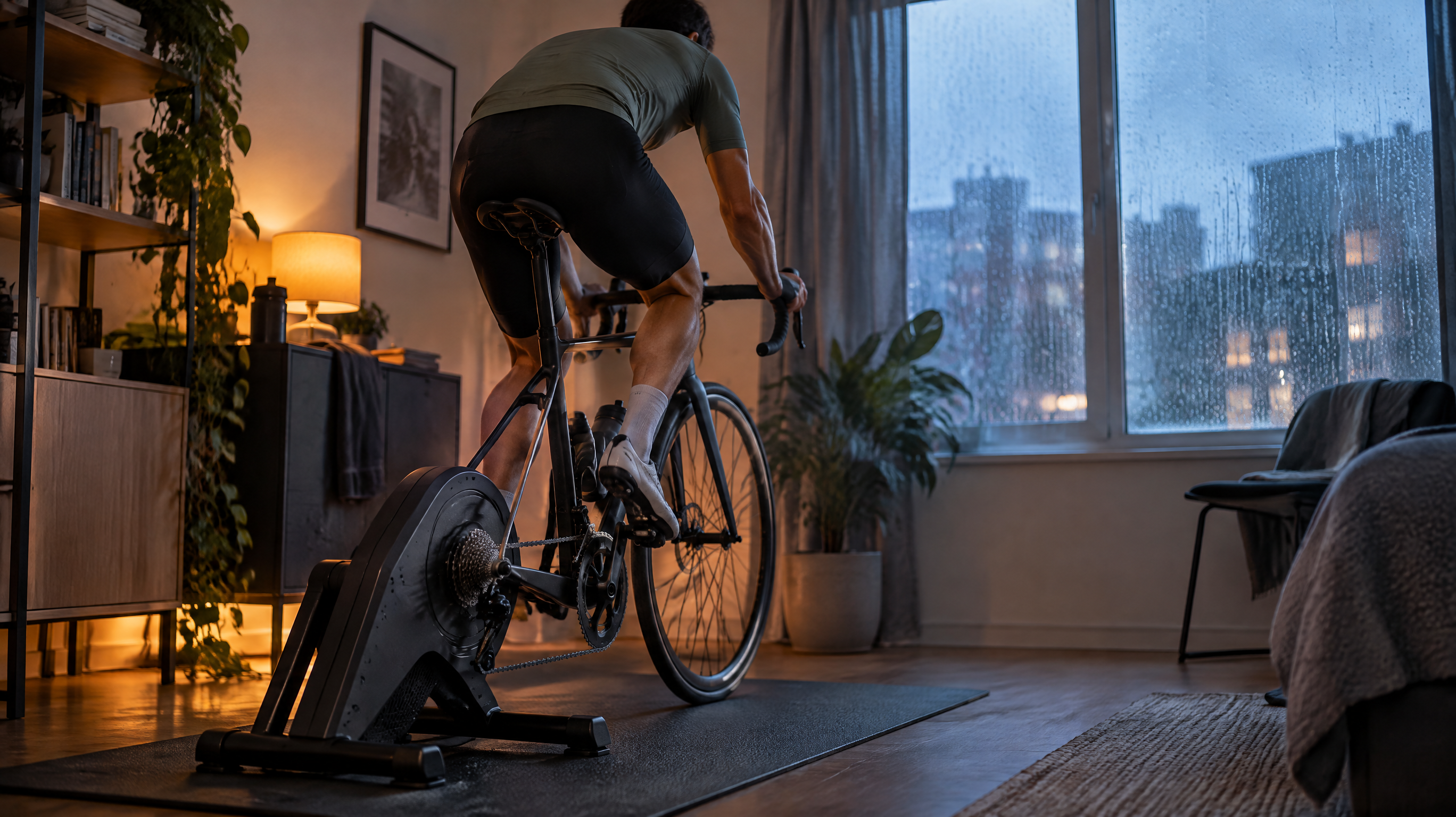
Some links may earn us a commission, at no extra cost to you. How we’re supported
In this article 8 sections
- What is an indoor bike trainer?
- Wheel-on trainers: the rear tire turns a roller
- Direct drive: the chain turns the trainer instead
- Free rollers: both wheels turn, and you still balance
- What makes a trainer smart?
- What indoor riding is useful for—and what it asks of you
- Questions before you commit
- Your next step
Start with your needs
Explore a fixed trainer if you want uninterrupted time on your own saddle, bars, and pedals without having to balance.
Use a gym or shared exercise bike if the bike itself isn’t important to you.
Try free rollers if holding a steady line is a skill you want to practice, not a distraction you want to remove.
As an Amazon Associate, we earn from qualifying purchases. Research-based analysis; no hands-on testing.
The short answer
A trainer is useful when you regularly want to ride your own bike but can’t get outside. If all you want is a place to pedal and you already have access to an exercise bike, you may not need any new equipment.
Worth considering if
- Cyclists who regularly miss rides because of weather, darkness, or traffic
- Riders who want to repeat steady sessions on their usual bike
- People who want app-guided workouts or a place to practice balancing at home
Hold off if
- You can already use an exercise bike and don’t mind its riding position
- You don’t have a workable spot for the full bike, or putting it away every time would keep you from riding
- Being outdoors is the part of cycling you look forward to most
Choose your next step
Ready to compare?
See the differences, tradeoffs and who each model suits.
Compare the products →


What is an indoor bike trainer?
An indoor bike trainer lets you ride your bicycle in place. Unlike a standalone exercise bike, it uses your own saddle, handlebars, and pedals, so you keep the riding position and controls you already know.
On a fixed trainer, the stand supports the back of the bike while the front wheel stays still, resting on the floor or a support block. You pedal against resistance without steering to stay upright. Free rollers also let you ride in place, but they don’t hold the bike upright for you.
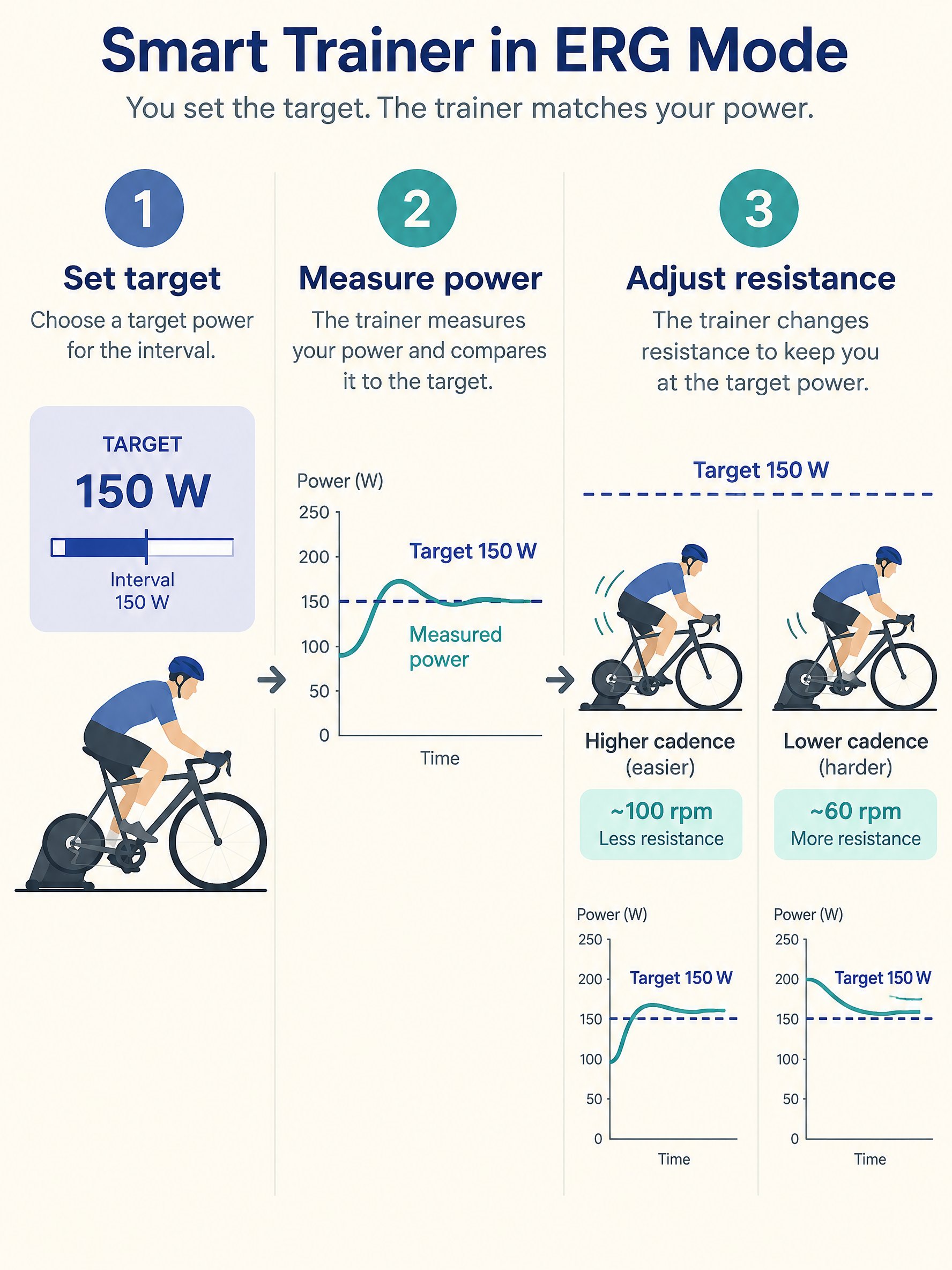
How a smart trainer follows a target-power workout
See the movement
Follow the opposite circular pedal crank and smooth flywheel rotation.
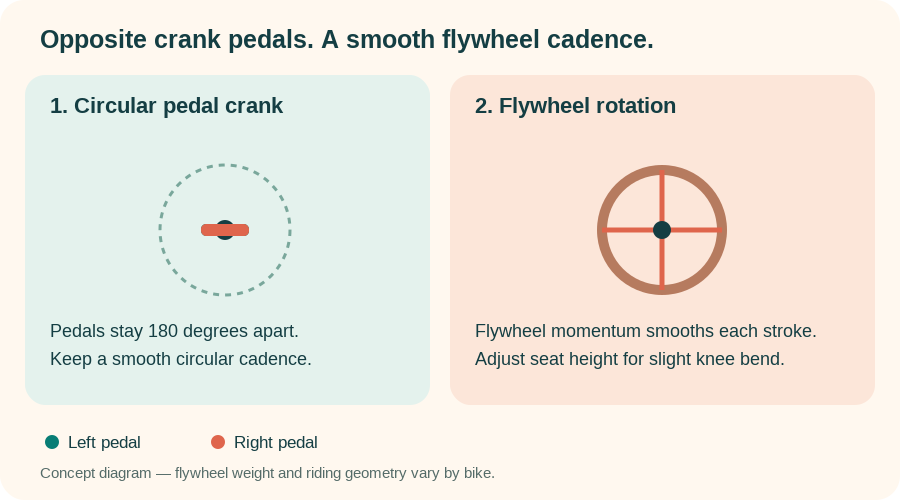
Simplified motion diagram. Flywheel weight and geometry vary by bike.
- The workout sets the target
In a compatible target-power mode, often called ERG mode, the workout sets how much power to aim for in the current interval.
- The trainer tracks your effort
As you pedal, the system compares your current power with the target.
- Resistance adjusts as you pedal
If you pedal a little faster, the trainer eases the resistance; if you slow a little, it increases the resistance to help hold the same power.
Wheel-on trainers: the rear tire turns a roller
Both wheels stay on the bike, but only the rear wheel spins. When you pedal, the chain drives the rear wheel, and the tire turns a small roller pressed against it. The trainer makes that roller harder to turn, so you feel resistance at the pedals.
How the resistance changes depends on the design. On the Sportneer 6-Level Magnetic Bike Trainer, you choose among six settings with a remote. A fluid trainer such as the Saris Fluid2 works differently: turning the roller moves an impeller through fluid, and the drag builds as the roller speeds up. Even if your pedaling rhythm stays the same, shifting to a harder gear can make the effort rise because the rear tire turns the roller faster.
Choose your next step
Which model fits your needs?
See the differences, tradeoffs and who each model suits.
Compare the products →Direct drive: the chain turns the trainer instead
A direct-drive trainer takes the place of the rear wheel and supports the back of the bike. In a cassette-based setup, the chain runs on the trainer’s cassette, the cluster of gears you’d normally find on the rear wheel. Your pedaling turns the trainer directly, with no rear tire or roller between the drivetrain and the resistance unit.
The Wahoo KICKR CORE 2 bundle shown here includes an 11-speed cassette. That’s a feature of this bundle, not of direct drive as a category: the ThinkRider X2Max listing, for example, specifies that a cassette isn’t included.
Try the indoor routine before committing
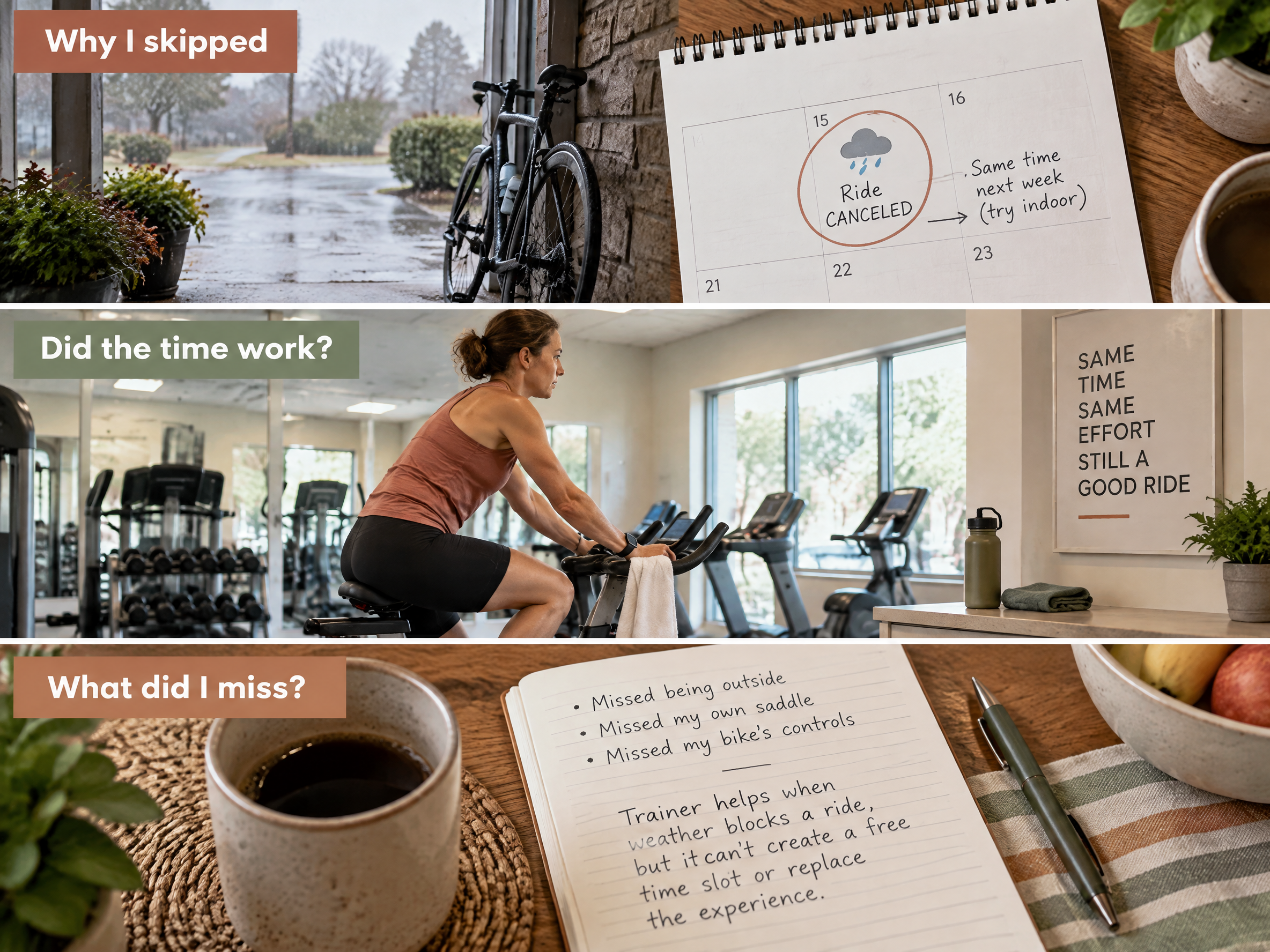
- Pick a ride you actually missed
Think of a recent ride you skipped. Bad weather is a problem indoor riding can solve; a calendar with no room to ride is a different problem.
- Use that time slot for a trial
Borrow a trainer if you can, or try a short session on an exercise bike you already have access to.
- Notice what you missed
If the time slot worked but you wanted your own saddle or controls, a trainer addresses that. If you mostly missed being outside, it won’t replace that part of the ride.
Free rollers: both wheels turn, and you still balance
On free rollers such as the Garmin Tacx Antares, the bike sits on drums rather than being clamped to a stand. The rear tire turns the rear drums, and a belt transfers that motion to the front drum, which turns the front wheel. Both wheels spin even though you stay in roughly the same spot.
Because the bike isn’t held upright, you make small steering and balance corrections to stay centered. That makes rollers useful for practicing a steady line, but it also means you can’t tune out the way you might on a fixed trainer.
What makes a trainer smart?
Wheel-on and direct drive describe how the bike connects to the trainer, not what the trainer can do with an app. The Elite Tuo is an interactive wheel-on trainer, so the rear tire still turns a roller. On the smart direct-drive Wahoo KICKR CORE 2, the chain drives the trainer with the rear wheel off.
The key distinction is reporting versus control. A sensor can send speed data to an app without giving the app any way to change your effort. An interactive trainer can also receive commands from compatible software, so the app can increase resistance when the road on screen tilts uphill. Seeing your ride on a screen doesn’t necessarily mean the app is controlling it.
What indoor riding is useful for—and what it asks of you
A fixed trainer turns a dark evening or a rainy morning into a chance to ride your usual bike. It also lets you repeat a steady session without traffic lights, turns, or stretches where you’d normally coast. Interactive resistance can guide your effort, while rollers make balance and steering part of the session.
Plan around the whole bike, not just the footprint of the trainer. You need room to get on and off, and a fan can replace some of the airflow you’d get outside. In a shared space, consider who might hear the drivetrain or, on a wheel-on trainer, the tire against the roller. Vibration can also travel through the floor.
Think about what happens when the ride ends. If the bike can’t stay in place, clearing space and putting everything away become part of each session. If you mainly ride for fresh air or to get somewhere, a different route or time of day may solve the problem better than riding indoors.
Questions before you commit
Can I still use my bike outside between indoor rides?
Yes. A trainer doesn’t permanently convert your bike. You release it from a wheel-on stand or lift it off free rollers; with direct drive, you also need to put the rear wheel back on before riding outside.
Do I need a subscription to ride indoors?
No. A manual trainer or basic free rollers don’t need an app. Some apps charge for virtual routes or workouts, so if you want a smart trainer without a subscription, check what the trainer can do on its own or with free software.
Will a wheel-on trainer wear out my regular rear tire?
It can add wear because the rear tire runs against the trainer’s roller. How much depends on the tire and how much you ride indoors. A direct-drive trainer avoids that contact entirely because the rear wheel is off the bike.
Does any trainer work with any bicycle?
No. On fixed trainers, the rear axle and frame need to be compatible with the trainer. Wheel-on designs also have to accommodate the rear wheel and tire, while a cassette-based direct-drive trainer needs gears that work with your drivetrain. With free rollers, check the supported wheelbase, which is the distance between the wheel axles.
Choose your next step
Put your shortlist side by side
See the differences, tradeoffs and who each model suits.
Compare the products →Your next step
- Name a ride you regularly miss and what gets in the way.
- Decide whether you want steady pedaling, app-controlled effort, or balance practice.
- Make sure the whole bike fits without blocking a walkway, with room to get on and off.
- Think through where the bike and trainer will go after the ride.
The useful question isn’t whether an indoor ride feels exactly like an outdoor one. It’s whether keeping the parts you care about—your bike, a steady effort, or the chance to practice balance—would make it a ride you’d actually do.