 Review101
Home Gym Workout Stations for Beginners: How They Work and What They Do
A home gym workout station puts several strength exercises on one frame, often using the same set of weights. Here’s how the parts work together, how to tell which movements a station supports, and what it takes to keep one at home.
Read the article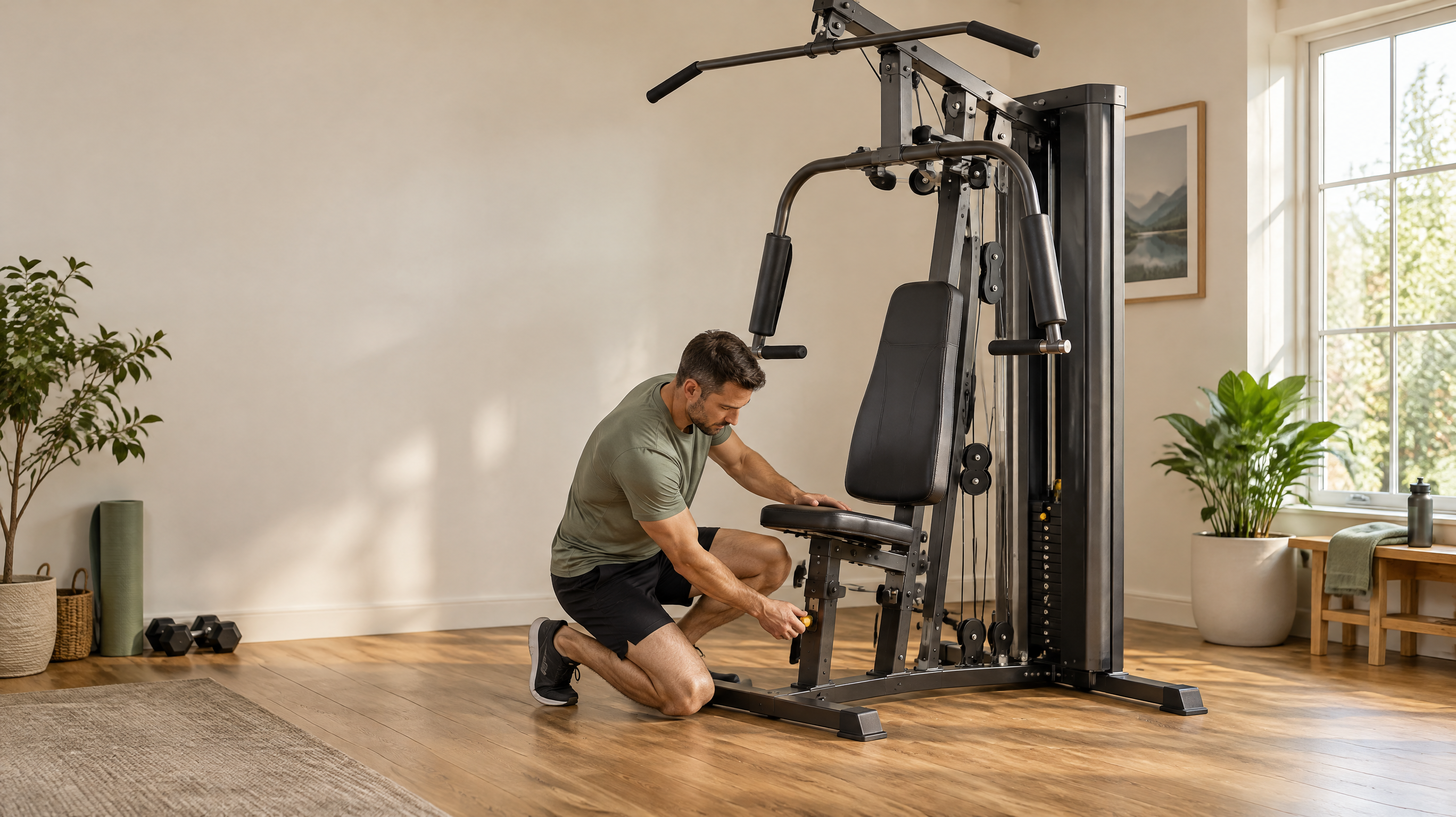
Some links may earn us a commission, at no extra cost to you. How we’re supported
In this article 7 sections
Start with your needs
You already like several cable or guided exercises and have room to keep them set up.
Use a similar press arm or pulldown at a gym to see whether the reach and movement feel comfortable.
If you need to clear the room after each session, choose equipment you can put away.
As an Amazon Associate, we earn from qualifying purchases. Research-based analysis; no hands-on testing.
The short answer
You don’t need an all-in-one station to start strength training. Consider one if you like several machine exercises and have a dedicated spot for them. If you’re still figuring out which movements you enjoy, try them at a gym before committing the floor space.
Worth considering if
- People who want several cable or guided exercises available in one spot.
- Households with a dedicated training area and a station that adjusts to fit its users.
Hold off if
- You haven’t tried the movements you’re buying the station for.
- You need the floor space back after each workout.
- You mainly want to train with barbells or dumbbells.
Choose your next step
Ready to compare?
See the differences, tradeoffs and who each model suits.
Compare the products →
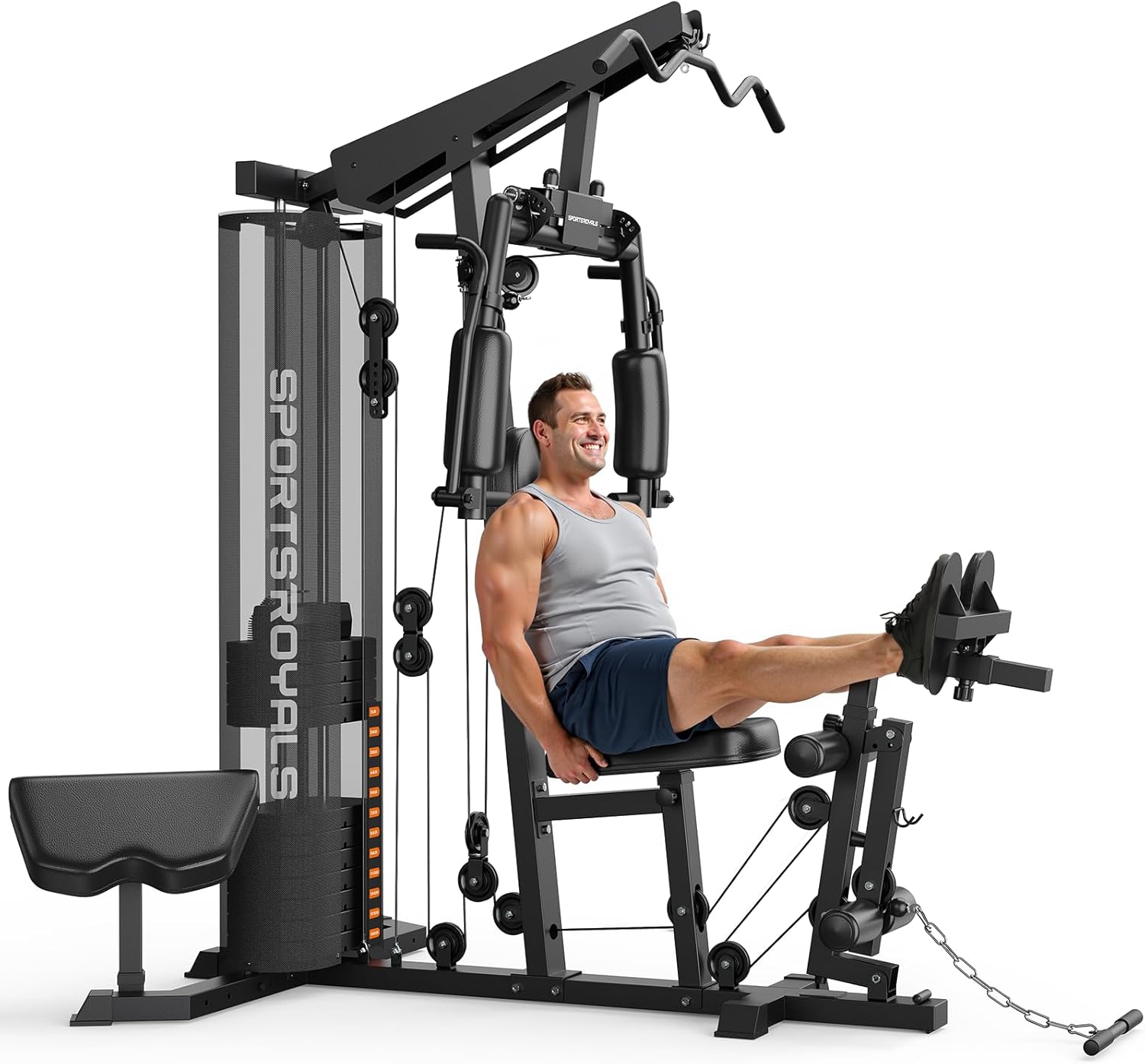

What makes it an all-in-one workout station?
A home gym workout station is a strength-training machine that combines several exercise setups on one frame. The frame holds the moving parts in place, while a seat, backrest or pads support you for certain movements. Depending on the layout, you might pull from an overhead cable, row from a low cable or push against a built-in press arm.
The weights provide resistance. Cables and pulleys route that resistance to different points on the frame, while a bar, handle or strap changes how you connect to the cable. The Sportsroyals HPM02, for example, lists a weight stack, pulley system, lat pulldown bar and ankle strap. That’s one way to use a shared set of weights for several movements, not a standard parts list for every station.
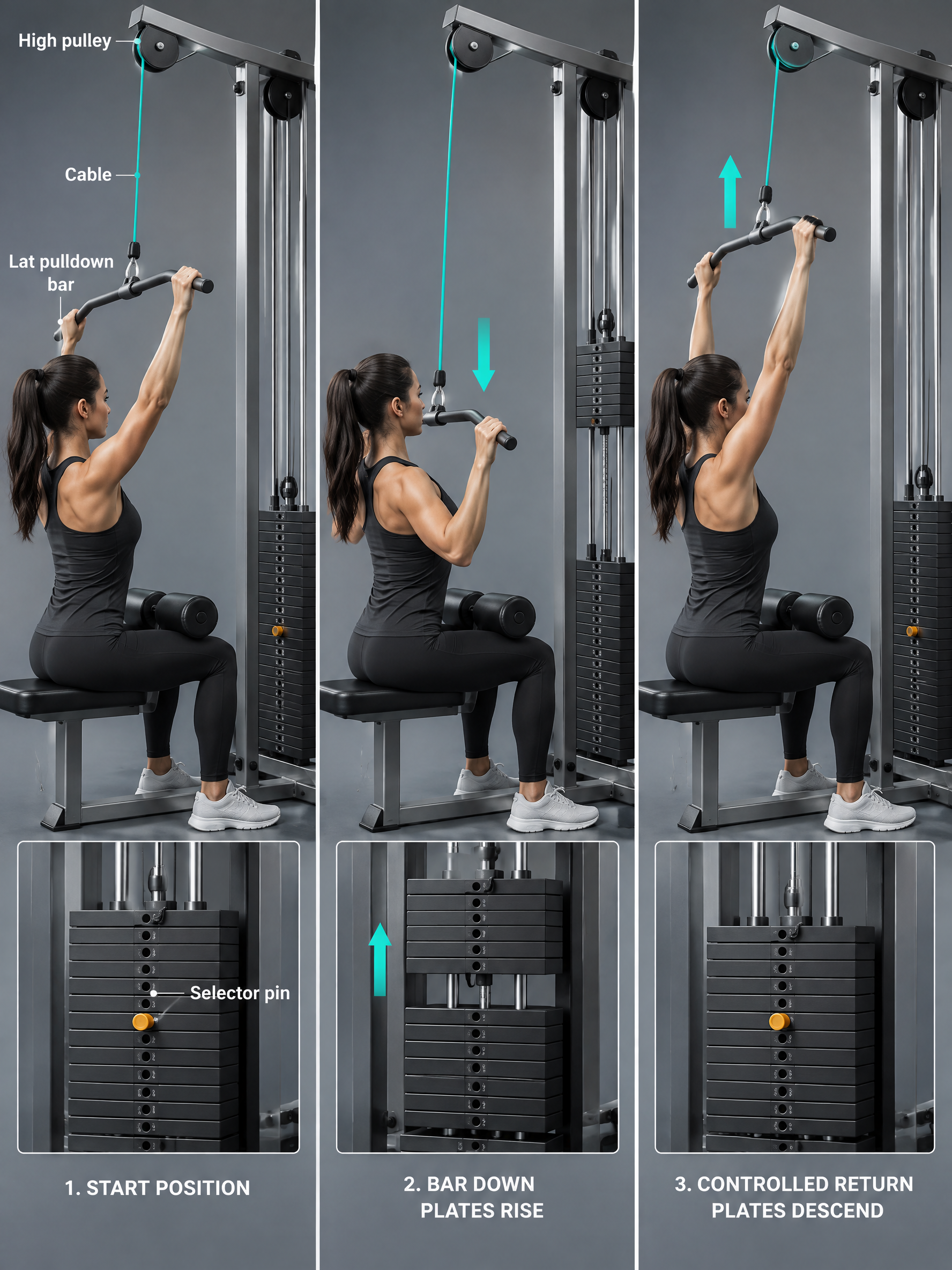
Follow the resistance in a lat pulldown
See the movement
Loop one controlled lat pulldown in side view. Keep the bar, high pulley, and stack visible together so viewers can see that the selected plates rise as the bar descends and lower as the bar returns.
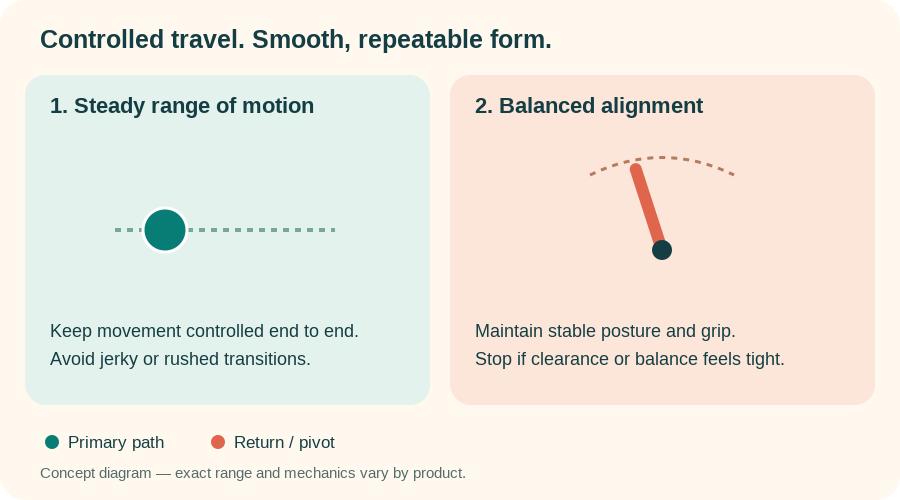
Simplified motion diagram. Exact range and mechanics vary by product.
- The bar moves down
Pulling the overhead bar draws cable out at the high pulley.
- The selected plates rise
The pulleys redirect the cable’s pull so it lifts the plates engaged by the selector pin.
- The stack lowers
As you guide the bar back up, the selected plates descend.
Why the weight at the handle can differ from the stack
The weight you select on the stack isn’t necessarily the force you’ll need at the handle. A pulley fixed to the frame can redirect the cable without changing the force required, ignoring friction. A pulley that moves with the load can trade a longer handle pull for less force. So two machines with the same stack weight can feel different.
A pivoting press arm can change the resistance you feel, too. Where you grip the arm and how the cable pulls on it affect how much force you need, and that can change as the arm swings. If you want to know the resistance at a particular handle or pedal, look for the manufacturer’s chart for that exercise on that model.
Choose your next step
Which model fits your needs?
See the differences, tradeoffs and who each model suits.
Compare the products →Weight stacks and loading rods: How you change resistance
With a pin-selected stack, the weights stay on the machine. Moving the selector pin changes how many plates lift together. A plate-loaded station instead takes compatible weight plates that you slide onto a loading rod and secure as directed. Check the package before assuming those plates are included. OPPSDECOR lists a weight rod and spring clips, for example, but that parts list doesn’t confirm that plates come with it or tell you which plates fit.
A fixed exercise arm is not a third way to load the machine. It describes how the handle moves: a press arm pivots along an arc set by the frame, while a free cable handle gives your hand more room to choose its path, even though the cable always pulls toward its outlet. A station can offer both kinds of movement using the same resistance source.
Check whether a station can do the exercise you want
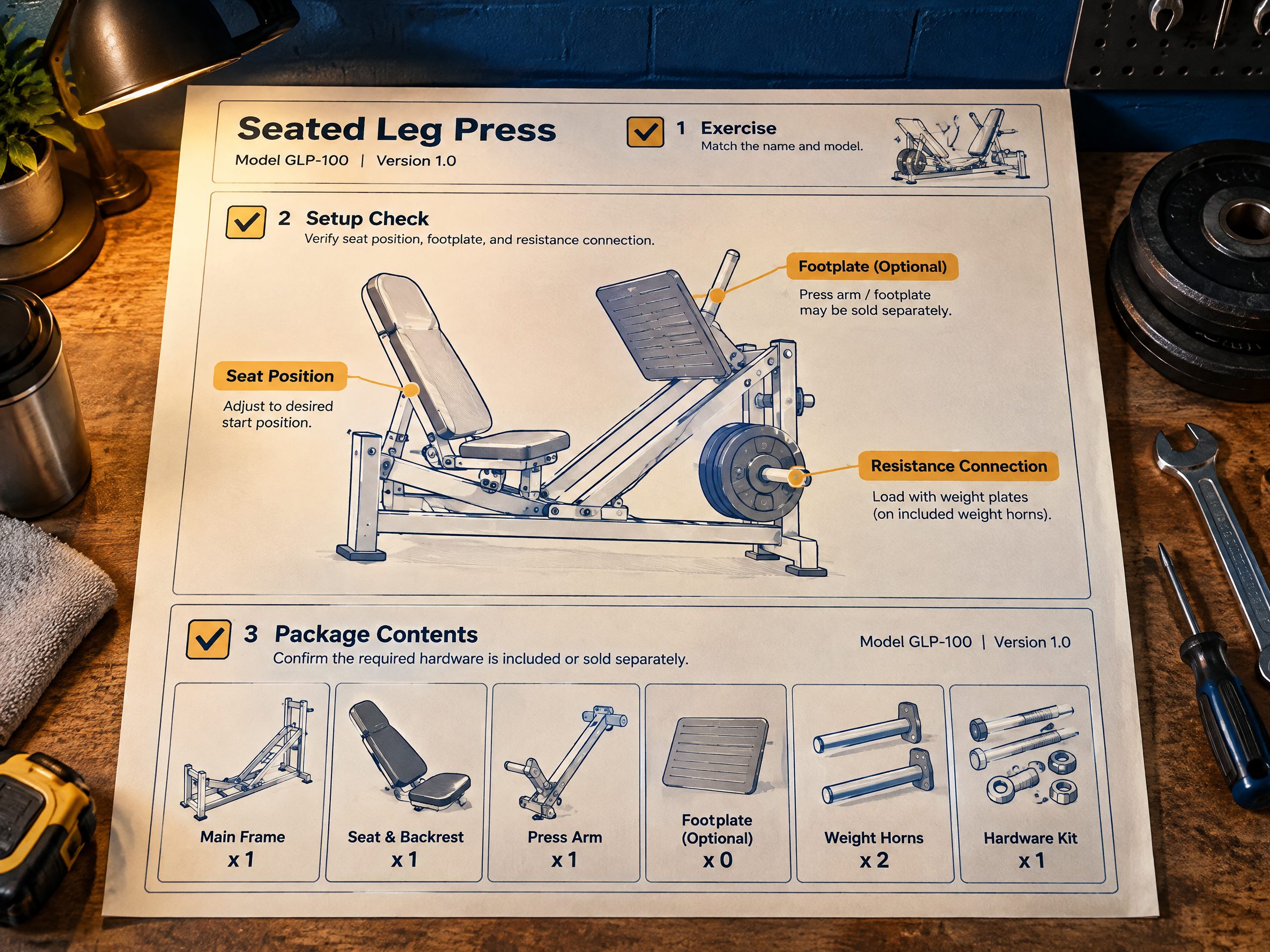
- Name the exact movement
Write down “seated leg press,” for example, rather than “leg training.”
- Find the setup in the manual
Check where you sit, what you push or pull, and how that part connects to the resistance.
- Match the setup to the package
Check the included parts for the exact version. If the manual shows an optional pedal or arm, confirm that your package includes it or that you can buy it separately.
What you can do without changing machines
A lat pulldown is a vertical pull: the bar comes down from overhead. A chest press is a forward push: the handles move away from your chest. A low cable with a row handle and a place to brace your feet can add a horizontal pull.
Leg extension and leg press are different movements. In a leg extension, you straighten your knees against a pad near your shins. In a leg press, your feet push against a pedal or platform as your hips and knees extend. A listing that says “leg developer” doesn’t tell you whether the machine supports both. Look for the specific setup you want; the Sportsroyals HPM02, for instance, explicitly lists a leg press pedal.
The convenience is in the changeover. You might swap a bar for a handle, change your position or move the selector pin rather than set up another piece of equipment. But an extra handle won’t add a cable outlet or turn a leg extension arm into a leg press. The layout matters more than the advertised exercise count.
What it takes to keep a station at home
Measure the space you’ll use, not just the machine’s footprint. Leave room to get onto the seat, swing the press arms and step back for cable exercises if the setup calls for it. Check overhead clearance for assembly and leave enough room to reach the selector pin or load plates.
If possible, assemble the station where it will stay. The manual should be your first stop for tools, steps that need a helper, and floor or anchoring requirements. Once it’s assembled, follow the manufacturer’s inspection guidance. Stop using the station if you find a frayed cable, damaged clip or selector pin that won’t seat properly.
If you mainly want to press and row, adjustable dumbbells and a bench may cover those movements without a permanent frame. Resistance bands take up less storage space, but the pull gets stronger as they stretch, and some setups need a suitable anchor. If what you want is a seated pulldown or leg press, using those machines at a gym gives you access without the assembly or upkeep.
Questions before you commit
How can I tell if the station will fit me, not just my room?
Check whether you can reach the handles and move through a comfortable range while staying supported by the seat and pads. On a seated press, for example, you shouldn’t have to scoot forward just to reach the starting position. If you’re shopping online, look for seat and pad adjustment details rather than relying on frame dimensions.
Can two people use one station at the same time?
Plan to take turns unless the manufacturer explicitly allows simultaneous use. Two cable outlets can share a single stack, so pulling one may affect the other. If you’ll alternate, check how easy it is for both people to reset the seat and change the weight.
Will it be too noisy for an apartment?
Don’t assume a cable station will be quiet: the stack can clatter as it settles, and loose attachments can knock against the frame. Lowering the stack under control helps reduce clatter, but it won’t guarantee that neighbors can’t hear it. Check building rules and the manufacturer’s floor requirements before committing.
Can I add more weight if the stack starts feeling too light?
Only if the manufacturer approves an upgrade for that exact model. Check the approved parts and load limits before buying anything extra. Don’t hang spare plates from the selector pin or improvise a heavier stack.
Choose your next step
Put your shortlist side by side
See the differences, tradeoffs and who each model suits.
Compare the products →Your next step
- Verify your must-have exercises in the manual for the exact configuration.
- Confirm which weights and attachments are included and which are sold separately.
- Look for a resistance chart if the load at a particular handle or pedal matters to you.
- Measure the delivery route, ceiling height and space needed to use the machine.
- Check assembly requirements and whether replacement cables and clips are available.
If you try a similar station at a gym, pay attention to the changeover as well as the motion. Reaching the pin, adjusting the seat and swapping a handle are small tasks that matter when you do them every time.