Review101
Exercise Bikes for Beginners: How They Work and How the Styles Differ
On an exercise bike, your feet turn the pedals while the frame stays put. What changes from one style to another is how you sit, where your hands rest, and what makes each turn harder.
Read the article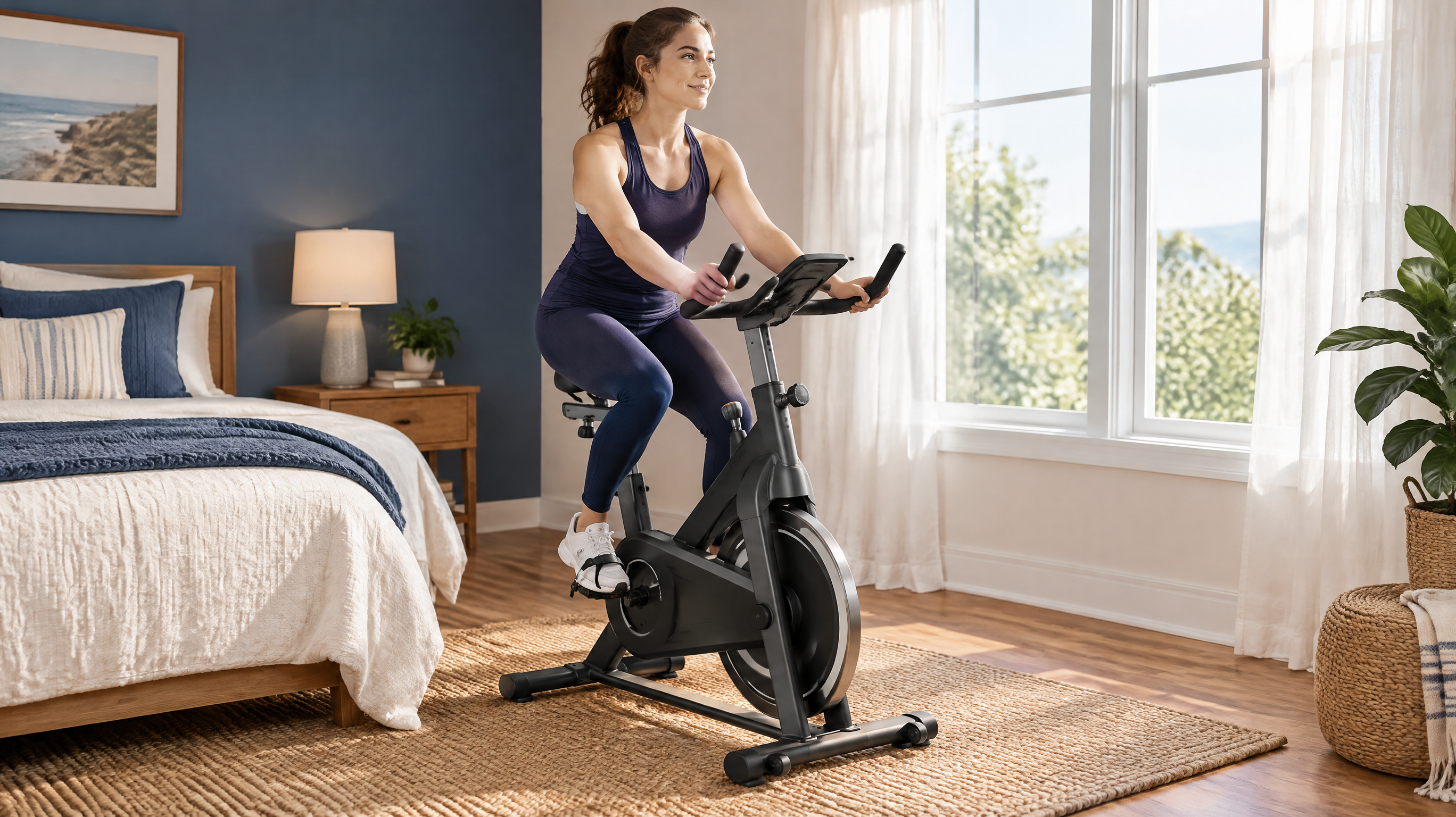
Some links may earn us a commission, at no extra cost to you. How we’re supported
In this article 7 sections
Start with your needs
You enjoy pedaling, but getting outside or to the gym is the part that keeps falling through.
Take a short ride on a bike you can already access if you’re unsure you’d enjoy pedaling in place.
Keep walking, riding outdoors, or going to the gym if it already fits your week and you enjoy it.
As an Amazon Associate, we earn from qualifying purchases. Research-based analysis; no hands-on testing.
The short answer
You don’t need an exercise bike to get moving. Its main advantage is access: if you like pedaling but traffic, weather, or a trip to the gym gets in the way, a stationary bike gives you the same place to ride whenever you have time.
Worth considering if
- People who want to keep riding when weather or traffic makes outdoor cycling impractical.
- People who like being able to change effort mid-ride without changing routes.
- People who have time for a ride at home but not for a trip to the gym.
Hold off if
- Scenery, fresh air, or riding with other people is the main reason you cycle.
- The only usable spot would block a walkway or require moving furniture before each ride.
- You haven’t tried stationary pedaling and aren’t sure you’d want to repeat it.
Choose your next step
Ready to compare?
See the differences, tradeoffs and who each model suits.
Compare the products →


What is an exercise bike?
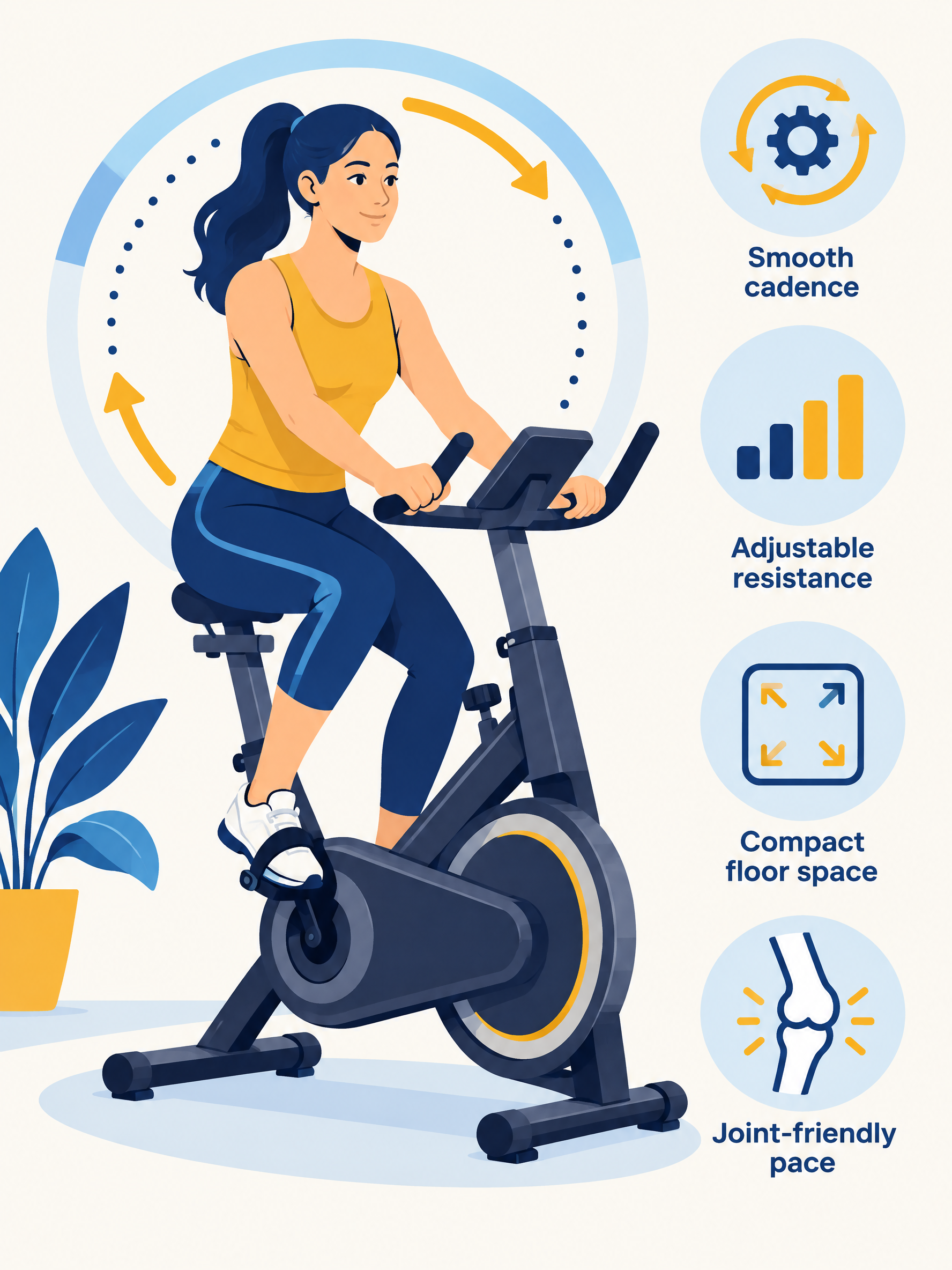
Your feet make the same circular motion they would on a bicycle, but you don’t have to balance or steer. The pedals turn a crank, and a drive system carries that motion to a spinning part such as a flywheel or fan. The frame stays still.
Cadence is how quickly you pedal, usually measured in revolutions per minute. Resistance is what opposes that motion. At the same cadence, more resistance takes more push. A slow turn can feel heavy, and a quick turn can feel light.
The drive system carries motion; the resistance mechanism opposes it. The MERACH S19 uses a belt and magnetic resistance, while the Marcy NS-1000 uses a chain and air resistance. The CURSOR CBE also uses a belt, but it relies on friction. Knowing that a bike is belt-driven doesn’t tell you what makes it harder to pedal.
Feel the difference between cadence and resistance
See the movement
Follow the opposite circular pedal crank and smooth flywheel rotation.
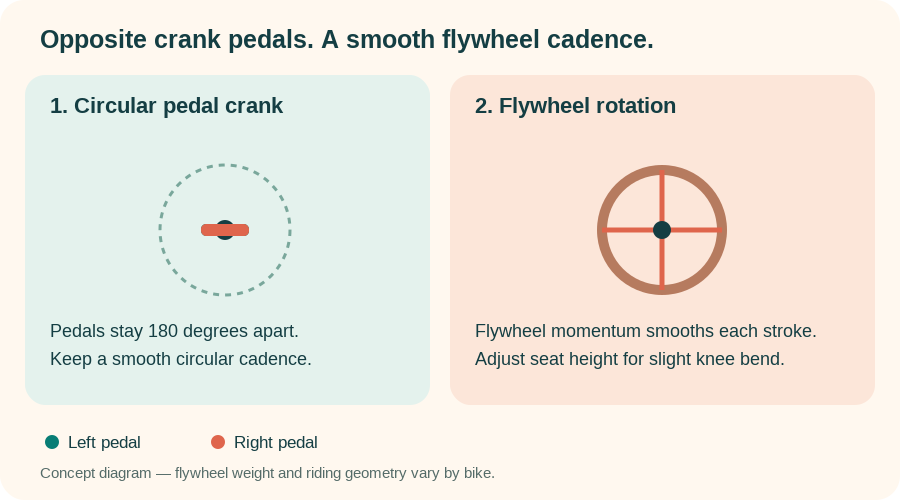
Simplified motion diagram. Flywheel weight and geometry vary by bike.
- Find a rhythm
On a bike with an adjustable resistance control, pedal at an easy, steady pace.
- Change the resistance
Turn the resistance up a little while keeping the same rhythm. Notice that each turn takes more push.
- Change the cadence
Leave the control alone and pedal a little faster. You’re making more turns per minute without changing the setting.
Magnetic, friction, and air resistance
On many magnetic and friction bikes, a knob, lever, or console control lets you change how hard each turn feels. On a fan bike, pedaling faster can make the next turn feel harder even if you haven’t touched a control.
Resistance levels aren’t a common intensity scale. The CURSOR CBE lists 100 friction settings, while the MERACH S19 lists eight magnetic settings. Those numbers describe the settings on each bike. They don’t tell you which bike is harder to pedal at its maximum.
- Magnetic: Magnets slow the flywheel without rubbing against it. Increasing the magnetic braking makes each turn take more effort at the same pace.
- Friction: A pad presses against the flywheel, much like a brake. More pressure creates more drag.
- Air: The pedals drive a fan. As the fan spins faster, it pushes more air and creates more drag, so picking up the pace also increases resistance.
Choose your next step
Which model fits your needs?
See the differences, tradeoffs and who each model suits.
Compare the products →Recumbent, upright, and indoor cycling bikes
To picture how a bike will feel, look at where the seat, pedals, and handlebars sit relative to one another. A recumbent bike and an indoor cycling bike can both use magnetic resistance without putting you in anything like the same riding position.
- Recumbent exercise bike: You sit against a backrest with the pedals out in front. When there are grips beside the seat, your hands can rest near your hips instead of reaching forward. The Sunny Health & Fitness Smart Recumbent Bike is an example with a wide cushioned seat and backrest.
- Traditional upright bike: You sit higher, with the pedals mostly beneath you and the handlebars in front. The position generally lets you keep your torso more vertical than on an indoor cycling bike. The Schwinn 130 is an example.
- Indoor cycling bike: The pedals are beneath you, but the saddle and forward handlebars put you in a position closer to riding a road bike. You generally reach farther forward and lean more at the hips. The Schwinn IC4 is an example.
Would a bike at home remove the thing that stops you?
- Recall one missed session
Think of a day you meant to move but didn’t. Was the problem rain, travel time, or simply a day with no room in it?
- Replay the day
Imagine the bike was already there. Would you have had time and wanted to get on it?
- Compare the simplest alternative
If a walk or another activity you already enjoy would have been just as easy to start, see whether that fills the same gap.
Where folding bikes and fan bikes fit
Folding describes how a bike stores, not how it rides. The pooboo Folding Magnetic X-Bike, for example, folds between rides and uses magnets for resistance. Folding can free up floor space, but unfolding and moving the bike adds a step before you can pedal.
Fan bike describes what creates resistance. The Marcy NS-1000 is an example of an air-resistance bike. On fan bikes with moving handlebars, you push and pull with your arms as you pedal instead of resting your hands on fixed grips. That changes the movement, not just how hard it feels.
What stationary cycling offers at home
Indoors, you can pedal without waiting out rain or finding a route away from traffic. You can ease off or work harder without looking for a flatter road or a hill. If you like feedback, a console can show ride data, and a compatible app may offer guided sessions or tracking. You don’t need either to pedal at an effort that feels right for you.
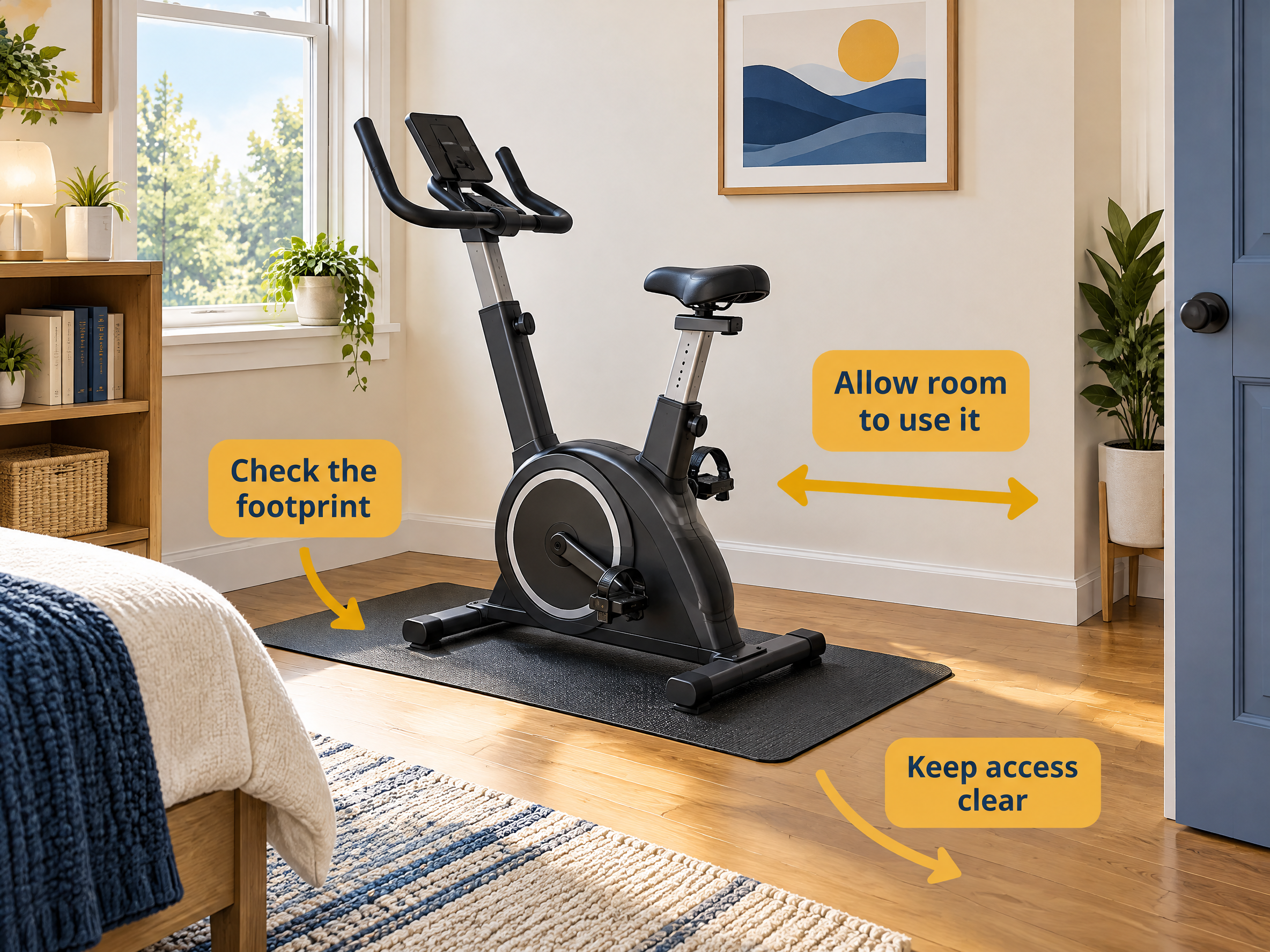
Think about space with the bike in use, not just tucked away. You need room to get on and off without blocking a walkway, plus clearance for any moving handlebars. A stuffy corner can feel warmer once you start pedaling. Day-to-day upkeep includes wiping off sweat and following the bike’s maintenance guidance.
If it’s cycling you want, a gym bike offers the same basic motion without taking up space at home. If you just want an easy way to move, a walk or a home routine you already enjoy may do the job. And if scenery or riding with friends is what gets you out the door, pedaling in place may not offer what you like most.
Questions before you commit
Can I ride without plugging the bike into a wall?
Yes on some bikes, but not all. The pooboo Folding Magnetic X-Bike is listed as manual with a battery-powered monitor, while the Schwinn IC4 lists corded power. A corded listing doesn’t tell you what still works unplugged, so check the manual for the display and resistance controls.
Will an exercise bike disturb someone in the next room?
It can, especially if the bike uses a fan that gets louder as it spins faster. Floors can also carry vibration even when the bike doesn’t sound loud beside you. If you can try a bike where you’ll use it, have someone listen from the next room while you pedal at your usual pace.
Does the distance on the console count as road mileage?
No. Displayed distance is a ride estimate, not ground you’ve covered, and it doesn’t reflect outdoor conditions such as wind or hills. It’s more useful for comparing similar rides on the same bike.
Do I need special cycling shoes?
Not if the bike has flat pedals or cages or straps designed for regular athletic shoes. Clip-in pedals require compatible cycling shoes and cleats, though some pedals have a regular-shoe option on the other side. If you’re trying a bike at a gym or studio, ask which pedals it has.
Choose your next step
Put your shortlist side by side
See the differences, tradeoffs and who each model suits.
Compare the products →Your next step
- Name the obstacle a home ride would remove.
- Try stationary pedaling at a gym or on a friend’s bike if you can.
- Picture where you’d get on and off, with the bike open and any moving bars in use.
- Notice whether a display helps you ride or just gives you another screen to watch.
The useful test is how an ordinary ride feels: whether you like the posture, the pedal motion, and having the option close at hand.