 Review101
Beginner’s Guide: Do You Really Need a Home Treadmill? How They Work and What to Consider
A home treadmill can be convenient, but it also takes space, power, and a real place in your routine. Here’s how to decide if one fits your life, what features actually matter, and when a gym, walking pad, or outdoor plan makes more sense.
Read the article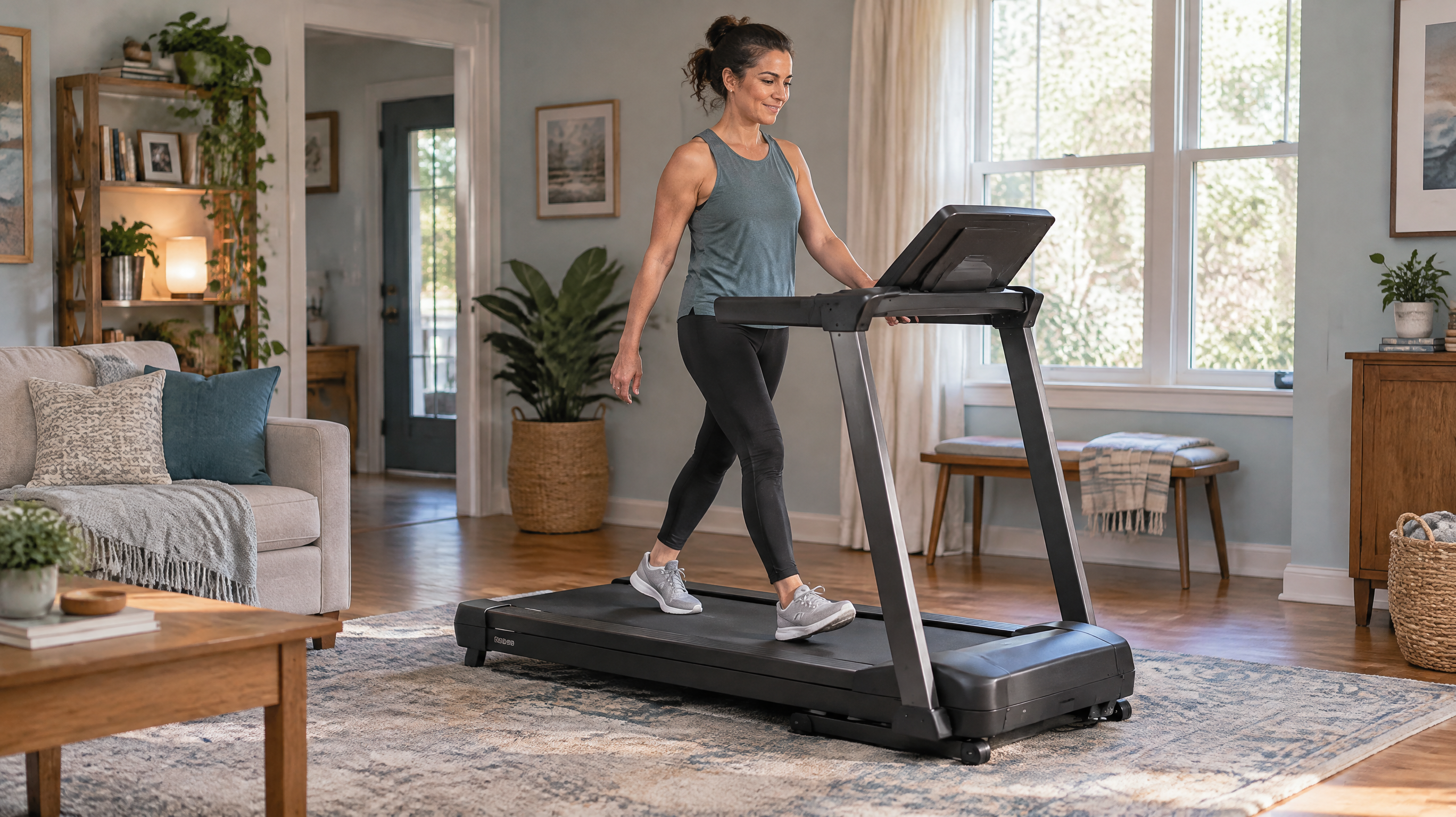
Some links may earn us a commission, at no extra cost to you. How we’re supported
In this article 7 sections
- Should a beginner get a treadmill, or try something else first?
- How home treadmills work and which features actually matter
- Alternatives to buying your own treadmill
- Fit, space, and the setup hurdles that catch beginners off guard
- What ownership is really like: power, upkeep, and everyday use
- Questions before you commit
- Your next step
Start with your needs
Choose this if you want dependable indoor walking, jogging, or running and have a clear place to keep the machine accessible.
Use a gym treadmill or borrow access first if you are unsure whether you like treadmill movement or will use it consistently.
Pick a walking pad or outdoor routine instead if your priority is light walking, small-space storage, or minimum household hassle.
As an Amazon Associate, we earn from qualifying purchases. Research-based analysis; no hands-on testing.
The short answer
A home treadmill makes sense if you want reliable indoor walking, jogging, or running without depending on weather, travel time, or gym hours. It is less compelling if you are unsure you will use it regularly, have very limited space, or mainly want a light walking option that could be handled by a smaller walking pad or outdoor routine.
Worth considering if
- People who want consistent indoor walking, jogging, or running at home
- Beginners whose main barrier is convenience, weather, or gym access
- Homes with a realistic open spot and nearby outlet for a larger machine
- Users who value simple pace and incline control during workouts
Hold off if
- You have not yet confirmed that you enjoy treadmill movement
- Your space only works if the machine is hidden away after every use
- You mainly want slow desk-side walking rather than full treadmill workouts
- You are unlikely to maintain a regular routine without testing cheaper options first
Choose your next step
Ready to compare?
See the differences, tradeoffs and who each model suits.
Compare the products →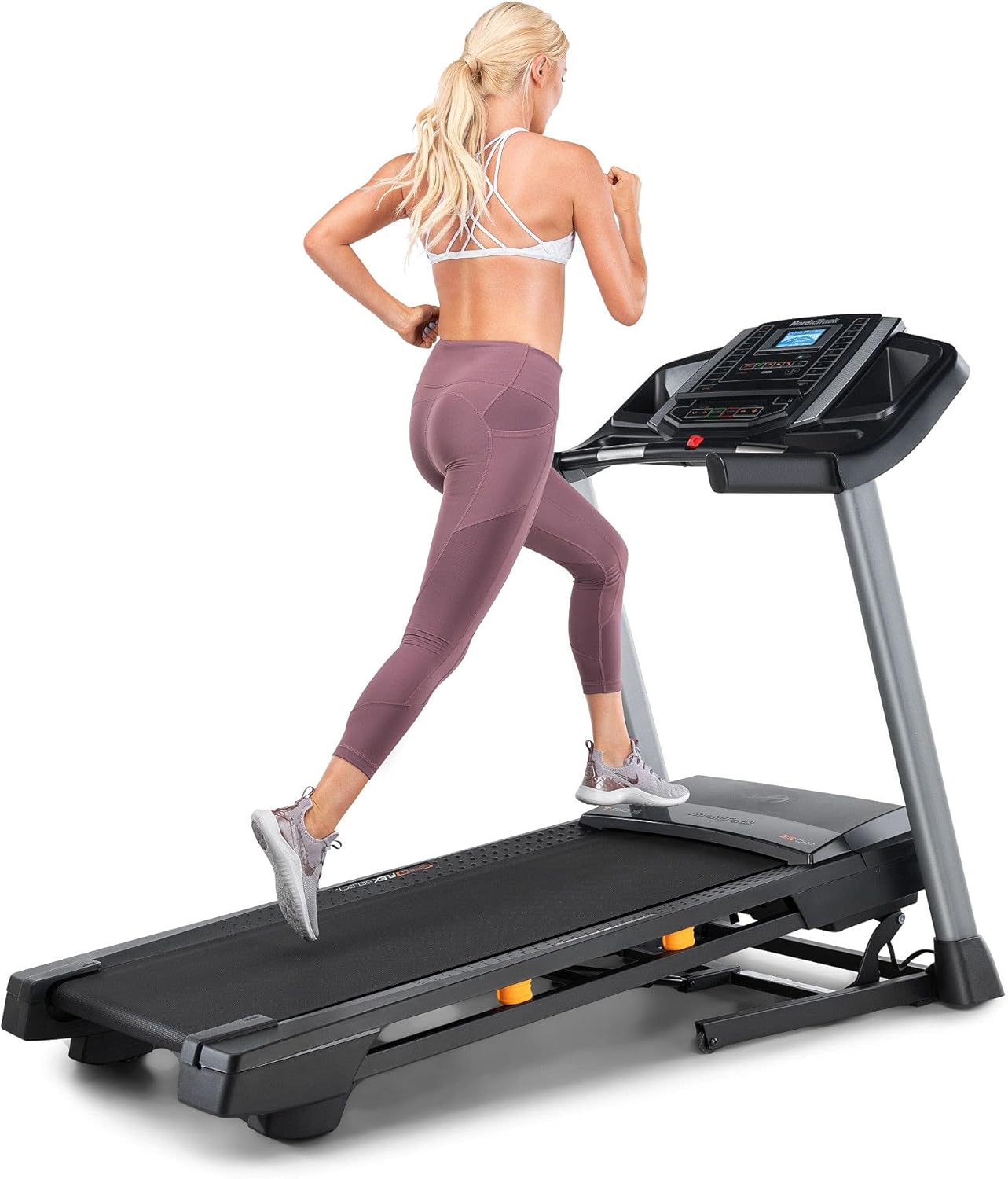


Should a beginner get a treadmill, or try something else first?
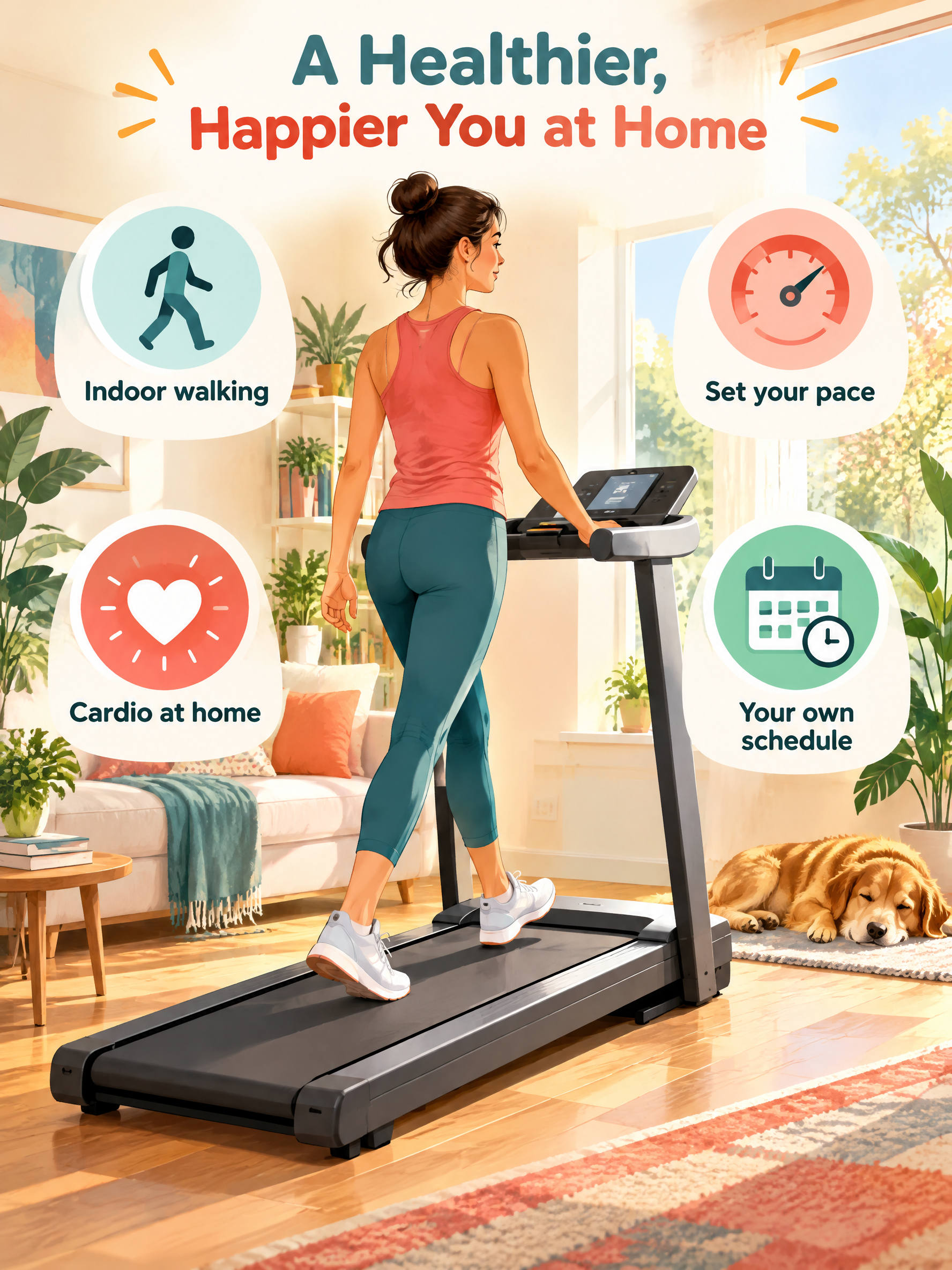
You probably do not need a full home treadmill just because you want to be more active. You need one when easy access is the main thing stopping you from walking, jogging, or running consistently. A treadmill is most useful for people who want indoor use on their own schedule and who expect to use it often enough that setup and floor space feel justified.
For beginners, the biggest advantage is control. Home treadmills are built for indoor walking, jogging, running, intervals, and training depending on the model, so you can choose a pace and keep conditions steady instead of working around weather or daylight. Some models are clearly aimed at running, while others also emphasize walking and general training use.
If you are undecided, it is smart to test the habit before buying the machine. Try a few weeks of outdoor walking, use a gym treadmill, or borrow access to one. If the pattern sticks and you keep wishing it were available at home, that is a strong sign a treadmill could earn its space.
Skip or delay the purchase if your real goal is simply to move more during work hours, especially at slower walking speeds. In that case, a smaller walking pad or under-desk style machine may fit better than a full treadmill. Likewise, if you want a machine mainly for occasional use, ownership can be more hassle than benefit.
- Best fit: people who want dependable indoor walking, jogging, or running at home
- Good sign: you already like treadmill movement and expect to use it regularly
- Try alternatives first if: you are still building the habit or mostly want casual desk-side walking
- Less ideal if: you have nowhere practical to leave it or fold/store it between sessions
How treadmill movement works during a session
- Step on and start slow
Attach the safety key if your machine uses one, stand on the side rails or belt as directed by the manual, and begin at an easy walking pace so you can settle into the moving surface.
- Adjust speed or incline
Use the console or handle controls to raise speed for walking, jogging, or running, or change incline when you want the deck to feel steeper without speeding up.
- Watch your rhythm
Let the belt carry under you while you match your steps to the set pace, using the display for simple feedback like time, speed, distance, or heart-rate readouts when available.
How home treadmills work and which features actually matter
A treadmill is straightforward in use: a powered belt moves under your feet while you control speed from the console or handles. On most home models, you also adjust incline, which changes how flat or steep the walking or running surface feels. The basics you interact with every time are speed, incline, the belt area, and the display.
Speed range matters because it tells you what kind of use the machine can support. Some compact machines top out at lower speeds, while larger home treadmills commonly reach 10 to 12 miles per hour. If you mainly plan to walk, that may be plenty. If you expect to jog or run comfortably, the upper speed range and the feel of the deck become more important.
Incline changes the character of the workout more than many beginners expect. A treadmill with incline gives you another adjustment besides speed, and many home models offer powered incline controls. That is useful because it is easy to change during a session instead of stopping and manually re-setting the deck.
Displays and programs are secondary, not primary. LCD or LED consoles can show basics like speed, distance, time, or heart rate depending on the model, and some machines connect to training platforms or your phone. That can help with motivation, but it should not distract from the practical basics: whether the controls are simple, whether the belt feels roomy enough, and whether you are comfortable using it without a learning curve.
Belt size has a real day-to-day consequence. Longer and wider decks generally give you more room to settle into a natural stride, while shorter or narrower decks can feel more specialized toward slower walking or compact spaces. For example, several full-size treadmills here use deck lengths around 55 to 60 inches, while many compact walking-pad style machines use much shorter decks.
- Speed affects whether a machine feels suited to walking only, mixed use, or regular running
- Powered incline is easier to adjust during a workout than manual incline
- The display should be easy to read, but it matters less than belt space and simple controls
- Deck size changes how natural the motion feels, especially as pace increases
Choose your next step
Which model fits your needs?
See the differences, tradeoffs and who each model suits.
Compare the products →Alternatives to buying your own treadmill
The best alternative is often the one you will actually use. A gym treadmill lets you test whether indoor walking or running suits you before a machine enters your home. That is especially valuable if you are unsure about treadmill motion, console controls, or whether you prefer flat walking versus incline sessions.
Outdoor walking or running is the simplest option if weather, sidewalks, and schedule cooperate. It costs less in space and maintenance, and it quickly answers the question of whether you enjoy the routine itself. If the issue is not motivation but convenience, though, outdoor plans can fall apart fast when conditions change.
A walking pad can be the smarter home choice if you mainly want slower walking in a small room or alongside a desk. Compact units in the evidence set are much smaller and lighter than standard treadmills, but they also tend to have shorter decks and lower top speeds. That trade-off can be excellent for casual walking and much less satisfying if you want a true jogging or running feel.
A training app can also be enough for some beginners. If guided sessions appeal to you, some treadmills support app-based workouts and auto-adjustments, but you can also use a phone or tablet outdoors or at a gym before committing to hardware at home.
- Gym access is the best test drive before ownership
- Outdoor walking is the lowest-hassle option if your schedule and environment support it
- Walking pads suit small-space, lower-speed use better than full running treadmills
- Apps can help you build the routine before you buy the machine
How to place and set up a treadmill at home
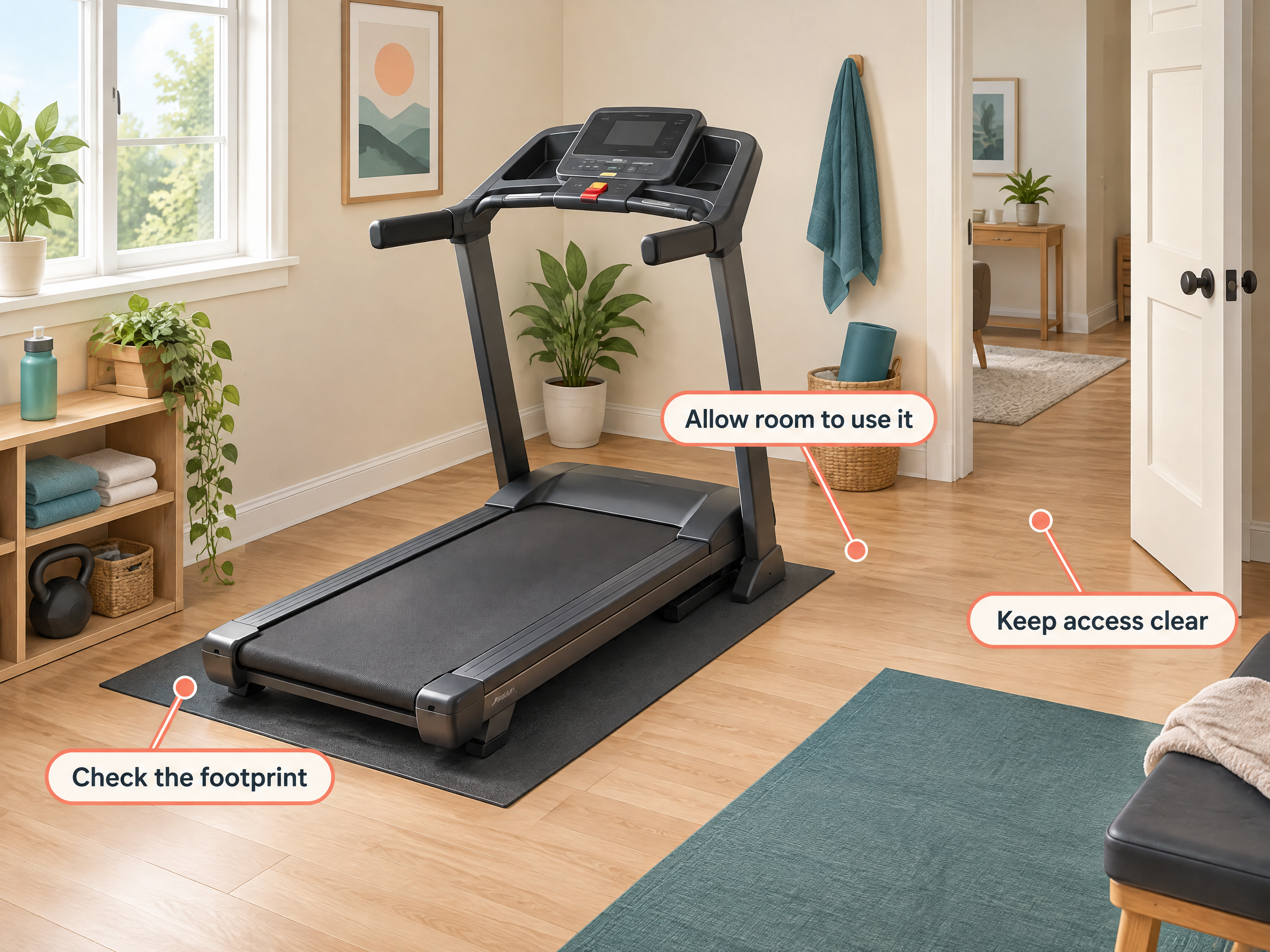
- Choose the real workout spot
Pick the place where you would actually use it, not just where it technically fits, and confirm that the machine’s open dimensions work in that area.
- Check storage and access
If the treadmill folds, compare the folded size too, then think through doorway clearance, wall clearance, and whether you can move or unfold it without a hassle.
- Confirm power and daily ease
Make sure there is convenient outlet access and enough room to get on, get off, and leave the machine ready enough that starting a session feels easy.
Fit, space, and the setup hurdles that catch beginners off guard
A treadmill is not just a workout tool. It is a large household object. Before anything else, check where it would live when open, how it would get there, and whether you are realistically willing to unfold or reposition it when needed. Full-size models in the evidence commonly run around the mid-70-inch length range and can weigh well over 150 pounds, so this is not an impulse item you casually move around the house.
Folding helps, but it does not make a treadmill disappear. Folded sizes are still substantial, and the machine may stand tall or remain awkward in a room even when stored. A foldable design is most helpful when you need to reclaim some floor area between sessions, not when you need something tiny.
Compact machines and walking pads solve a different problem. They are notably shorter, lighter, and lower to the ground than standard treadmills, which can make under-bed or closet-adjacent storage more realistic. The trade-off is that the walking surface is usually smaller, which matters if you want longer strides or a more secure running feel.
Think beyond dimensions on a product page. Consider outlet access, where the power cord will run, whether the floor is level, and whether nearby furniture leaves enough room to step on and off comfortably. Also think about who shares the space. If the machine sits in the only free area of a room, the friction of setting it up may quietly kill the routine.
Most beginners should try the motion before buying if possible. Not everyone enjoys treadmill walking or running. Some people love the controlled rhythm, while others never quite settle into it. A few sessions on a gym treadmill can save you from buying a large machine for a movement you do not actually like.
- Measure the room, the doorway path, and the storage position before shopping seriously
- Foldable does not mean small; it usually means somewhat easier to live with
- Compact treadmills and walking pads save space but often reduce belt length and overall running feel
- Try treadmill motion in person first if you have never used one regularly
What ownership is really like: power, upkeep, and everyday use
Owning a treadmill is easiest when it stays accessible. The people who get the most value from one usually do not have to wrestle with it before every session. If using it means clearing a room, unfolding a heavy deck, or rearranging cords each time, motivation drops fast.
You will need power nearby because these are corded electric machines. Depending on the model, power requirements differ, but the practical takeaway is simple: plan around an outlet and avoid treating placement as an afterthought. If the only suitable spot creates cable clutter or blocks a walkway, the machine may become annoying to live with.
Care is usually basic but regular. Some treadmills include items like a safety key, tool kit, or lubricant, which hints at the kind of ownership involved: occasional cleaning, checking hardware, and following the maintenance instructions in the manual. That is manageable for most people, but it is still another household task.
Folding and wheels can make storage easier, but they do not make a heavy treadmill effortless. A standard home treadmill may still weigh around 200 pounds or more, which matters during delivery, assembly, room changes, and any future move. Think about the full life of the machine, not just day one.
The surprise for many beginners is that a treadmill is less about features than about friction. If it is easy to access, comfortable to use, and suited to your actual pace, it can become part of your week. If it is too large, too inconvenient, or mismatched to how you really exercise, even a feature-rich model can turn into furniture.
- Place it where plugging in and getting started feel easy
- Expect light routine maintenance and basic housekeeping around the machine
- Heavy full-size treadmills are harder to relocate than many beginners expect
- The easiest machine to use regularly is usually the better fit
Questions before you commit
Can I replace a gym membership with a home treadmill?
Yes, for walking, jogging, or running convenience, a home treadmill can replace that part of gym use. No, it does not replace every reason people go to a gym, so the better question is whether home access would make your routine happen more often.
Is a foldable treadmill good enough for a small home?
Sometimes, but not automatically. Folding helps with floor management, yet full-size treadmills are still large and heavy even when folded, so you need to look at both open and folded dimensions before assuming it will fit your life.
Do I need incline as a beginner?
No, you do not need incline to start walking regularly. But it is a useful feature because it gives you another way to change the session without relying only on speed, and many home treadmills include powered incline controls.
Would a walking pad be better than a treadmill for me?
Yes, if you mainly want slower walking and easier storage, a walking pad may be the better match. No, it is usually not the same experience as a full treadmill, because compact models often have lower top speeds and shorter walking surfaces.
What surprises most first-time owners?
The biggest surprise is usually how much placement matters. A treadmill that technically fits but is awkward to plug in, unfold, or walk around can become much less inviting to use than expected.
Choose your next step
Put your shortlist side by side
See the differences, tradeoffs and who each model suits.
Compare the products →Your next step
- Decide whether you want indoor walking only or true jogging/running capability
- Try treadmill motion at a gym or store before buying if you can
- Measure the workout area, storage position, and path through your home
- Check whether a full treadmill or a smaller walking pad better matches your routine
- Make sure nearby power access and everyday setup will be simple enough to use often
If you keep wishing exercise were easier to start at home, a treadmill can be a very practical purchase. If you are still testing the habit, short on space, or mostly interested in slow walking, try the simpler options first. The right answer is the machine, or non-machine, that you will use without friction.