 Review101
CAP 2-Inch Olympic Bumper Plate Set Review: What Comes With This Listing?
CAP lists 2-inch compatibility and steel hubs for the OSR6IS-260, but the product details don’t tell you which plates or accessories will arrive. This review is based on listing research, not hands-on testing.
Read the article
Some links may earn us a commission, at no extra cost to you. How we’re supported
In this article 9 sections
- CAP 2-Inch Olympic Bumper Plate Set: at a glance
- Our assessment
- Which plates and accessories will actually arrive?
- What do the rubber and steel hubs tell you about construction?
- Will the plates fit your bar and give you the loads you want?
- Can you drop the lightest plates on their own?
- How should you judge the price and delivery terms?
- When an alternative makes more sense
- Before you order
Review summary
Buy the CAP OSR6IS-260 if you have a bar with 2-inch Olympic sleeves and the seller confirms matched pairs that cover your training loads. If you drop the bar, confirm that your planned loads and training surface are approved. Choose a better-documented set if the seller can’t tell you what ships or whether it’s suitable for the way you lift.
As an Amazon Associate, we earn from qualifying purchases. Research-based analysis; no hands-on testing.
CAP 2-Inch Olympic Bumper Plate Set: at a glance
A home-gym candidate for 2-inch Olympic sleeves, but the exact assortment and drop conditions need confirmation before purchase.
Pros
- Home lifters with a 2-inch Olympic bar who can verify the plate pairs they need
Cons
- The listing doesn’t establish the plate assortment, total loadable weight, or rack inclusion.
- Plate dimensions by weight and approved drop conditions aren’t documented in the supplied listing.
Our assessment
Editorial judgments based on the listed specifications, not a lab-test score.
Olympic bar fit
Plausible matchThe merchant specifies 2-inch compatibility and steel hubs but gives no fit tolerance or plate thickness.
Set contents
UnconfirmedThe one-item, five-pack, and 56.5 lb entries don’t identify the denominations, pairs, or accessories.
Construction and rebound
Partly documentedThe merchant describes medium-bounce rubber and steel hubs, but provides no rebound measurements and doesn’t identify what the cast-iron field refers to.
Drop use
Verify before buyingThe merchant names weightlifting as an intended use without specifying drop conditions for light plates or warranty coverage for dropped lifts.

CAP 2-Inch Olympic Bumper Plate Set
Check price on Amazon →Which plates and accessories will actually arrive?
This review covers model OSR6IS-260, ASIN B0DHYNHYJD. Its product details list one item, five packs, a unit count of one, and an item weight of 56.5 lb. None of those fields gives you a plate inventory. Five packs doesn’t establish five plates, five pairs, or five shipments, and the item-weight field doesn’t establish 56.5 lb of loadable plates. The model number identifies the option to ask about, not its total weight.
A search result advertises the broader CAP set line in 100–370 lb options. That range doesn’t identify this selection, and a rack shown or mentioned for another configuration isn’t proof that one ships with this model. The supplied external results include individual CAP plates and broader set coverage, but no independent review we could verify confirms the contents of this exact option. Ask for the quantity at each weight, the combined plate weight, and a separate yes or no on the rack.

What do the rubber and steel hubs tell you about construction?
The merchant highlight describes medium-bounce rubber and steel hubs. The hub is the part that meets the bar sleeve, so the steel claim describes that contact point, not the full plate construction. A separate material field says “Cast Iron” without naming the component. It doesn’t establish that these plates have a cast-iron core or explain how the rubber and hub are assembled.
“Medium bounce” is a merchant description, not a measured rebound result. It doesn’t tell you how high a loaded bar will rebound, how loud a landing will be, how the hubs will hold up, or what protection the plates offer your floor. If you lift in a shared garage or basement, don’t use that label to decide whether your setup can accommodate dropped lifts.
Will the plates fit your bar and give you the loads you want?
Check the diameter of the loading sleeves at the ends of your bar, not the shaft you grip. The advertised 2-inch compatibility is a useful first check, but the listing gives no fit tolerance. It also doesn’t give plate diameter or thickness by denomination. Diameter sets the bar’s starting height when that pair supports it on the floor. If a lighter pair is smaller, your light cleans and pulls will start lower than they do with a larger pair.
Thickness matters at the other end of your training range. Once you have the dimensions, add up the plates you’d load on one sleeve for your heaviest planned lift and leave room to secure the collar. For smaller jumps, look at the denominations rather than the set total: adding a matched pair of 10 lb plates adds 20 lb to the bar. If that’s too big a jump, check whether the confirmed assortment includes smaller pairs or budget for separate change plates.

Can you drop the lightest plates on their own?
The merchant lists weightlifting as an intended use, but the supplied details don’t say whether a light pair can be dropped when it’s the only pair on the bar. That distinction matters if you practice snatches or cleans at light loads. Ask whether the lightest denomination can be dropped on its own and whether there’s a minimum load, a maximum drop height, or a required training surface.
Ask about warranty coverage separately. Knowing a drop is permitted doesn’t tell you how a damaged plate or loose hub would be handled. The supplied listing doesn’t establish either the drop rules or coverage for damage from drops.
How should you judge the price and delivery terms?
Use the delivered price and the confirmed plate weight if you calculate cost per pound. Don’t use the 56.5 lb item-weight entry as the denominator unless the seller confirms it is the total weight of the plates. Also price any change plates you’d need: a bundle that reaches your heaviest lift can still leave costly gaps at the loads you use most often.
Ask how many cartons to expect and what happens if a carton is missing or a hub arrives damaged. The listing’s pack count isn’t a shipping schedule. Check who pays return freight before placing a heavy order, and keep the seller’s written inventory so you can check the delivery against what was promised.
When an alternative makes more sense

Papababe 2-Inch Olympic Bumper Plates
Consider the Papababe 160 lb set if you want named denominations before ordering. Its highlight lists two each of 10, 25, and 45 lb, which adds up to 160 lb across six plates. The unit count agrees, but a separate field says eight items, so confirm the six-plate assortment. See the bumper plate roundup for the full comparison.
Compare this alternative →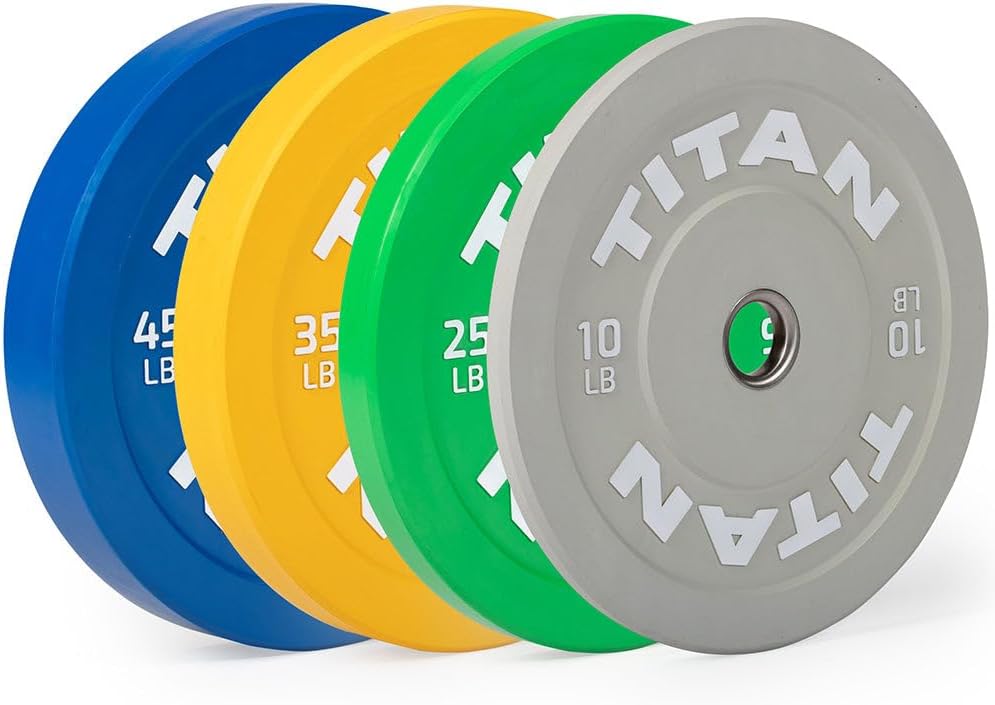
Titan Fitness Economy Color-Coded Olympic Bumper Plate Set
Consider the Titan Fitness Economy Color-Coded set if you want to distinguish plates by color at a glance. Its listing names five colors and gives a 230 lb item weight, but doesn’t itemize the pairs. Color coding alone doesn’t establish IWF certification. See the bumper plate roundup for more on this option.
Compare this alternative →Choose your next step
Put your shortlist side by side
See the differences, tradeoffs and who each model suits.
Compare the products →Before you order
- Get a written inventory for OSR6IS-260: quantities by weight, combined plate weight, and rack inclusion.
- Check sleeve diameter and usable length against the plate dimensions, with room for collars.
- Get the drop rules for the lightest pair and confirm what the warranty covers.
- Confirm the delivered price, expected cartons, missing-item policy, and who pays return freight.
Save the seller’s written answers with your order so you can check the cartons and plate pairs as they arrive.


